How do I read a jewelry listing to tell what is lab-grown, what is silver and what is plated?
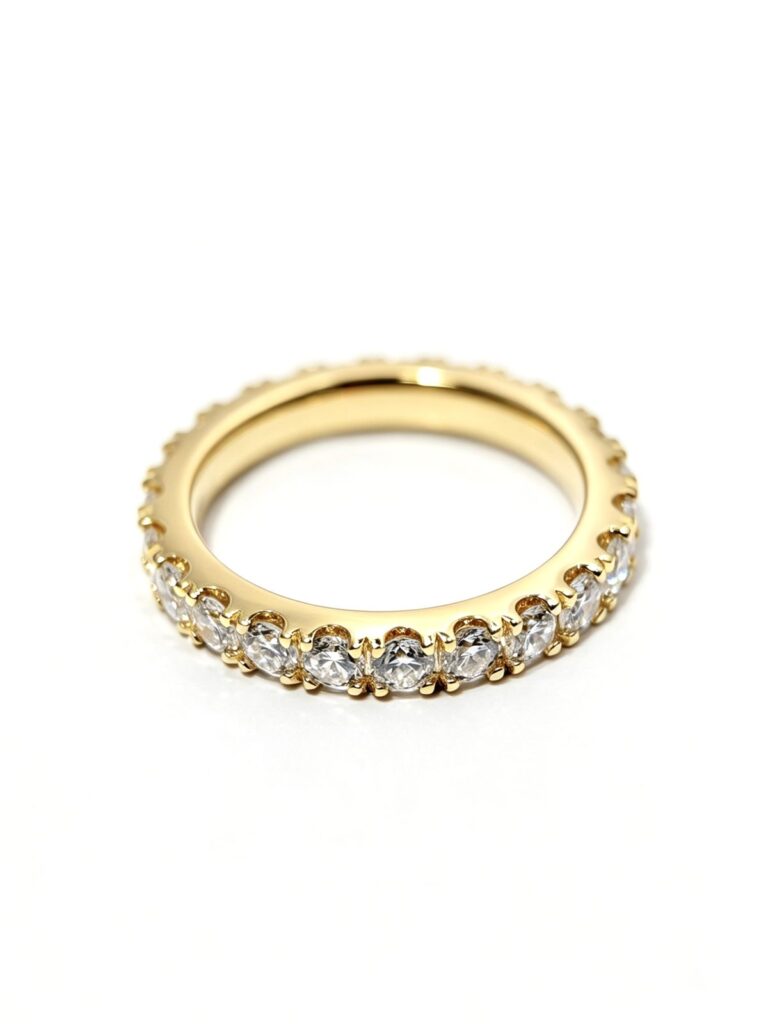
925 sterling silver jewellery, set with lab grown diamonds and made in our own Shenzhen workshop.
Talk · Buying & value
A shopper finds a ring listed as "diamond ring, silver, brilliant finish, 0.5 TCW" at an attractive price. The description does not say whether the stone is mined or lab-grown, whether "silver" means sterling, or whether the surface is plated. They want to know how to read it before ordering.
 ZKZ Editorial TeamMain answer · Product & gemmology desk
Read a listing as three separate claims: what the stone is, what the metal is, and what covers the surface. A clear listing names all three, for example "laboratory-grown diamond", "925 sterling silver" and "rhodium-plated". If any one is vague, ask before you buy.
1. The stone
Fact The FTC's Jewelry Guides say a laboratory-grown diamond should be clearly identified as such, using a qualifier such as "laboratory-grown" or "laboratory-created". They also say words like "real", "genuine" or "natural" should not be used for products made artificially (16 CFR 23.12 and 23.27).
Our advice A listing that only says "diamond" with no origin is a reason to ask. Also check whether colour and clarity grades are attached to a named independent report, or are the seller's own description. Our advice is to treat grades without a report number as unverified.
2. The metal
Fact Under 16 CFR 23.5, "sterling" or "sterling silver" should only describe a product that is at least 925/1,000 pure silver. The unqualified word "silver" should be preceded by a fineness figure, and a product that only has a silver surface layer should be described as plated or coated.
Our advice So "925 sterling silver" is specific. "Silver tone", "silver colour" or just "silver" is not. Look for a stamp in the photos or description.
3. The surface
Fact The Guides say it is deceptive not to disclose a surface layer of rhodium on products described as precious metal (16 CFR 23.7). "Vermeil" has a narrower meaning: a sterling silver base with a gold layer of at least 10 karat and a minimum thickness (16 CFR 23.4).
Our advice If the listing says "white gold finish", "gold tone" or "plated" without naming the base metal, ask what lies underneath. Plating can wear, which is normal, but it should be disclosed.
A quick checklist
- Does it say "laboratory-grown" or "lab-grown" next to the word diamond?
- Is a report number or lab name given, and can you look it up?
- Does it say 925 or sterling, and is the metal stamped?
- Is any plating named, with the base metal?
- Is the weight total carat weight or one stone?
Uncertain These Guides are US guidance. Other countries use different wording and, in some places, mandatory hallmarking, so a compliant listing for one market may look different in another. A listing can also be accurate in words and still be poor value, so compare the actual details rather than the adjectives.
Related reading: How to Buy Jewelry Online Safely: Quality Checks Before You Pay · What Does 925 Mean on Silver Jewelry? · Lab Grown Diamond Certification: IGI, GIA and What to Check
Sources
- FTC, In the Loupe: Advertising Diamonds, Gemstones and Pearls
- 16 CFR 23.12, FTC Jewelry Guides: definition and misuse of the word "diamond"
- 16 CFR 23.27, FTC Jewelry Guides: misuse of "real", "genuine", "natural", "precious" and similar words
- 16 CFR 23.5, FTC Jewelry Guides: misrepresentation as to silver content
- 16 CFR 23.7, FTC Jewelry Guides: disclosure of surface-layer application of rhodium
- 16 CFR 23.4, FTC Jewelry Guides: misuse of the word "vermeil"
Fact = stated by the cited source. Our advice = editorial recommendation. Uncertain / it depends = limits of what can be said in general.
Other perspectives from the ZKZ team
Ask for the same four facts every time: stone origin, report number, metal fineness and plating. A seller who answers in plain words and in writing is usually easier to work with later, whatever the price.
Check origin wording first. Phrases such as "real diamond" or "natural look" next to a lab-grown stone are the ones that tend to create problems, because they blur the disclosure the Guides ask for.
Do not compare listings by headline carat or price alone. Compare like for like: same origin wording, same metal, same plating and the same type of weight figure.
Have a different question? Ask our team, or browse more answers in Talk.
Related products
Related articles & topics
- Should I insure a sterling silver lab-diamond ring, and what value should I declare?Talk
- Is a Lab-Grown Diamond on Sterling Silver a Good Engagement Ring for Daily Wear?Talk
- Will a Lab-Grown Diamond Hold Its Resale Value?Talk
- How do I price lab-diamond silver jewelry for retail from a factory quote?Talk
- Is a silver polishing cloth safe on rhodium-plated jewelry?Talk
- What Are Lab Grown Diamonds? A Plain-English ExplanationGuide
- Lab Grown Diamond Wedding Bands and Eternity RingsGuide
- Lab Grown Diamond Engagement Rings: A Buyer’s GuideGuide
- Silver Purity Explained: 925, 999, 800 and Plated MetalsGuide
- Men’s Lab Grown Diamond Rings and BandsGuide
Recommended
 What is the difference between GIA, IGI and in-house reports for lab-grown diamonds?Talk
 What bracelet size should I order if I have a small, medium or large wrist?Talk
 What are flat-back studs, and who needs them for cartilage or sleeping?TalkWhat jewelry suits an engagement-party or bridal-shower gift?Talk
 Can nickel-free silver jewelry still cause a reaction?Talk
 What are the black spots on my silver jewelry, and are they damage or tarnish?Talk