2026 Lab-Grown Diamond Industry Outlook: Prices, Supply and Jewelry Demand
925 sterling silver jewellery, set with lab grown diamonds and made in our own Shenzhen workshop.
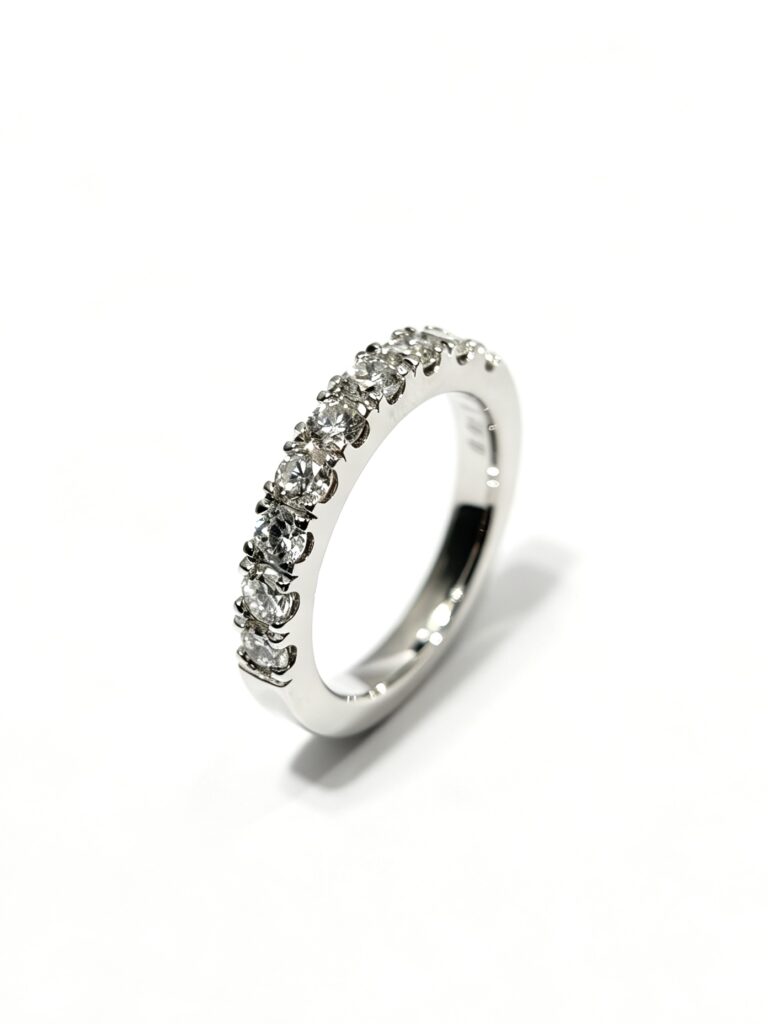
The lab-grown diamond market in 2026 is not disappearing. It is becoming more competitive, more transparent and less dependent on the stone itself as the main source of value.
Production capacity has expanded, larger stones are easier to obtain, and buyers can compare similar diamonds across suppliers within minutes. As loose-stone prices fall, jewelry brands can no longer rely on a simple message of “a bigger diamond for less money.” The setting, metal, design, quality control and after-sales experience now determine more of the finished product’s value.
For jewelry brands and wholesale buyers, the practical conclusion is clear: lab-grown diamonds remain commercially important, but the winning product is increasingly the complete piece of jewelry—not an undifferentiated loose stone.
Lab-grown diamond supply continues to expand
Laboratory-grown diamonds are produced primarily through CVD and HPHT processes. Both technologies have improved in output, consistency and the range of sizes they can produce.
GIA reported that forecast production for 2025 was approximately 30 million carats of gem-quality lab-grown rough. It also observed continuing improvements in stone size and quality. CVD production is prominent in commercial-size stones, while HPHT remains important for melee and other specialised size ranges. The GIA laboratory-grown diamond research provides useful technical context for these changes.
Greater supply gives buyers more choice, but it also makes basic availability less of a competitive advantage. A supplier that can obtain a one-carat or two-carat lab-grown diamond is no longer unusual.
The questions that matter now are more specific:
- Can the supplier match stones consistently across a pair or a production batch?
- Are color, clarity, dimensions and fluorescence controlled to the agreed tolerance?
- Can the setting be engineered for the selected stone size?
- Are reports, inscriptions and stone records checked before production?
- Can the same specification be repeated on the next order?
Availability opens the door. Consistency wins the repeat order. Buyers comparing the two production routes can also read CVD vs HPHT lab diamonds.
Falling stone prices do not automatically mean cheaper jewelry
Loose lab-grown diamond prices have been under sustained pressure. De Beers’ June 2026 Diamond Report states that synthetic lab-grown diamond wholesale prices had declined by 93% since 2020.
That figure should be interpreted carefully. De Beers is primarily associated with the natural diamond market, and its report draws on external price and retail datasets. It is useful evidence of the direction of the market, but it should not be treated as a neutral price list for every shape, size and quality. The full De Beers report explains its sources and retail argument.
The broader conclusion is still difficult to avoid: loose stones are becoming a smaller percentage of the value that brands can defend.
A finished piece also includes:
- precious-metal weight;
- casting and finishing;
- stone sorting and matching;
- setting labour;
- plating;
- findings, clasps and chains;
- quality inspection;
- packaging, freight and customer service.
These costs do not fall at the same rate as loose-diamond prices. A lower stone price may create room for a larger center stone, a stronger setting or a better chain, but it does not remove the need for sound manufacturing.
Brands should therefore avoid promising that every fall in loose-stone prices will produce an equal fall in retail jewelry prices. That approach trains customers to wait for the next discount and undervalues the work in the finished piece. For the underlying cost variables, see what determines lab-grown diamond prices.
Natural and lab-grown diamonds are becoming separate markets
Natural and laboratory-grown diamonds have closely related optical and physical properties, but they increasingly serve different buying motivations.
Natural diamonds retain a geological origin story, rarity positioning and an established role in high-value luxury purchases. Lab-grown diamonds offer greater size accessibility, manufacturing scalability and flexibility for design-led jewelry.
This does not mean every customer will choose one category permanently. A buyer may select a natural diamond for one milestone and a lab-grown diamond for an everyday necklace, tennis bracelet or larger pair of earrings.
The useful question is not “Which diamond will replace the other?” It is “Which category fits this product, customer and price position?”
Lab-grown diamonds are particularly suitable when the design depends on greater visible carat weight at a controlled budget, matched stones, repeated production, tennis constructions, fancy shapes or fashion-led collections.
Natural diamonds remain a different commercial proposition. Trying to sell both categories with the same value story usually weakens the message for each. For a product-level comparison, see lab-grown vs natural diamonds.
Certification is shifting from rarity to clear identification
Certification remains important, but the way laboratories describe lab-grown diamonds is changing.
On October 1, 2025, GIA introduced a revised quality assessment for eligible D-to-Z laboratory-grown diamonds. Instead of applying the same detailed color and clarity nomenclature developed for natural diamonds, qualifying stones are assessed as Premium or Standard according to combined color, clarity, polish, symmetry and cut criteria.
GIA also requires the girdle to be inscribed with “Laboratory-Grown” and the quality-assessment number. GIA’s current laboratory-grown diamond service describes the assessment and submission requirements.
This change makes four checks especially important:
- Confirm which laboratory issued the document.
- Match the report number to the laser inscription.
- Check that the physical stone matches the report measurements.
- Agree whether every stone, only the center stone or a representative sample requires documentation.
A report is not a substitute for incoming inspection. It documents the stone; it does not confirm that an entire finished batch meets the buyer’s manufacturing specification. More detail is available in the guide to IGI and GIA lab-grown diamond certification.
Disclosure must remain clear as the market grows
As lab-grown diamonds become more familiar, some sellers may be tempted to shorten product descriptions and assume customers understand the category. That creates unnecessary risk.
The US Federal Trade Commission advises marketers to disclose clearly that laboratory-created diamonds are not mined diamonds. Terms such as “laboratory-grown” or “laboratory-created” should appear prominently with the word “diamond,” rather than being hidden in technical specifications. The FTC jewelry advertising guidance explains the distinction.
For brands selling internationally, exact requirements vary by market, but the operational principle is consistent:
- describe the stone accurately;
- distinguish lab-grown diamonds from mined diamonds;
- do not confuse diamonds with simulants such as cubic zirconia or moissanite;
- keep product pages, invoices, packaging and sales training consistent.
Clear disclosure is not a disadvantage. It prevents disputes and helps the customer understand why the product exists.
Product design will matter more than carat weight alone
When many sellers can offer a similar stone, visible differences move into the jewelry.
For rings, buyers notice band thickness, stone height, prong security and comfort. For earrings, they notice total weight, post position and back type. For necklaces, chain strength and balance determine whether the piece sits correctly. Tennis bracelets depend on articulation, clasp security and consistent stone setting.
Before requesting a quote, a buyer should define:
- target stone shape and dimensions;
- acceptable color and clarity range;
- certificate requirements;
- metal and fineness;
- finished metal weight or minimum section thickness;
- setting style;
- plating material and target thickness;
- chain, clasp or earring-back requirements;
- sample and production tolerances;
- inspection method.
Without these details, two quotations may describe products that look similar in a photograph but differ substantially in durability and production cost.
Sustainability claims will face more scrutiny
Lab-grown diamonds are frequently marketed as inherently sustainable. That claim is too broad unless the seller can support it with information about energy sources, production location, manufacturing efficiency and the boundaries of the comparison.
Growing a diamond requires energy. Mining also has environmental and social impacts. The result depends on what is measured and which producers are being compared.
Brands should avoid unsupported phrases such as “zero impact,” “completely green” or “the sustainable diamond.” A more defensible approach is to make specific, verifiable statements about disclosed laboratory-grown origin, documented metal sourcing, packaging reductions, factory practices, energy sourcing and product durability.
What jewelry buyers should do in 2026
The best response to falling stone prices is not to buy the cheapest available parcel. It is to tighten the product specification.
- Select the product position before selecting the stone.
- Set acceptable ranges for dimensions, color, clarity and cut.
- Decide which stones require individual reports.
- Approve a physical sample before bulk production.
- Check matched pairs and multi-stone layouts under consistent lighting.
- Record metal, setting and plating requirements.
- Inspect finished pieces for stone security, symmetry and surface finish.
- Keep the approved sample and specification for repeat orders.
Lab-grown diamonds make ambitious designs more accessible, but they do not remove manufacturing risk. As the stone becomes more standardised, the quality of the finished jewelry becomes easier—not harder—for customers to compare.
The 2026 outlook
The lab-grown diamond market is moving from novelty to normal commercial competition.
Supply will remain broad. Price comparison will become easier. Certification language will continue to adapt. Retailers will face more pressure to explain why one finished piece deserves a higher price than another using a similar stone.
The strongest opportunity is therefore not simply “selling lab-grown diamonds.” It is producing jewelry with a clear customer, reliable specification and repeatable manufacturing standard.
Brands that control design, matching, setting, metal quality and disclosure can still build valuable lab-grown diamond collections. Brands that compete only on carat size and headline price will find it increasingly difficult to defend their margins.
Request a production review
If you are developing a lab-grown diamond jewelry line, prepare the target stone sizes, metal, setting style, expected quantity, certificate requirements and target market.
ZKZ Jewelry can review the specification from a manufacturing perspective and identify the decisions that should be fixed before sampling. Request a quote or production review.
For stone selection, certification and jewelry-specific buying guides, explore the complete lab-grown diamond guide.
Recommended
 Does a lab-grown diamond need Kimberley Process paperwork when shipped?Lab Grown Diamond Guide
 Is it better to buy a loose lab-grown diamond and set it, or buy finished jewelry?Lab Grown Diamond Guide
 Is Lab Grown Diamond Jewelry a Good Investment?Buying Guides
 What is a “hearts and arrows” cut, and is it available in lab-grown stones?Lab Grown DiamondsDoes a lab-grown diamond need an appraisal, and what does one include?Lab Grown Diamonds
 Custom Lab Grown Diamond Jewelry: A Step-by-Step GuideCustom Jewelry