Round vs Oval Diamonds: Sparkle, Size and Price
925 sterling silver jewellery, set with lab grown diamonds and made in our own Shenzhen workshop.
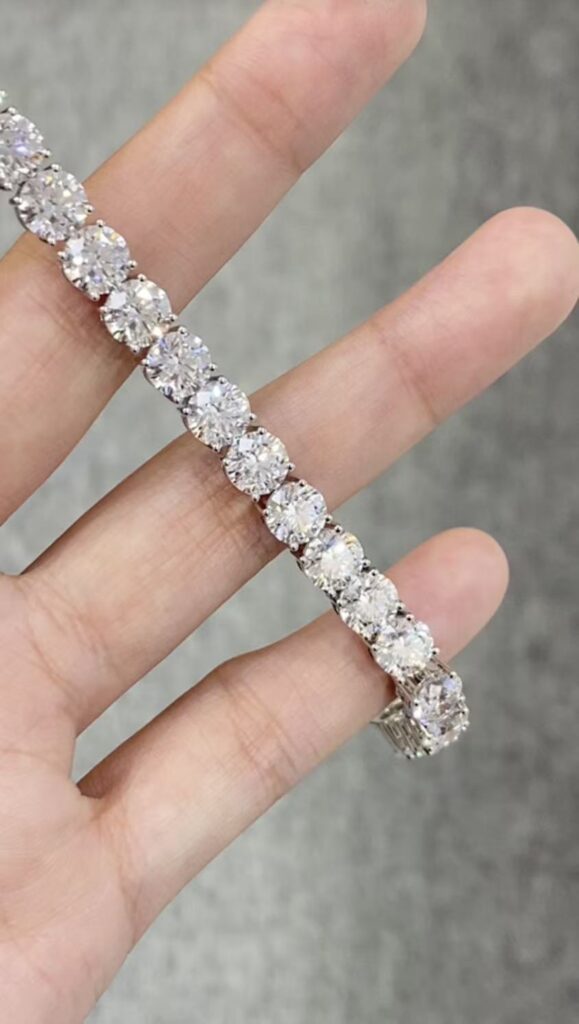
Put a round and an oval of the same weight beside each other and two differences appear immediately. The oval covers more of the finger, and the round is livelier. Everything else — price, setting choice, what the certificate records — follows from those two facts. Buyers who understand that the trade is spread against light return usually decide quickly, and the remaining questions are about proportion, ratio and how the stone will be worn.
Is an oval cheaper than a round?
Generally yes, at equivalent grades, because round brilliant carries the highest demand.
Round is the benchmark against which all diamond pricing is quoted, and its demand keeps the per-carat price at the top of the range. Oval is a brilliant cut as well, with a similar facet arrangement stretched into an elongated outline, and it prices below round at the same colour, clarity and weight. The difference is a demand effect rather than a material one; the two stones are the same substance.
The comparison is not quite exact, though. An oval has to be assessed on outline proportion and on whether a bow-tie shadow is present, both of which a round does not have to answer.
What actually differs between them
Three properties, and only one of them changes the material.
The facet arrangement is the same family in both cases: a brilliant cut, designed to return light upward. The outline differs, and that changes both the face-up area and how the stone reads against a hand or a neckline. The depth distribution differs too, because an oval spreads the same weight over a longer face and is typically a little shallower.
Nothing about hardness, composition or durability changes with the outline. An oval is not a weaker stone than a round, with the one exception that its ends are more exposed in a setting that does not protect them.
Sparkle: the honest version
A round returns more light; an oval is close, and the gap is smaller than the price gap.
Round brilliant has the advantage of radial symmetry: every facet is positioned so that light entering the crown is returned through the crown regardless of the angle the stone is tilted. An elongated shape cannot achieve that symmetry in the same way, because the distance from the centre to the edge varies around the outline. In practice the difference is visible side by side under controlled light and much less visible in wear.
What does affect an oval’s appearance is the bow-tie: a dark, bow-shaped shadow across the middle where light leaks through, caused by the pavilion angles rather than by any defect in the material.
Face-up size and spread
The same weight looks larger in an oval because of how the mass is distributed.
An oval of a given weight typically measures longer than a round of the same weight measures across, and the eye reads length as size. That is the practical gain from choosing an oval, and it is the reason buyers looking for apparent size often end up there. The gain is not free: outline proportion becomes a factor that has to be assessed, and a badly proportioned oval — too narrow or too broad — reads awkwardly regardless of its weight.
Length-to-width ratio is the number that describes the outline. Most buyers find ratios around the middle of the common range the most balanced; extremes look either squat or narrow.
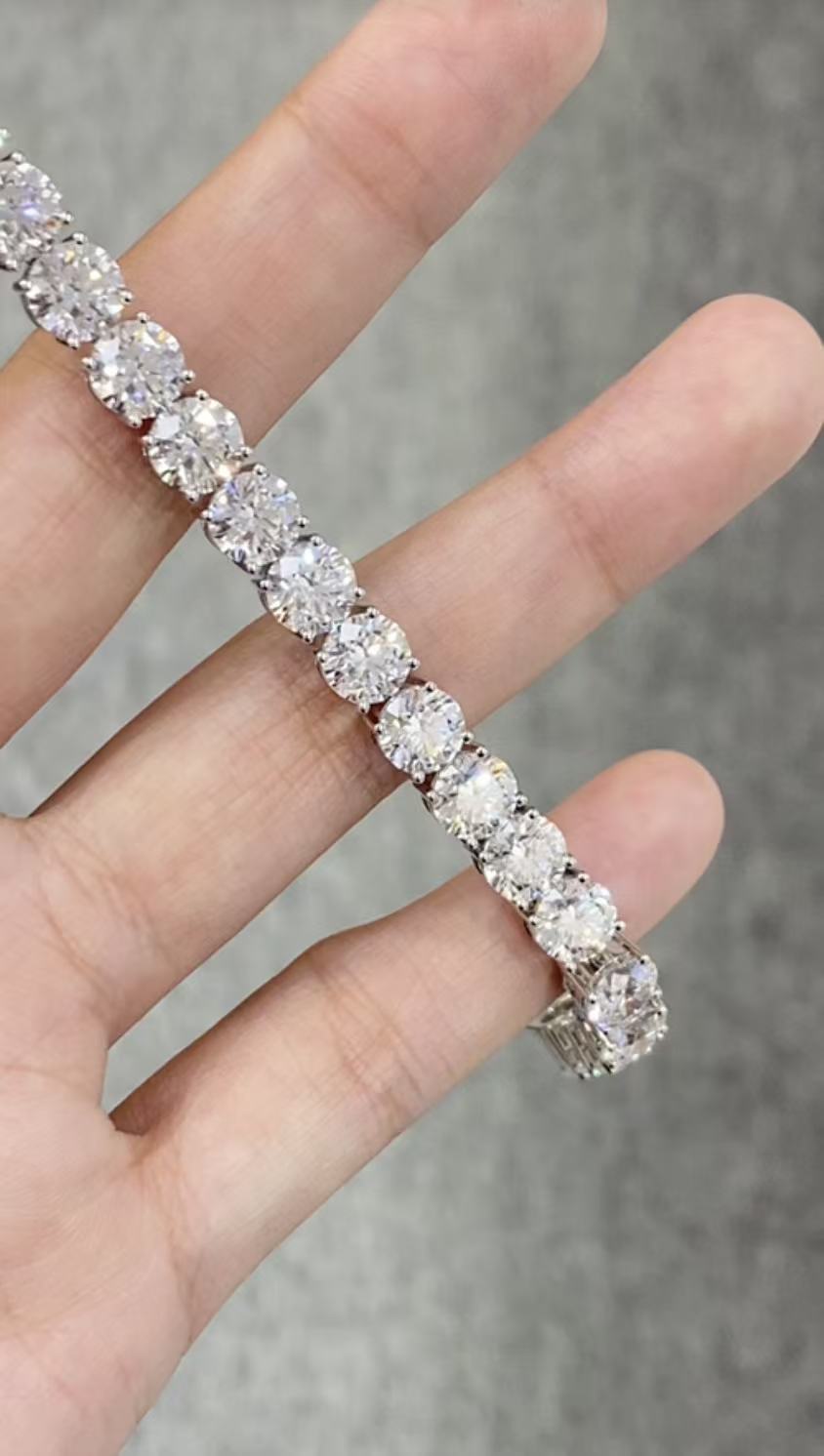
Where the price difference comes from
Demand and cutting yield, not rarity of material.
Round brilliant is the highest-demand shape, which supports its price independently of production cost. An oval uses rough more efficiently in some cases, since an elongated outline can be cut from a piece of rough that would not yield a good round. Those two effects together explain most of the gap. Lab grown supply changes the picture only in that availability is flexible, so price differences between shapes reflect demand and yield rather than scarcity.
The wider structure is covered in the breakdown of lab grown diamond pricing.
The bow-tie, and how to judge it
Present in most ovals to some degree; the question is how prominent it is.
A bow-tie appears as a dark band across the width of the stone. It comes from pavilion angles that fail to return light through that zone, and almost every oval shows one under some lighting. What matters is proportion: a faint bow-tie visible only at an angle is normal, while a strong dark band visible face-on in ordinary light reduces the stone’s appearance significantly.
Because it is a function of cutting rather than material, it is not recorded on a grading report. It has to be assessed from photographs or in person, which is why the comparison of shapes treats inspection as part of the buying process for fancy shapes.
How each takes a setting
The outline decides which settings protect the stone well.
A round is protected from every direction by any well-made prong setting, because its outline offers no vulnerable point. An oval’s ends are the exposed areas, so a setting that covers the tips — a bezel, or a six-prong with prongs placed at the ends and the sides — reduces the risk of chipping. A four-prong setting on an oval leaves the ends relatively open.
Both shapes suit solitaires, halos and three-stone designs; the oval additionally suits designs that emphasise length, such as a setting with shoulder stones that continue the line of the stone.
Choosing between them
Four questions that usually settle it.
Is apparent size or liveliness the priority. Does the wearer prefer a symmetrical outline or an elongated one. Is the piece worn daily, which favours the round for durability and the oval for covered settings. And is the buyer prepared to assess outline proportion and bow-tie, since that judgement is required for an oval and not for a round.
Answers favouring size, elongation and a willingness to inspect point to the oval. Answers favouring maximum light return and the simplest quality assessment point to the round.
FAQ
Is oval cheaper than round?
Generally yes at the same colour, clarity and weight, because round brilliant carries the highest demand and sets the pricing benchmark. The difference is a demand effect rather than a difference in material. Part of the saving is offset by having to assess outline proportion and bow-tie, which round stones do not require.
Which sparkles more, round or oval?
Round, because radial symmetry lets every facet return light from any tilt angle. An oval is a brilliant cut as well and performs closely, but its elongated outline cannot achieve the same symmetry. In normal wear the difference is small; side by side under controlled lighting it is visible.
Does an oval diamond look bigger than a round?
Yes, at the same weight. An oval spreads its mass over a longer outline, so it covers more of the finger and reads larger. Length-to-width ratio determines how that size is distributed, and an outline at either extreme looks less balanced than one in the middle of the common range.
What is a bow-tie in an oval diamond?
A dark band across the width of the stone, caused by pavilion angles that do not return light through that zone. Almost every oval shows some degree of it under certain lighting. A faint shadow visible at an angle is normal; a strong dark band visible face-on in ordinary light is a cutting problem.
Sources and further reading
- GIA 4Cs — cut and light performance
- GIA Gem Encyclopedia — brilliant cut variations
- GIA — what fancy shape reports record
- International Gemological Institute — grading and reports
- CIBJO Blue Books — shape and cut terminology
- International Gem Society — oval and round cutting reference
Next step: Tell us the spread you want and whether the stone will be worn daily or occasionally, and we will present matched options in both shapes with length-to-width ratios so the outline comparison is like for like. Loose stones and finished pieces are both supplied OEM/ODM. Contact vinico@zkzdiamonds.com or WhatsApp +86 135 3037 8229.
{“@context”:”https://schema.org”,”@type”:”FAQPage”,”mainEntity”:[{“@type”:”Question”,”name”:”Is oval cheaper than round?”,”acceptedAnswer”:{“@type”:”Answer”,”text”:”Generally yes at the same colour, clarity and weight, because round brilliant carries the highest demand and sets the pricing benchmark. The difference is a demand effect rather than a difference in material. Part of the saving is offset by having to assess outline proportion and bow-tie, which round stones do not require.”}},{“@type”:”Question”,”name”:”Which sparkles more, round or oval?”,”acceptedAnswer”:{“@type”:”Answer”,”text”:”Round, because radial symmetry lets every facet return light from any tilt angle. An oval is a brilliant cut as well and performs closely, but its elongated outline cannot achieve the same symmetry. In normal wear the difference is small; side by side under controlled lighting it is visible.”}},{“@type”:”Question”,”name”:”Does an oval diamond look bigger than a round?”,”acceptedAnswer”:{“@type”:”Answer”,”text”:”Yes, at the same weight. An oval spreads its mass over a longer outline, so it covers more of the finger and reads larger. Length-to-width ratio determines how that size is distributed, and an outline at either extreme looks less balanced than one in the middle of the common range.”}},{“@type”:”Question”,”name”:”What is a bow-tie in an oval diamond?”,”acceptedAnswer”:{“@type”:”Answer”,”text”:”A dark band across the width of the stone, caused by pavilion angles that do not return light through that zone. Almost every oval shows some degree of it under certain lighting. A faint shadow visible at an angle is normal; a strong dark band visible face-on in ordinary light is a cutting problem.”}}]}
Part of our lab grown diamonds guide.
Recommended
 Does a lab-grown diamond need Kimberley Process paperwork when shipped?Lab Grown Diamond Guide
 Is it better to buy a loose lab-grown diamond and set it, or buy finished jewelry?Lab Grown Diamond Guide
 Is Lab Grown Diamond Jewelry a Good Investment?Buying Guides
 What is a “hearts and arrows” cut, and is it available in lab-grown stones?Lab Grown DiamondsDoes a lab-grown diamond need an appraisal, and what does one include?Lab Grown Diamonds
 Custom Lab Grown Diamond Jewelry: A Step-by-Step GuideCustom Jewelry