What Does 925 Mean on Silver Jewelry?
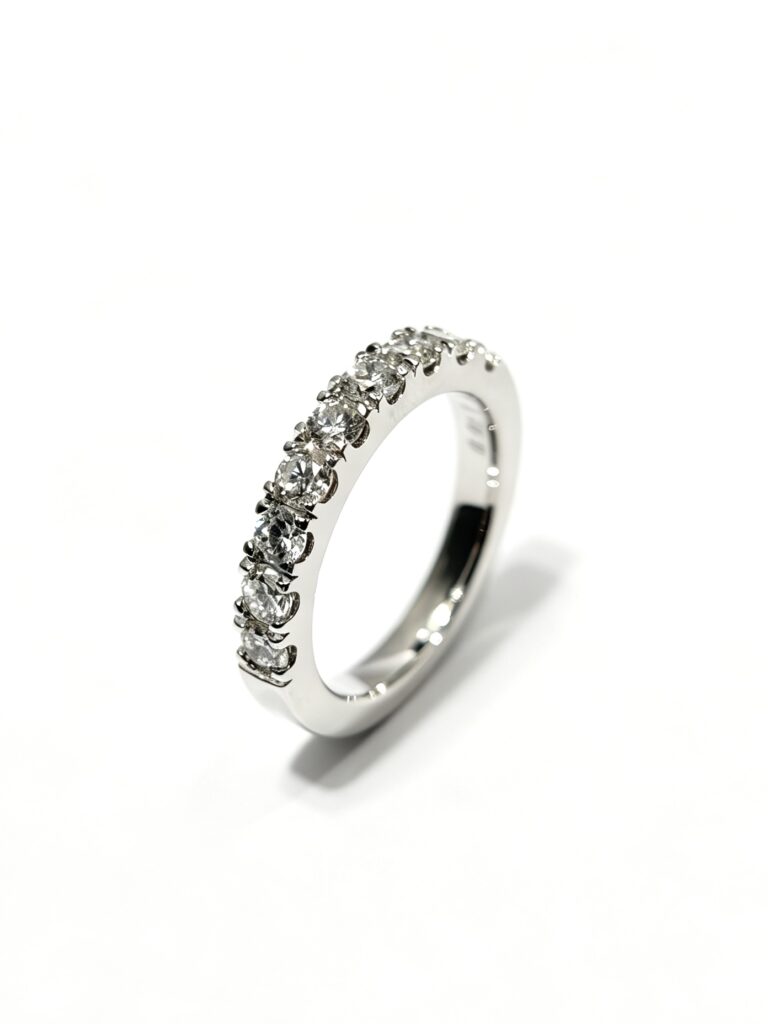
925 sterling silver jewellery, set with lab grown diamonds and made in our own Shenzhen workshop.
Almost every silver ring, chain or pair of earrings carries a small stamp, and 925 is the one buyers see most often. The number is not decoration: it is a fineness mark that states how much of the metal is actually silver. Understanding it takes a few minutes and prevents the most common mistake in silver buying — paying sterling prices for a plated piece with a 925-looking stamp.
What does the 925 stamp actually mean?
925 means the metal is 92.5% silver by weight.
The remaining 7.5% is another metal, usually copper, added to give the alloy the hardness jewelry needs. The stamp describes the alloy, not the finish, the plating or the brand quality.
Fineness marks are an old idea: assay offices have tested precious metal alloys and stamped the result for centuries, and the international convention behind them is set out in references such as the CIBJO Blue Book. When a piece is stamped 925, it is claiming the sterling silver standard — 92.5% silver — rather than fine silver, which is 99.9%.
Practically, that distinction matters because pure silver is too soft for everyday rings and clasps. The copper in a 925 alloy adds hardness and wear resistance, at the cost of a slightly lower silver content and a greater tendency to tarnish.
Why is sterling silver 92.5% silver instead of 100%?
Because 100% silver is too soft to hold a setting or survive daily wear.
Fine silver scratches and deforms easily. Adding 7.5% copper produces an alloy that keeps the bright white colour, takes a polish, and can be worked into thin chains and prongs that keep their shape.
The trade-off is tarnish. Copper reacts with sulphur compounds in air and on skin, forming the dark silver sulphide film that dulls a piece over time; the mechanism is well described by conservation and materials sources such as the Silver Institute. Rhodium plating or an anti-tarnish finish slows this down, but the underlying alloy is still 925 silver.
Quick comparison:
| Material | Silver content | Behaviour in jewelry | Typical use |
|---|---|---|---|
| Fine silver (999) | 99.9% | Very soft, tarnishes slowly | Collector pieces, some chains |
| Sterling silver (925) | 92.5% | Hard enough for daily wear, tarnishes | Rings, earrings, bracelets, settings |
| Silver-plated brass or copper | Thin surface layer | Wears through, reveals base metal | Fashion pieces at low price points |
| Nickel silver | No silver | Contains nickel, may irritate skin | Budget hardware, not fine jewelry |
Which marks and hallmarks should you look for?
Look for a fineness mark such as 925, and a maker’s mark or country hallmark where the market requires one.
In countries with a formal hallmarking system, the piece carries an assay office mark in addition to the fineness number; the UK system is described by the Assay Office. In markets without compulsory hallmarking, a 925 stamp is a manufacturer’s claim and should be checked against the retailer’s documentation.
Where you find the mark matters too. It is usually stamped inside a ring band, on a chain’s clasp tag, or on the post of an earring. A mark that is printed on a sticker, or absent from a piece sold as sterling, is worth questioning before purchase.
Is 925 silver real silver, and how is it different from plated jewelry?
Yes — 925 silver is a solid silver alloy, while plated jewelry has only a thin silver layer over another metal.
A solid 925 piece keeps its silver content through wear; if you polish through a scratch, the metal underneath is still sterling. A plated piece has a coating measured in microns, and repeated wear, polishing or contact with chlorine can expose the base metal, which is often brass or copper.
The two can look identical when new, which is why price is a poor test on its own. Ask what the piece is made of, whether it is solid sterling or plated, and how the finish is applied. Reputable manufacturers state the alloy and the plating thickness, and electroplated coatings are specified by standards such as ASTM B700; vague descriptions such as “silver tone” usually indicate plating. Where a piece carries a certified stone, the report from a laboratory such as GIA tells you what was actually graded.
How does 925 silver behave day to day?
It wears well in normal use, but it tarnishes and it is softer than gold or steel.
Tarnish is a surface film, not damage: a jeweller’s cloth or a mild silver dip restores the shine, and the metal below is unchanged. The rate depends on humidity, air quality, skin chemistry and how the piece is stored.
Because sterling is softer than steel or 14K gold, thin bands can deform under heavy wear, and prongs should be checked periodically if the ring carries a stone. Lightweight chains can stretch or kink if they are pulled. These are design issues rather than material failures, and they are the reason heavier gauges and reinforced settings are used for pieces intended for daily wear.
How do you clean and store 925 silver jewelry?
Use a soft cloth and mild soap, dry the piece completely, and store it in a sealed bag away from air and moisture.
Avoid abrasive polishes on plated or antiqued finishes, and keep silver away from chlorine, perfume, hairspray and rubber bands, all of which accelerate tarnish. A silver polishing cloth removes light tarnish; a dip is faster for chains but should not be used on pieces with porous stones.
Storage is the part most people skip. Airtight bags, tarnish-inhibiting strips and separate compartments stop pieces from rubbing and reduce the sulphur exposure that causes the film to form. Our step-by-step routine is in the care and cleaning guides.
Is 925 silver safe for sensitive skin?
Sterling silver is usually well tolerated, but reactions are most often caused by nickel in the alloy, the plating or the earring post.
Good-quality sterling alloys are typically copper-based rather than nickel-based, and pieces made for sensitive wearers use nickel-free posts, clasps and plating. If you have reacted to jewelry before, ask for the alloy composition and the post material rather than relying on the word “hypoallergenic”, which has no single legal definition.
Earrings deserve particular attention because the post sits in a piercing for hours. Titanium or nickel-free white gold posts are common alternatives when sterling is not comfortable.
How should you evaluate a 925 silver piece before buying?
Check four things: the stamp, the description of the alloy, the weight and construction, and the seller’s documentation.
Ask whether the piece is solid 925 or plated, what the closure and post are made of, what the plating is if any, and how the item should be cleaned. For gem-set pieces, ask how the stones are secured and whether the setting is designed for daily wear.
For buyers sourcing at volume, the same questions apply at the production level: alloy specification, plating thickness, hallmarking and finish consistency between batches. ZKZ Jewelry manufactures 925 silver and lab grown diamond jewelry in Shenzhen and can supply the silver jewelry guide specification points as a reference for a new line.
FAQ
Is 925 silver worth anything?
Its value comes from the 92.5% silver content plus the making of the piece, not from a resale premium. Silver is traded as a commodity, so a 925 piece is worth its metal value plus craftsmanship and brand. Buy it for wear and design rather than as an investment.
Does 925 silver turn your skin green?
Green marks usually come from copper in the alloy reacting with sweat and cosmetics, or from a plated base metal showing through. It is a surface reaction, not poisoning, and it cleans off. Rhodium plating, keeping the piece dry and removing it before exercise reduce the effect.
Can 925 silver be worn in the shower or pool?
Showering occasionally is usually fine, but chlorine and hot water accelerate tarnish and can damage plated finishes and some stones. Remove silver before swimming, and dry it after contact with water to keep the surface bright for longer.
How can I tell if a 925 stamp is fake?
A stamp alone cannot prove anything. Look for weight and construction that suit solid silver, a maker’s mark where hallmarking applies, and documentation from the seller. If a heavy-looking piece is unusually light or the price is far below the market, treat the stamp as unverified.
Next step: if you are building or restocking a 925 silver line, send your design brief or specification to vinico@zkzdiamonds.com or message +86 135 3037 8229 and the ZKZ Jewelry team will confirm the alloy, plating and finishing options for your order.
Recommended
 Silver Necklaces for Sensitive Skin: What to Look ForSilver Jewelry
 Sterling Silver Necklace Care: Preventing Tangles and TarnishCare & Cleaning
 Layering Silver Necklaces Without TanglingSilver Jewelry
 How to Choose the Right Necklace Length (16 to 24 Inches)Silver Jewelry
 Silver Necklace Chains Compared: Box, Cable, Rolo, Snake and FigaroSilver Jewelry
 Silver Purity Explained: 925, 999, 800 and Plated Metals925 Silver Basics & Care