925 Sterling Silver Jewelry: The Complete Guide
925 sterling silver jewellery, set with lab grown diamonds and made in our own Shenzhen workshop.
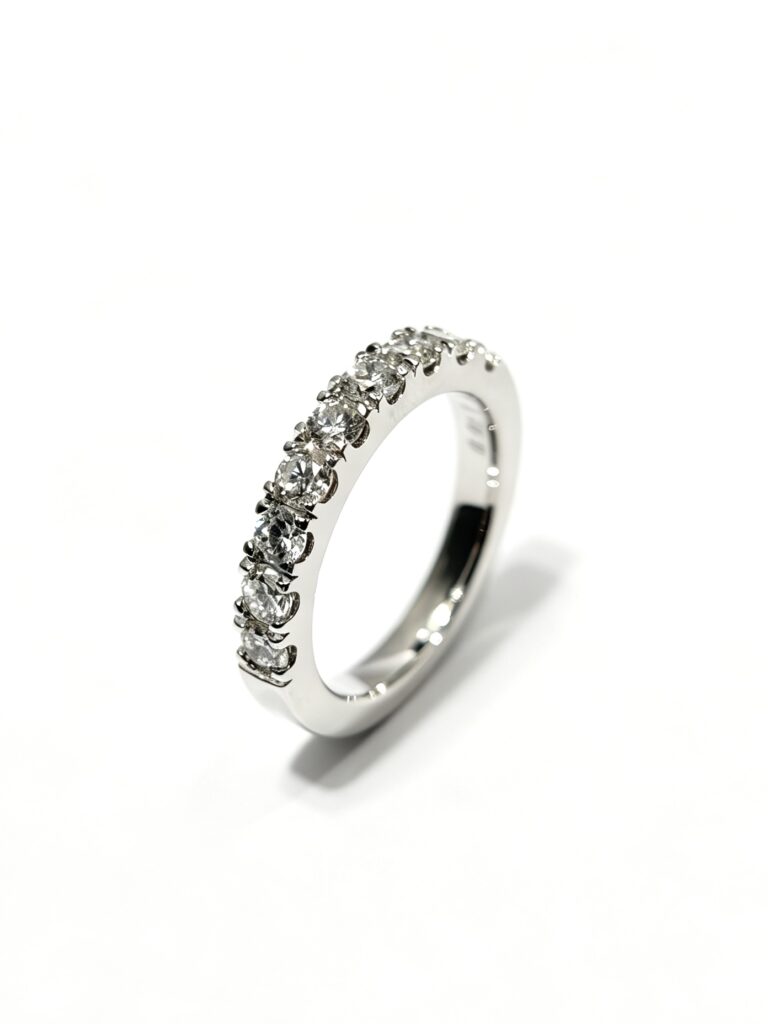
Sterling silver is the standard for fine silver jewelry: 92.5% pure silver alloyed with 7.5% copper so it stays strong enough to wear every day. This guide explains what “925” really means, how to spot a genuine piece, how to care for it, and how to choose the right necklace, earring, ring or bracelet for you.
Start with the basics
- What is 925 sterling silver? (and how to check it)
- Care and cleaning: why silver tarnishes and how to fix it
- Size and fit: ring sizes, necklace lengths, earring sizes
- Buying guides: quality, price and value
925 sterling silver vs fine silver vs plated metal
| Type | Composition | Durability | Best for |
|---|---|---|---|
| Fine silver (999) | 99.9% silver | Very soft, scratches easily | Collectible pieces, not daily wear |
| Sterling silver (925) | 92.5% silver + 7.5% copper | Strong enough for daily wear | Necklaces, rings, earrings, bracelets |
| Silver plated | Thin silver layer over brass or copper | Wears through with use | Fashion pieces, short-term wear |
| Stainless steel | Steel alloy, no silver | Very durable | Everyday pieces when silver is not essential |
How to tell whether silver is real
Start with the hallmark. Genuine pieces carry a “925” or “S925” stamp, usually inside the band or on the clasp. Then check the weight and feel: sterling silver is denser than plated brass and warms up quickly in your hand. A magnet should not stick to solid sterling silver. Finally, look for the paperwork: a manufacturer that works with certified silver will state the composition and plating clearly.
Does 925 silver tarnish, and what can you do about it?
Yes, sterling silver can tarnish: the copper in the alloy reacts with sulphur compounds in air, cosmetics and sweat. It is a surface reaction, not damage, and it reverses. Store pieces dry and separate, wear silver often (skin contact slows tarnish), remove jewelry before swimming or showering, and clean with a soft polishing cloth. Read the full routine in our care and cleaning guide.
Choosing your first 925 silver piece
- Necklaces: 16–18 inch chains sit at the collarbone; 20–24 inch chains work over knitwear. See silver necklaces.
- Earrings: nickel-free sterling silver with rhodium plating suits sensitive ears. See silver earrings.
- Rings: check the size on a warm finger at the end of the day. See silver rings and bands.
- Bracelets: allow one finger of slack for a comfortable fit. See silver bracelets.
Shop 925 sterling silver jewelry
ZKZ Jewelry manufactures and supplies 925 sterling silver jewelry with lab grown diamond settings, in ready stock and made-to-order programmes.
Frequently asked questions
Is 925 silver the same as sterling silver?
Yes. “925” and “sterling silver” describe the same alloy: 92.5% silver and 7.5% other metals, usually copper.
Will 925 silver turn my skin green?
A green mark usually comes from copper in the alloy reacting with sweat and cosmetics, or from plated base metal. Rhodium-plated sterling silver and regular cleaning minimise it.
Can I wear 925 silver every day?
Yes. Sterling silver is designed for daily wear; remove it for swimming, gym sessions and cleaning products, and store it dry.
How do I clean silver with lab grown diamond settings?
Use warm water with a drop of mild soap and a soft brush, rinse and dry with a lint-free cloth. Avoid abrasive polishes on plated surfaces and never use chlorine-based cleaners.
Recommended
 Silver Wedding Bands: Durability, Plating and Long-Term WearSilver Jewelry
 Stacking Silver Rings: Proportions, Widths and ComfortSilver Jewelry
 Will a Silver Ring Turn My Finger Green?Silver Jewelry
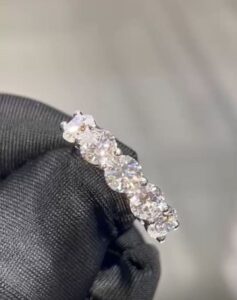 How to Find Your Ring Size at Home (Free Printable Method)Jewelry Guides & Sizing
 Sterling Silver Eternity Rings: Full, Half and Channel SetSilver Jewelry
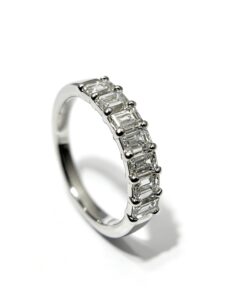 Sterling Silver Rings: How to Choose a Ring That LastsSilver Jewelry