Stacking Silver Rings: Proportions, Widths and Comfort
925 sterling silver jewellery, set with lab grown diamonds and made in our own Shenzhen workshop.
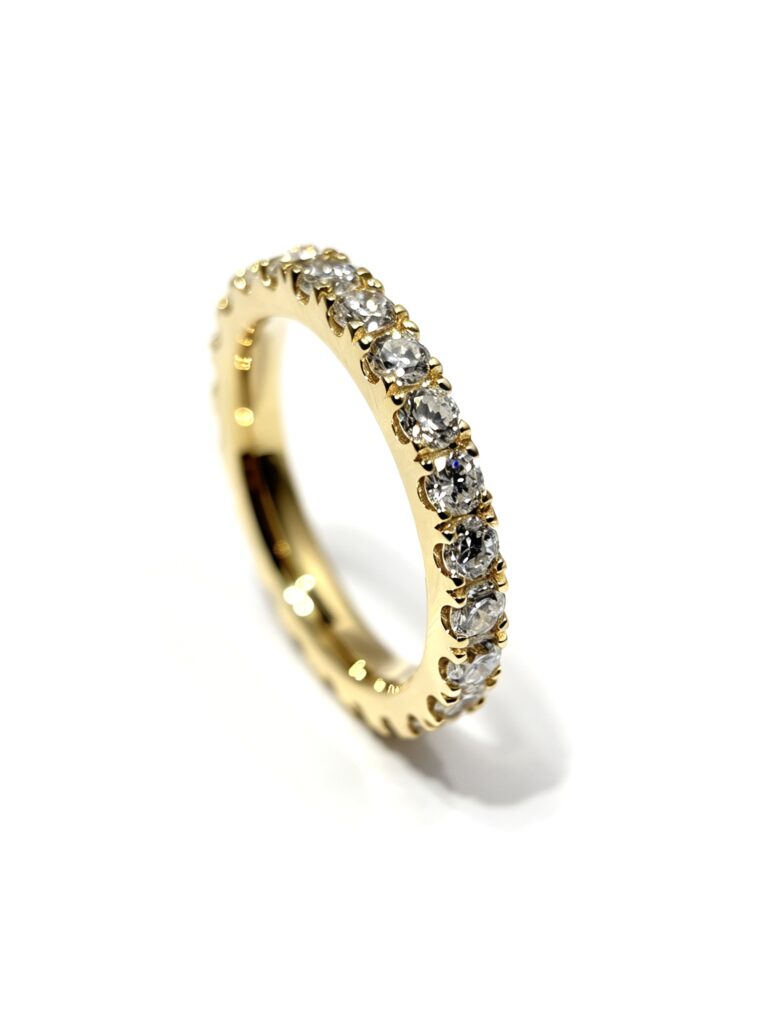
A ring stack is a proportion problem before it is a style choice. The same three rings can look balanced or crowded depending on their widths, profiles and the order they are worn in, and the same stack can feel comfortable or pinching depending on the total width across the knuckle.
How many rings should you stack?
Two or three is the practical range for daily wear.
Two rings give a clear pairing, usually a plain band with a stone-set ring. Three allows a rhythm — thin, medium, thin — and is the most common stack. Beyond three, the total width becomes the limiting factor: the stack sits higher on the finger, presses at the sides and is harder to keep clean.
If you want the look of more rings without the bulk, use narrower bands and vary the finishes rather than adding width.
How to combine widths and profiles
Alternate widths and profiles so the edges do not sit in the same place.
A 1.5 mm band next to a 4 mm band reads as deliberate; three 4 mm bands read as a block. Alternating a domed profile with a flat one stops the edges from rubbing in the same line, which also reduces wear on the metal.
A useful recipe: a 2 mm plain band, a 3–4 mm stone-set ring, and a 1.5 mm spacer. Total width around 7 mm, with the heaviest piece in the middle so the thinner bands sit against it.
| Combination | Total width | Look | Comfort |
|---|---|---|---|
| Three 1.5 mm | 4.5 mm | Delicate | Very comfortable |
| 2 + 4 mm | 6 mm | Balanced pair | Comfortable |
| 2 + 3 + 1.5 mm | 6.5 mm | Classic stack | Comfortable |
| Three 4 mm | 12 mm | Heavy, blocky | Likely uncomfortable |
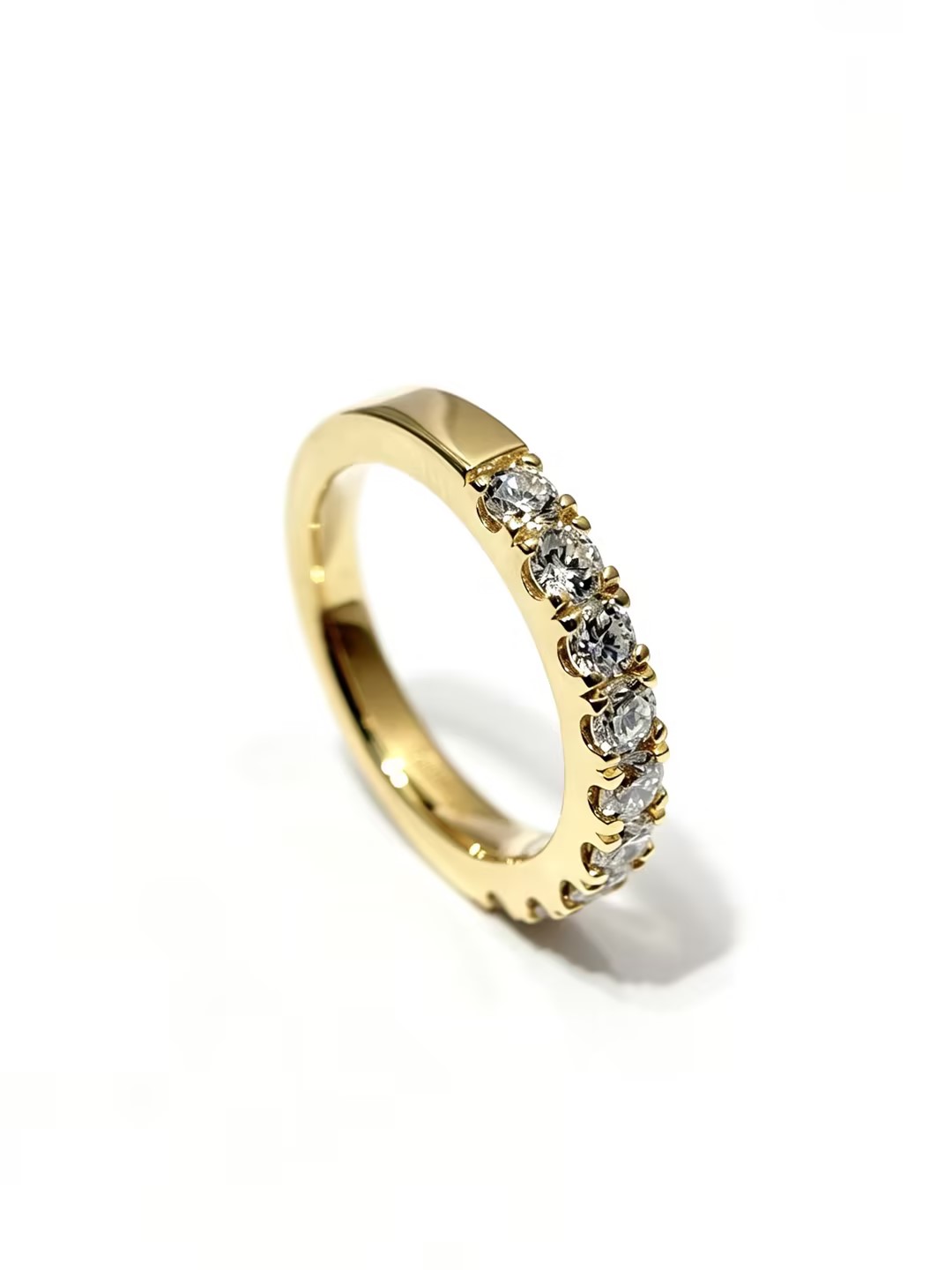
Comfort across the knuckle
The stack must pass the knuckle, not just fit the base of the finger.
Several rings increase the total width that has to cross the joint, so a stack that fits the finger base can still be difficult to remove. Measure for the largest ring in the stack, and remember that a 7 mm stack behaves differently from a single 2 mm band.
A comfort-fit interior helps on wider stacks, and sizing the stack slightly loose is better than sizing it tight; silver deforms when it is forced over a knuckle.
Order and pairing
Put the heaviest and widest ring at the base, and keep stone settings clear of each other.
Wearing the widest band at the base of the finger gives the stack a stable foundation. Stone-set rings should not sit directly against a rough or engraved band, because the stones and prongs will rub; place a plain spacer between them.
Mixing finishes is fine as long as the stack reads as one family: rhodium-plated and bare silver together look consistent, while mixing strongly warm tones with cool ones requires a deliberate design decision.
Wear and tear in a stack
Rings in a stack rub against each other, so the thinnest band wears fastest.
Friction polishes the sides of the bands and, on plated rings, removes the coating at the contact points. Rotating the order occasionally spreads the wear, and keeping a spacer between stone-set pieces prevents the prongs from scratching the neighbouring band.
Check the stack every few months for loose stones, worn plating and thin spots on the narrowest band; those three issues account for most stack damage.
Care for a stacked set
Clean the rings individually rather than as a stack.
Residue collects between the bands, so separate them, clean each with mild soap and a soft brush, dry thoroughly, and store them apart or with spacers. Our care and cleaning guides cover the routine for plated and bare silver.
Buying checklist for a stack
Plan the total width before buying individual rings.
Decide the finger, the total width you can wear comfortably and the finish. Choose one anchor ring and two supporting bands, keep the profiles different, and check that the stack passes the knuckle. If one ring will carry stones, budget for a spacer and for periodic prong checks.
For production, specify width, profile, finish and the finished weight per ring so the set is comfortable as a stack, not only individually.
FAQ
How many rings can I stack comfortably?
Two or three is the usual range for daily wear, with a total width of about 4–7 mm. Beyond that, the stack presses at the sides of the finger, is harder to remove over the knuckle and collects more residue between the bands.
What widths look best together?
Alternate the widths rather than repeating them. A 2 mm band with a 3–4 mm centre ring and a 1.5 mm spacer looks deliberate, while three bands of the same width can look like one thick ring.
Should stacked rings be the same size?
Yes, they should be sized for the same finger and must pass the knuckle as a set. A stack is slightly tighter than a single ring, so consider sizing up half a size if you are between sizes.
How do I stop stacked rings scratching each other?
Alternate the profiles, place a plain spacer between stone-set rings, and rotate the order occasionally. Friction is unavoidable in a stack, but different profile shapes reduce the concentration of wear at the same edge.
Sources and further reading
References supporting the material, coating and sizing points in this guide.
- CIBJO Blue Book — precious metal fineness and terminology
- ASTM B700 — electrodeposited silver coatings
- The Silver Institute — silver behaviour and care references
- The Assay Office — hallmarking precious metal items
- IGI — gemstone and jewelry testing references
Next step: if you need stacking bands specified by width, profile and finish, send your brief to vinico@zkzdiamonds.com or message +86 135 3037 8229.
{“@context”:”https://schema.org”,”@type”:”FAQPage”,”mainEntity”:[{“@type”:”Question”,”name”:”How many rings can I stack comfortably?”,”acceptedAnswer”:{“@type”:”Answer”,”text”:”Two or three is the usual range for daily wear, with a total width of about 4–7 mm. Beyond that, the stack presses at the sides of the finger, is harder to remove over the knuckle and collects more residue between the bands.”}},{“@type”:”Question”,”name”:”What widths look best together?”,”acceptedAnswer”:{“@type”:”Answer”,”text”:”Alternate the widths rather than repeating them. A 2 mm band with a 3–4 mm centre ring and a 1.5 mm spacer looks deliberate, while three bands of the same width can look like one thick ring.”}},{“@type”:”Question”,”name”:”Should stacked rings be the same size?”,”acceptedAnswer”:{“@type”:”Answer”,”text”:”Yes, they should be sized for the same finger and must pass the knuckle as a set. A stack is slightly tighter than a single ring, so consider sizing up half a size if you are between sizes.”}},{“@type”:”Question”,”name”:”How do I stop stacked rings scratching each other?”,”acceptedAnswer”:{“@type”:”Answer”,”text”:”Alternate the profiles, place a plain spacer between stone-set rings, and rotate the order occasionally. Friction is unavoidable in a stack, but different profile shapes reduce the concentration of wear at the same edge.”}}]}
Recommended
 Will a Silver Ring Turn My Finger Green?Silver Jewelry
 How to Find Your Ring Size at Home (Free Printable Method)Jewelry Guides & Sizing
 Sterling Silver Eternity Rings: Full, Half and Channel SetSilver Jewelry
 Sterling Silver Rings: How to Choose a Ring That LastsSilver Jewelry
 Silver Earring Backs: Butterfly, Screw, Push and LockingSilver Earrings
 Lab Grown Diamond Earrings in Silver: Buying ChecklistLab Grown Diamond Earrings