Silver Purity Explained: 925, 999, 800 and Plated Metals
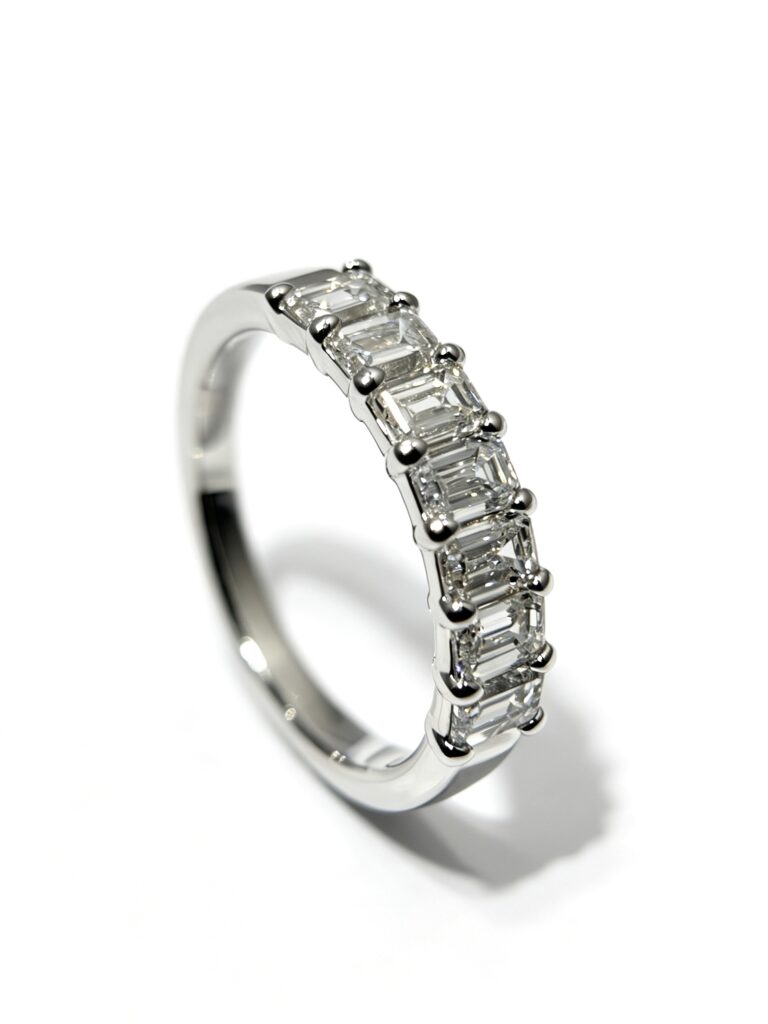
925 sterling silver jewellery, set with lab grown diamonds and made in our own Shenzhen workshop.
Silver is sold under several numbers, and they are not marketing grades: each one describes a different alloy with its own hardness, tarnish behaviour and best use. Knowing which number suits a ring, a chain or a pair of earrings prevents both damage and disappointment.
What do silver purity numbers mean?
The number is the silver content in parts per thousand.
999 means 99.9% silver, 925 means 92.5%, 958 means 95.8%, and 800 means 80%. The rest of the alloy is another metal, usually copper, which adds hardness at the cost of tarnish resistance. The fineness vocabulary is standardised internationally and described in references such as the CIBJO Blue Book.
Plated metals sit outside the system: a brass or copper core with a silver coating has no silver fineness, regardless of how thick the plating is.
Which purity is best for jewelry?
925 sterling silver is the practical standard for most jewelry.
It balances silver content with the hardness needed for rings, clasps and settings. Fine silver is softer and deforms under load, so it is used for chains, some pendants and collector pieces rather than for prongs or thin bands.
Lower purities such as 800 and 835 appear in older European silver and in some flatware; they are legitimate alloys, but they tarnish more readily and are less common in modern fine jewelry.
| Fineness | Silver content | Hardness | Typical use |
|---|---|---|---|
| 999 fine silver | 99.9% | Soft | Chains, collector pieces, bullion |
| 958 Britannia | 95.8% | Soft to medium | Traditional British silver |
| 925 sterling | 92.5% | Medium | Rings, earrings, settings, bracelets |
| 835 / 800 | 83.5% / 80% | Harder | Older European jewelry and flatware |
| Silver plated | Coating only | Depends on core | Fashion jewelry at low price points |

Does higher purity mean better jewelry?
Not necessarily. Purity and suitability are different questions.
A 999 ring is purer but deforms more easily, and a stone set in fine silver prongs is at higher risk of working loose. A 925 ring is slightly less pure but far more durable, which is why the industry settled on it for everyday pieces.
For buyers, the useful approach is to match purity to function: sterling for structural pieces, fine silver for chains where softness is acceptable, and plated metal only where the price point and the intended life of the piece justify it.
How does purity affect tarnish?
Less copper means slower tarnish, so fine silver tarnishes more slowly than sterling.
Copper is the reactive element in the alloy; 999 silver contains almost none, 925 contains 7.5%, and 800 contains 20%. That is why older low-fineness silver darkens quickly and why sterling needs a care routine.
Plating changes the surface rather than the alloy: a plated piece tarnishes slowly until the coating wears, then behaves like the metal underneath.
How do you verify a purity claim?
Check the stamp, the paperwork and, for valuable pieces, an assay.
Hallmarking systems and assay offices exist precisely because a stamp can be counterfeit. In the UK, the Assay Office tests and marks precious metal items; in other markets the manufacturer’s mark is the normal declaration. Weight and behaviour provide supporting evidence, and an X-ray fluorescence test gives a composition readout without damaging the piece.
For volume buyers, the specification should state the fineness, the alloy supplier and the inspection method, so that each production lot can be verified against one standard.
What about “German silver” and “nickel silver”?
Neither contains silver. Both are copper-nickel alloys.
The names are historical and misleading, and pieces made from them may cause reactions in nickel-sensitive wearers. If a listing uses those names without stating silver content, treat the piece as base metal and check the composition before ordering.
The same caution applies to descriptions such as “silver tone”, “silver colour” and “silver finish”, which describe appearance rather than material.
How should purity be specified for a jewelry line?
Specify the fineness, the alloy source and the finish for each style.
A production specification should state 925 or 999, the alloy composition of the remaining percentage, the plating if any and the inspection criteria. That level of detail prevents disputes and makes it possible to compare quotes from different factories on equal terms.
ZKZ Jewelry manufactures 925 silver and lab grown diamond jewelry in Shenzhen and builds those specification lines into sampling; the process is summarised in the silver jewelry guide.

Sources and further reading
The references below support the material, plating and testing points made in this guide: precious-metal fineness and terminology, electroplated silver coatings, silver behaviour in normal use, hallmarking practice, and laboratory testing of gem-set jewelry.
- CIBJO Blue Book — precious metal fineness and terminology
- ASTM B700 — electrodeposited silver coatings
- The Silver Institute — silver behaviour and care references
- The Assay Office — hallmarking precious metal items
- GIA — gemstone and jewelry testing references
FAQ
Is 999 silver better than 925 for jewelry?
It is purer but softer, so it suits chains and collector pieces rather than rings and stone settings. For everyday jewelry, 925 sterling offers better resistance to deformation. Choose by function, not by the higher number.
What does 800 silver mean?
It means the alloy contains 80% silver and 20% other metal, usually copper. It is harder than sterling but tarnishes faster, and it appears mostly in older European jewelry and flatware. It is real silver, just a lower fineness.
Is silver plated jewelry real silver?
It has a silver coating over another metal, so the surface is silver but the piece as a whole is not solid silver. Once the plating wears, the base metal is exposed. It is a legitimate category, but it should not be sold as solid sterling.
Does higher silver purity mean higher resale value?
The metal value follows the silver content by weight, so a purer piece contains more silver per gram. Craftsmanship, condition and brand affect the price of jewelry more than the small difference between 925 and 999.
Next step: if you need a silver line specified by fineness, alloy and finish, send your requirement to vinico@zkzdiamonds.com or message +86 135 3037 8229.
Recommended
 How to Find Your Ring Size at Home (Free Printable Method)Jewelry Guides & Sizing
 Sterling Silver Eternity Rings: Full, Half and Channel SetSilver Jewelry
 Sterling Silver Rings: How to Choose a Ring That LastsSilver Jewelry
 Silver Earring Backs: Butterfly, Screw, Push and LockingSilver Earrings
 Lab Grown Diamond Earrings in Silver: Buying ChecklistLab Grown Diamond Earrings
 Ear Stacking With Sterling Silver: A Practical GuideSilver Earrings