What Is the Best Metal for Jewelry? Silver, Gold, Platinum Compared
925 sterling silver jewellery, set with lab grown diamonds and made in our own Shenzhen workshop.
Two rings can share a design, a stone and a measurement and still differ by several grams of weight and by an order of magnitude in metal cost, depending on whether they are made in sterling silver, gold or platinum. The metal decision is therefore the largest single swing in price after the stone, and it is also the decision that determines how often the piece needs refinishing. There is no universally best metal; there is a best metal for a specific piece worn in a specific way.
Last updated:
Which metal is best for jewelry?
It depends on three things: how hard the metal needs to be, how much maintenance is acceptable, and what the piece has to weigh.
A ring worn daily needs hardness and prong retention, which points towards platinum or a lower-karat gold alloy. A pendant, which contacts nothing continuously, can be made in a softer metal without consequence. A wide statement band needs the stiffness to hold its shape, while a fine chain needs workability rather than hardness. And where a piece has to be light, silver wins simply because it costs so much less that the design can be built heavier for the same budget.
Answer those three and the metal follows.
The metals compared
Hardness, tarnish behaviour, plating and cost, side by side.
| Metal | Hardness | Tarnish / plating | Metal cost | Best use |
|---|---|---|---|---|
| 925 sterling silver | Moderate | Tarnishes; often plated for white colour | Low | Pendants, earrings, bands, volume programmes |
| 10K gold | High | White gold needs plating | Moderate | Everyday rings, men’s bands |
| 14K gold | High | White gold needs plating; yellow does not tarnish | Higher | Fine jewellery, settings, chains |
| 18K gold | Moderate | As above | High | High-value pieces, colour depth |
| Platinum | High, and it displaces rather than wears | No plating required | Highest | Rings worn daily, high-value settings |
| Titanium / steel | High | No tarnish | Low | Plain bands; rarely used with fine settings |
Hardness and how a metal wears
Two mechanisms, and they matter more than a hardness number.
The first is abrasion: repeated contact with skin, clothing and surfaces removes metal from a piece, which is why prongs on a frequently worn ring thin over time. The second is displacement: platinum does not lose material in the same way, it moves, so a worn platinum prong is bent rather than reduced, and it can be pushed back into place. That is why platinum holds settings longer even though its hardness on a scale is unremarkable.
Sterling silver sits between the two: harder than fine silver, softer than the common gold setting alloys, so prongs wear faster and settings need inspection more often.
Tarnish and plating
Two different maintenance rhythms that buyers frequently confuse.
Silver darkens through a surface reaction with sulphur compounds, which is a surface effect and does not affect structure. Gold does not tarnish, but white gold is normally rhodium plated to reach the bright white that buyers expect, and that plating wears at the contact points and needs renewing. Yellow and rose gold need neither treatment. So the choice is between polishing a silver piece and re-plating a white gold one — both are scheduled maintenance, and neither is a failure.
Coatings do not change the base metal’s hardness, which is worth remembering when a plated silver piece is presented as equivalent to white gold.
Metal cost and what it buys
The metal is a large share of a jewellery price and a small share of a stone’s.
On a piece with a modest stone, the metal can be the larger cost, which is why silver allows a heavier, more substantial design for the same budget. As the stone’s value rises, the metal becomes a smaller proportion of the total, which weakens the argument for saving on it. That is the basic rule: silver is a rational choice for accessible pieces, and gold or platinum becomes increasingly rational as the stone’s replacement cost rises.
Metal prices also move, which is why gold pieces are sometimes quoted with a price validity window while silver pieces are not.
Allergy and sensitive skin
Nickel is the usual culprit, not the karat number.
Contact reactions in jewellery are most often caused by nickel, which appears in some white gold alloys and in base metals. Yellow gold is naturally nickel-free in most formulations, platinum is inert, and titanium is widely used for sensitive piercings. Sterling silver is generally well tolerated, though its copper content bothers a small number of wearers. Higher karat does not automatically mean nickel-free, so the specification to request is the absence of nickel rather than a karat figure.
On a plated piece, the coating can wear through at the point of contact, which reintroduces whatever is underneath. That is why solid alloys are the more reliable answer for a known sensitivity.
Choosing by piece
Five common pieces and the metal that suits each.
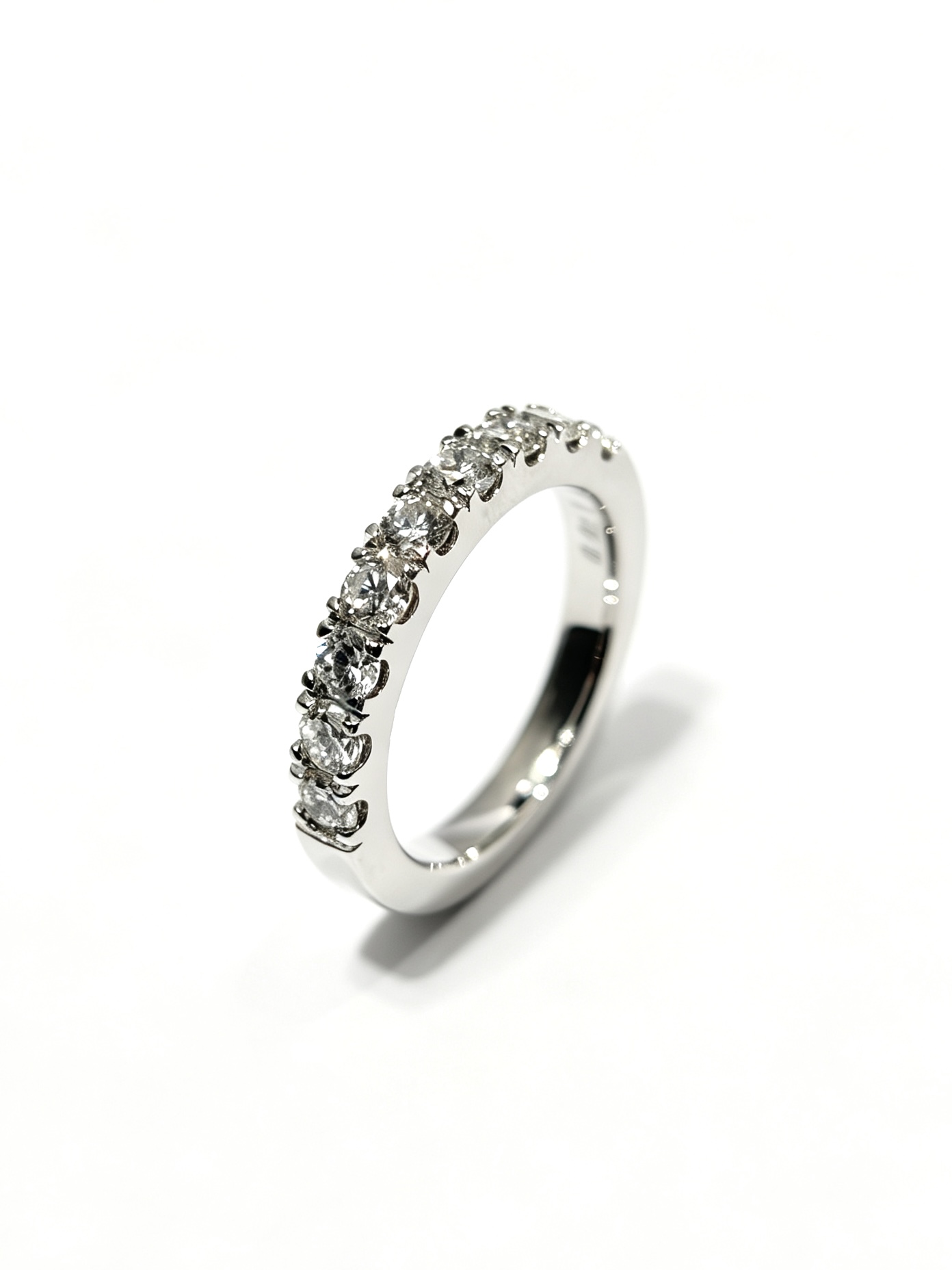
An engagement ring worn daily: platinum or 14K gold. A wedding band in a physical job: platinum or 14K with a low profile. A pendant: anything, including sterling silver, because nothing rubs against it. A tennis line with many small settings: white gold or platinum, because every setting is a place where a softer metal wears. Earring posts for sensitive ears: nickel-free gold, platinum or titanium.
Fine chains are the one case where a softer metal is often the right answer, because flexibility matters more than hardness on a chain that has to drape.
Where the metal decision goes wrong
Three mistakes that show up repeatedly.
Choosing silver for a heavy stone in a thin setting, where the prongs wear faster than the buyer expects. Choosing white gold without understanding that it needs re-plating. And choosing a metal for its colour while ignoring how the piece will be worn — a delicate silver ring on a working hand will need attention that a heavier alloy would not.
Each is avoidable by answering the three questions at the top of this article before looking at designs. The metal-specific checks for silver are set out in our sterling silver ring buying guide and the plating question in the notes on rhodium plating on silver.
FAQ
Is silver or gold better for jewelry?
Neither is universally better. Gold alloys are harder and hold fine settings longer, which matters on a ring worn daily. Silver costs far less, which allows a heavier design for the same budget, and works well on pendants and earrings where the metal is not rubbed. The choice follows wear pattern rather than prestige.
Which metal lasts longest?
Platinum, because it displaces rather than abrades, so a worn prong can be pushed back into place instead of having lost material. It requires no plating and holds settings longer than any other common jewellery metal, at the highest metal cost.
Does white gold tarnish?
White gold itself does not tarnish, but it is normally rhodium plated for a bright white appearance, and that plating wears at the contact points and needs renewing. What buyers see as tarnished white gold is usually worn plating showing the warmer alloy beneath.
What metal is best for sensitive ears?
A solid nickel-free alloy: yellow gold in most formulations, nickel-free white gold, platinum, or titanium. Higher karat does not automatically mean nickel-free, so ask for the nickel-free specification. A coating over a base metal does not solve it, because coatings wear through where the post contacts the skin.
Sources and further reading
- Assay Office — hallmarking and precious metal standards
- The Silver Institute — sterling silver alloys and properties
- ASTM B700 — electrodeposited silver coating specification
- CIBJO Blue Books — precious metal nomenclature
- International Gem Society — metal and setting reference
- International Gemological Institute — stone grading for set pieces
Next step: Tell us the piece, how often it will be worn and the stone’s replacement cost, and we will recommend the metal and finish that balance durability against budget, then confirm the specification before production. Silver, gold and platinum programmes are all supplied OEM/ODM. Contact vinico@zkzdiamonds.com or WhatsApp +86 135 3037 8229.
Part of our 925 sterling silver jewelry guide.
Recommended
 What is a good gift for a self-purchase to celebrate a milestone?Jewelry Guides & Sizing
 Jewelry Care Myths: What Actually Damages Silver and DiamondsCare & Cleaning
 Is Lab Grown Diamond Jewelry a Good Investment?Buying Guides
 What jewelry makes a good Sweet 16 or teen birthday gift?Jewelry Guides & Sizing
 What is the best jewelry gift for a 10th, 25th or 30th anniversary?Jewelry Guides & Sizing
 Engagement Ring Etiquette: Budgets, Sizes and SurprisesGifting & Occasions