How do I inspect a batch of silver rings when it arrives?
925 sterling silver jewellery, set with lab grown diamonds and made in our own Shenzhen workshop.
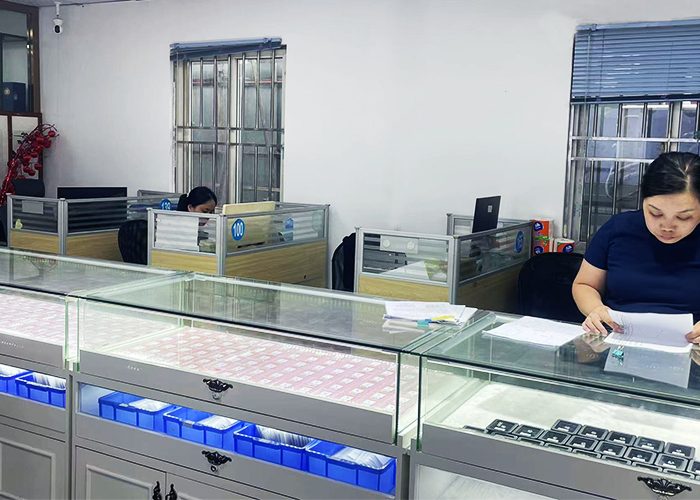
Talk · Production, QC & Testing (B2B)
A buyer receives a carton of silver rings from a factory and wants to inspect them properly before accepting the batch or paying the balance.
 ZKZ Editorial TeamMain answer · Product & gemmology desk
Inspect in a fixed order: packaging, count, markings, sizes, weight, stones, finish and function. Use the approved sample as your reference, work in good light and photograph every defect as you find it.
Before you open
Our advice Photograph the sealed carton and any damage. Keep the packing list and the order specification at hand.
Step by step
- Count: check quantity by style and size against the packing list.
- Marks: check the 925 stamp, logo and any other markings are present and legible.
- Size: check a sample of rings on a ring mandrel or with a gauge.
- Weight: weigh a sample and compare with the specified range.
- Stones: check each stone for chips, missing stones, colour match and secure setting.
- Finish: look for scratches, pits, rough edges and uneven plating.
- Function: check shanks, joins and any moving parts.
Record everything
- Write defects in a log with the style and size
- Take clear photographs with a scale
- Separate good, rework and reject pieces
It depends How many pieces to inspect depends on the batch size and your agreement with the factory. A sample is common for large batches, while small batches can be checked piece by piece.
Speak up quickly
Our advice Report problems promptly and in writing, with photographs, and refer to the specification you agreed. Do not use or sell rejected pieces until the issue is settled.
Keep a reference
- Keep an approved sample for comparison
- Store a few pieces from each batch for later checks
A tidy inspection area
Our advice Set up a clean table with a soft mat, a lamp, a loupe, a scale, a mandrel, trays for accepted, rework and rejected pieces and a notebook. Having everything ready makes inspection faster and more consistent, and it means that you will actually do it for every shipment rather than only when something looks wrong.
Uncertain We cannot say what level of defects is acceptable to you. Agree it with the factory beforehand.
Related reading: Is an ultrasonic cleaner safe for a silver diamond ring? · Will a Silver Ring Turn My Finger Green?
Sources
No external standard governs this question, so this answer is editorial advice from the ZKZ team and is labelled that way.
Fact = stated by the cited source. Our advice = editorial recommendation. Uncertain / it depends = limits of what can be said in general.
Other perspectives from the ZKZ team
Use a fixed order and good light. Compare each piece with the approved sample, not with your memory.
Report defects in writing, with photographs, and refer to the agreed specification. Keep the log.
Keep a few pieces from each batch as a record. They help in disputes and in future orders.
Have a different question? Ask our team, or browse more answers in Talk.
Related products
Related articles & topics
- How do I check stone matching across a production batch?Talk
- How do I compare two silver diamond pendants with the same stone size?Talk
- What does “vermeil” mean, and how is it different from gold-plated silver?Talk
- How do I clean a sterling silver ring at home, step by step?Talk
- What is lab-grown white sapphire, and how does it compare with a lab diamond in silver?Talk
- Silver Necklace Chains Compared: Box, Cable, Rolo, Snake and FigaroGuide
- Silver Purity Explained: 925, 999, 800 and Plated MetalsGuide
- Does 925 Sterling Silver Tarnish? Causes and FixesGuide
- Ear Stacking With Sterling Silver: A Practical GuideGuide
- Silver Bracelets Explained: Tennis, Chain, Bangle and CharmGuide
Continue with the jewelry guides guide for related answers and deeper context.
Recommended
 What is a good gift for a self-purchase to celebrate a milestone?Jewelry Guides & Sizing
 Jewelry Care Myths: What Actually Damages Silver and DiamondsCare & Cleaning
 Is Lab Grown Diamond Jewelry a Good Investment?Buying Guides
 What jewelry makes a good Sweet 16 or teen birthday gift?Jewelry Guides & Sizing
 What is the best jewelry gift for a 10th, 25th or 30th anniversary?Jewelry Guides & Sizing
 Engagement Ring Etiquette: Budgets, Sizes and SurprisesGifting & Occasions