How do I check stone matching across a production batch?
925 sterling silver jewellery, set with lab grown diamonds and made in our own Shenzhen workshop.

Talk · B2B / custom / OEM
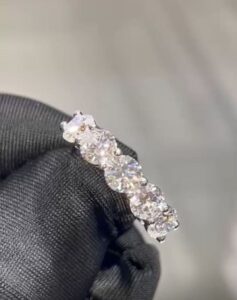
A brand receives a batch of 200 silver rings with small lab-grown diamonds. Some stones look a little different from others in colour or size. They want to know how to check matching in a systematic way.
 ZKZ Editorial TeamMain answer · Product & gemmology desk
Compare every piece against an approved master sample or reference set, under the same lighting and against the same background, and record the results. Check colour, size, shape, cut, clarity and setting height. Agree the tolerances with the factory before production, and sample a defined share of the batch, with a plan for what happens to failures.
Before production
- Approve a master sample. Keep it, and let the factory keep an identical one.
- Write the specification. State stone size, shape, colour range, clarity range and cut quality, with tolerances.
- Agree the inspection method. Decide how many pieces are checked, by whom and how, and what counts as a pass.
Setting up the check
- Use the same light. Use a daylight-equivalent lamp or a consistent light box, and the same place each time. Colour looks different in different lighting.
- Use a plain background. A white or neutral card helps you compare tone.
- Compare side by side. Place the test piece next to the master sample.
- Use magnification. A 10x loupe lets you see chips, inclusions and setting problems.
What to check
- Size and shape. Measure the diameter with a gauge and look for uneven shapes.
- Colour. Compare the face-up tone of each stone with the master. Look for a stone that is visibly more yellow or grey.
- Clarity. Check for visible marks at normal viewing distance, and agree what is acceptable.
- Cut and sparkle. Look for dull or "dead" stones.
- Setting. Check height, seating, prongs or beads and symmetry.
- Count. Check that the right number of stones is present.
Record and decide
Our advice Take photos of the master and the test pieces under the same conditions. Mark pieces as accepted, reworked or rejected, and write the reason. Agree in advance how rework or replacement is handled and who pays.
What the standards say
Uncertain We have not found a published standard that sets a tolerance for matching small stones in jewelry batches, so the tolerances here should be set by agreement between you and the factory. Grading reports apply to the individual stones they describe, and small stones are normally not graded one by one.
It depends A tight tolerance costs more, and a looser one may be fine for small accent stones. What is acceptable depends on the product, the price and your customers.
Related reading: Jewelry Quality Control Checklist for Production Orders · Jewelry Sample Approval Checklist Before Production
Sources
Fact = stated by the cited source. Our advice = editorial recommendation. Uncertain / it depends = limits of what can be said in general.
Other perspectives from the ZKZ team
The factory should check stones before setting, when it is easy to swap them. After setting, replacing a stone costs time and risks damage to the metal.
Ask for stones to be sorted into matched lots by size and colour, and for each lot to be used for one production run, so pieces within a batch match.
Make sure the description of the stones in your listing is true for the whole batch, including origin, size and quality range, and not only the master sample.
Have a different question? Ask our team, or browse more answers in Talk.
Related products
Related articles & topics
- How can I check plating thickness and adhesion on a production sample?Talk
- How do I split a first order across styles, sizes and plating colours?Talk
- What stone size suits a small hand or slim finger?Talk
- Should a pendant and earrings match in stone size for a set?Talk
- What should I do if a stone looks loose in its setting?Talk
- 925 Sterling Silver vs Sterling Silver: Is There a Difference?Guide
- 2026 Lab-Grown Diamond Industry Outlook: Prices, Supply and Jewelry DemandGuide
- What Does 925 Mean on Silver Jewelry?Guide
- Lab Diamond Necklace Lengths and LayeringGuide
- Why Does 925 Silver Turn Skin Green? (And How to Stop It)Guide
Recommended
 What is the difference between GIA, IGI and in-house reports for lab-grown diamonds?Talk
 What bracelet size should I order if I have a small, medium or large wrist?Talk
 What are flat-back studs, and who needs them for cartilage or sleeping?TalkWhat jewelry suits an engagement-party or bridal-shower gift?Talk
 Can nickel-free silver jewelry still cause a reaction?Talk
 What are the black spots on my silver jewelry, and are they damage or tarnish?Talk