Lab Grown Diamond Tennis Necklaces: What to Check Before You Buy
925 sterling silver jewellery, set with lab grown diamonds and made in our own Shenzhen workshop.
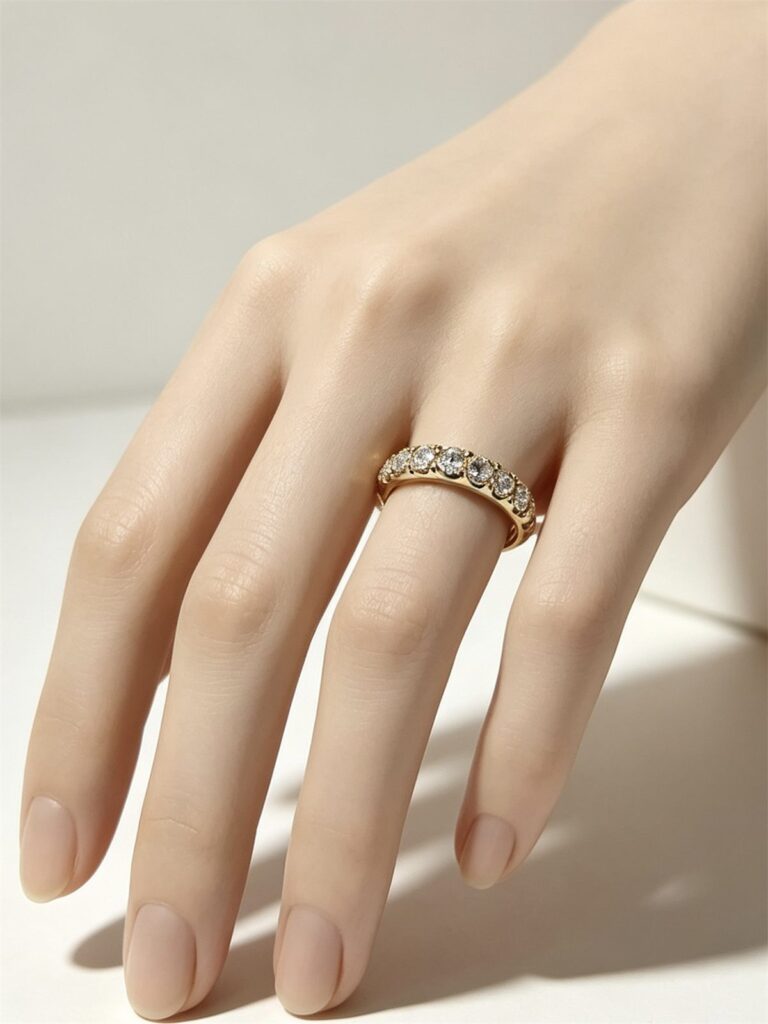
The first sign that a tennis necklace has a problem is usually a stone noticed on a tablecloth, or a clasp that opens when the wearer turns their head. By then the piece is in the shop rather than on the neck. Almost all of those failures trace back to a decision made at order stage: a clasp specified for a lighter piece, an end link that takes the entire load, or a setting type chosen for appearance rather than for how the line articulates. This is an inspection guide, ordered the way you would actually check a piece before buying.
Last updated:
What should you check first on a tennis necklace?
The clasp, then the two end links, then whether the line articulates smoothly.
Those three points carry the load and take the movement, and they fail before anything else does. A clasp that does not fully engage, an end link that is soldered rather than articulated, or a line that hangs stiff all predict the same outcome: a repair within the first two years. Stone setting and matching matter, but they are second-order checks compared with these.
For a buyer specifying a new piece rather than inspecting a finished one, the same three points belong in the specification before anything else is agreed.
What “tennis” actually means, and how carat is quoted
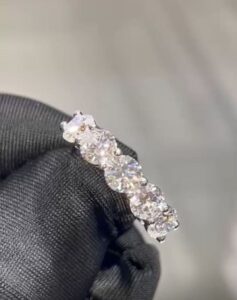
A tennis necklace is a continuous line of near-equal stones, traditionally in four-prong basket settings.
The name comes from construction and history rather than from a specification. What defines the piece practically is that the stones are close in size along the whole run, which is the hardest matching problem in jewellery: any stone that is visibly different in size or colour breaks the line, and the eye finds it immediately. Total carat weight is the sum across the run, so a long necklace with smaller stones can carry a larger total than a short one with bigger stones.
Ask for total weight, stone count, the size of each stone and the tolerance within which they are matched. The tolerance is the number that predicts how the line will read.
Setting types and what they do to wear
Prong settings show more stone and collect more on the neck; bezels protect and read more solidly.
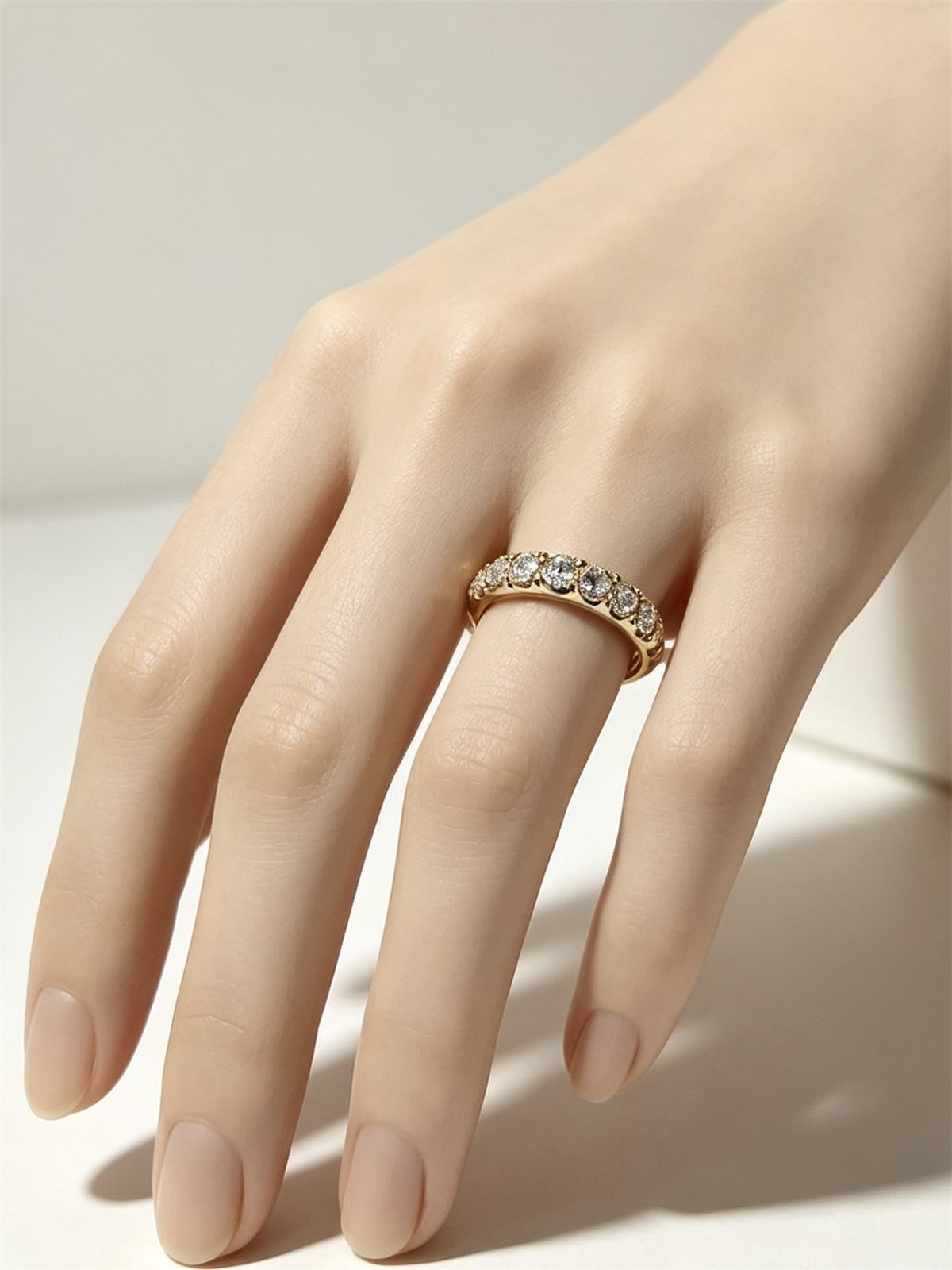
Four-prong basket settings are the traditional construction for a tennis line: they expose the stone, let light through, and depend on the prongs staying uniform and tight. Three-prong and shared-prong settings reduce metal between stones and can make the line look more continuous. Bezel settings enclose each stone, protecting the girdle and reducing snagging, at the cost of hiding the stone’s outline.
For a piece worn against the skin, each claw is a potential snag on fine fabric or hair. On our inspection bench, prong tips are finished and checked for sharpness before the piece is packed.
The clasp: the weakest point on the piece
Size the closure to the weight of the whole line, not to the width of the last stone.
A box clasp with a figure-eight safety is the conventional choice for a continuous line, because a box clasp carries load across a broad internal tongue and closes invisibly inside the line. A lighter mechanism can be adequate for a short piece with small stones but is a liability on a long, heavy one. Whatever the closure, a secondary safety should be present and should be independently operable.
The check takes seconds: close the clasp, apply gentle opposing tension, and confirm the safety engages without force and releases without a tool.
Length and drape
A continuous line has to be sized to the neckline it will sit on, not to a standard length.
A tennis necklace that is too long for its intended neckline drops into the hollow of the collarbone and rotates forward, so the wearer spends the evening turning it back. Too short and it sits above the natural resting line, which makes the stones face upward rather than outward. The relevant measurement is not just the neck circumference but the length at which the line finds a stable resting position on the intended wearer.
For production, the safest route is to sample at the intended length and confirm the resting position on a person rather than on a measuring tape.
Link structure and articulation
The line should move at every connection, and the ends should move most.
Each connection between baskets is a hinge. If a link is stiff, the neighbouring connections take more of the movement, and they wear faster; if the end links are soldered or over-finished, the clasp takes the load directly. Lay the necklace flat, then lift it by one end: a well-built line drapes as a smooth curve, while a stiff link shows as a kink or a flat segment.
This is also the check that reveals compatibility with the wearer: a piece that hangs in a smooth curve when lifted follows the body rather than fighting it.
Stone matching across the run
Matching is what you are paying for on a continuous line.
Colour and size should be consistent along the whole length, with no single stone reading darker or larger than its neighbours. On a graduated riviere the change should be gradual rather than stepped. Checking under a daylight lamp beats checking under shop lighting, which is designed to flatter stones and hides small differences in colour.
Where a line has been assembled from more than one parcel, ask which stones are from which selection. It is not a defect, but it is useful when a stone has to be replaced later and has to match the run.
What to inspect on delivery
Six checks carried out before the piece is worn or dispatched.
One: every stone seated and immobile under a light touch. Two: prong tips uniform and free of sharp edges. Three: clasp and safety operating without force. Four: the line lying flat with no twist. Five: total length and stone count matching the order and the specification sheet. Six: metal weight and hallmarking consistent with what was ordered.
Documentation should travel with the piece: stone documentation, the metal specification and the size details. That record is what makes a replacement or a resizing job possible later. Length, in particular, should be confirmed against the intended wearer using the same approach as the necklace length guide, because a continuous line cannot be adjusted after production.
Care and storage
Store flat and separately, and clean the line rather than just the stones.
A tennis necklace should be stored flat, in its own compartment, with the clasp closed and the safety open. Storing it coiled in a shared box presses the prongs against other pieces and is a common source of bent claws. Cleaning with warm water and mild soap, plus a soft brush along the line to lift skin oils from the settings, keeps the stones returning light.
Avoid chlorinated water and avoid ultrasonic cleaning unless the manufacturer confirms the settings tolerate it.
Price factors specific to a tennis necklace
Stone count, matching tolerance and clasp quality move the price more than any single grade.
Across a run of dozens or hundreds of stones, matching is the constraint that determines how much of a parcel can be used, and tighter tolerance reduces yield. Setting labour scales with stone count rather than with weight, so a line of many small stones can cost more to make than one with fewer larger stones. The clasp and the safety are small line items that decide whether the piece avoids a repair.
Buyers comparing quotes should compare stone count, matching tolerance, setting type and clasp class — not the total carat weight alone.
FAQ
What is a tennis necklace?
A continuous line of near-equal diamonds, traditionally set in four-prong baskets, running the full length of the necklace. The defining feature is consistency: every stone should match its neighbours in size and colour so the line reads as one ribbon rather than a series of individual stones.
How many carats are in a tennis necklace?
There is no standard figure, because total carat weight is the sum across the run and depends on length, stone count and individual stone size. A long necklace of smaller stones can outweigh a short one of larger stones. Ask for total weight, stone count and the size of each stone rather than relying on the total alone.
Is a lab grown diamond tennis necklace durable?
The stones are as hard as mined diamonds and are not the durability limit. The points that decide longevity are the clasp, the end links and how each connection articulates. Specify a box clasp with a figure-eight safety, articulated end links and uniform prongs, and a well-built line will last for years of regular wear.
How should a tennis necklace fit?
It should sit at a stable resting position on the intended neckline without rotating forward or riding up. Because the line is continuous, length has to be sized to the wearer rather than chosen from a standard size. Confirm the resting position on a person at the sample stage, not on a measuring tape.
Sources and further reading
- GIA 4Cs — carat weight, cut and the factors behind appearance
- GIA Report Check — verifying diamond documentation
- International Gemological Institute — diamond grading and reports
- Assay Office — precious metal standards and hallmarking
- The Silver Institute — silver alloy behaviour in jewellery
- CIBJO Blue Books — diamond and jewellery nomenclature
Next step: Send the length, stone size and matching tolerance you are working to, and we will confirm stone count, clasp class and setting type, then sample the line before the order runs so the drape is approved on a person rather than on a drawing. Ready-stock and OEM/ODM tennis programmes are both available. Contact vinico@zkzdiamonds.com or WhatsApp +86 135 3037 8229.
Part of our sterling silver necklaces and pendants guide.
Recommended
 Does a lab-grown diamond need Kimberley Process paperwork when shipped?Lab Grown Diamond Guide
 Is it better to buy a loose lab-grown diamond and set it, or buy finished jewelry?Lab Grown Diamond Guide
 Is Lab Grown Diamond Jewelry a Good Investment?Buying Guides
 What is a “hearts and arrows” cut, and is it available in lab-grown stones?Lab Grown DiamondsDoes a lab-grown diamond need an appraisal, and what does one include?Lab Grown Diamonds
 Custom Lab Grown Diamond Jewelry: A Step-by-Step GuideCustom Jewelry