Silver vs Gold Settings for Lab Diamond Necklaces
925 sterling silver jewellery, set with lab grown diamonds and made in our own Shenzhen workshop.
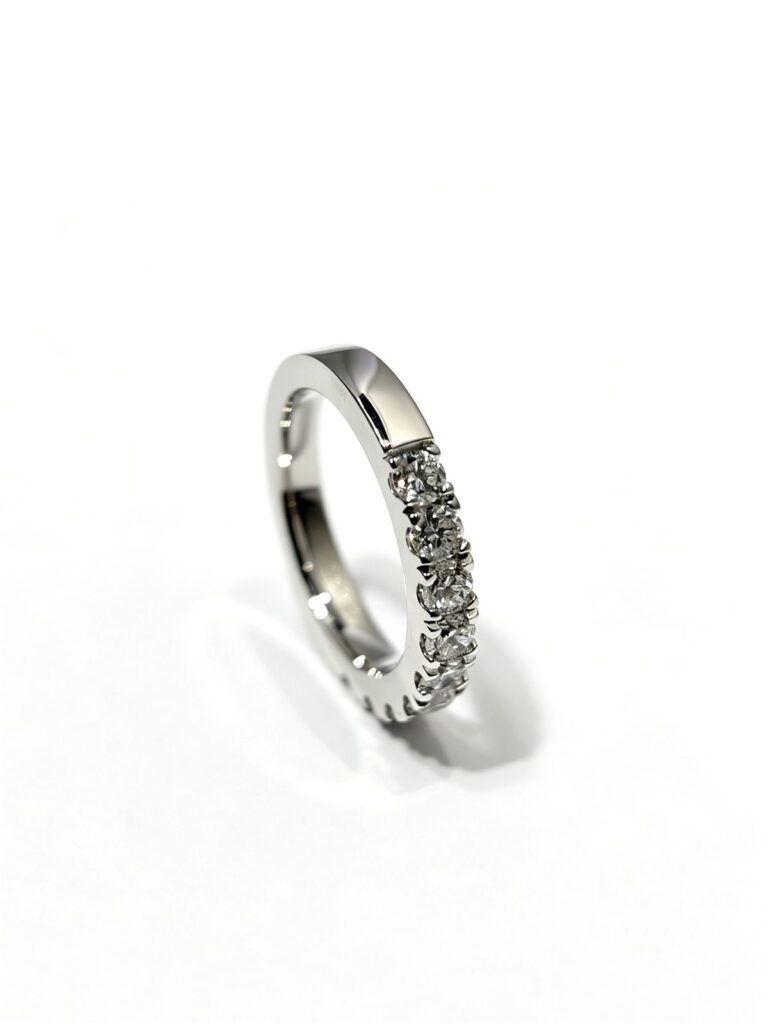
The belief that silver is too soft to hold a diamond safely is repeated often enough to sound like fact. It is not. A 925 sterling setting holds a diamond perfectly well in normal wear, and many pieces sold every day prove it. What genuinely changes with the metal is wear rate at the prongs, how the surface ages, and how much of the budget is left for the stone. Those three things, rather than safety in the abstract, are what should decide the specification.
Last updated:
Is silver good enough for a diamond necklace?
Yes, for most pendant and light chain designs, provided the setting is built properly.
Sterling silver is an alloy of 92.5 percent silver with copper or a similar addition, which raises its hardness well above pure silver. A diamond is held by mechanical retention: the metal is pushed over the girdle or enclosed in a bezel. Silver does that job. The limits appear in pieces that take continuous abrasion — a heavy line necklace worn daily against the skin — where a softer metal wears at the prongs faster and needs inspection more often.
The practical rule: silver suits pendants, light chains and cost-sensitive programmes; for a heavy continuous line holding valuable stones, gold is the better carrier.
Where the “silver is too soft” idea comes from
From prong wear and from settings that were made thin to save metal.
A prong is a small mass of metal, and a thin prong in any material wears faster than a thick one. Thin prongs plus a softer alloy produce the loose stone that starts the story. The same failure appears in light gold settings made to the same thinness. When a silver setting is built with adequate prong thickness and a well-formed seat, the stone stays put.
The second source is tarnish, which is a surface reaction rather than a structural problem. Buyers see a darkened piece and conclude the metal has failed. It has not; it has oxidised.
What actually differs between 925 silver and gold alloys
Hardness, tarnish behaviour, colour stability and price.
| Variable | 925 sterling silver | 14K / 18K gold |
|---|---|---|
| Hardness | Softer than gold alloys used for settings | Harder, especially white gold alloys |
| Tarnish | Reacts with sulphur compounds and darkens | Yellow and rose gold do not tarnish; white gold is rhodium plated |
| Colour stability | Colour stays, surface tone changes with patina | Rhodium on white gold wears over time and needs re-plating |
| Prong wear on daily wear | Faster; more frequent inspection | Slower; longer inspection intervals |
| Hallmarking | 925 or sterling mark | Carat mark, for example 585 or 750 |
| Share of a piece’s cost | Low | High, and it moves with metal prices |
White gold or silver for diamonds?
Visually similar, practically different, and the difference is the plating.
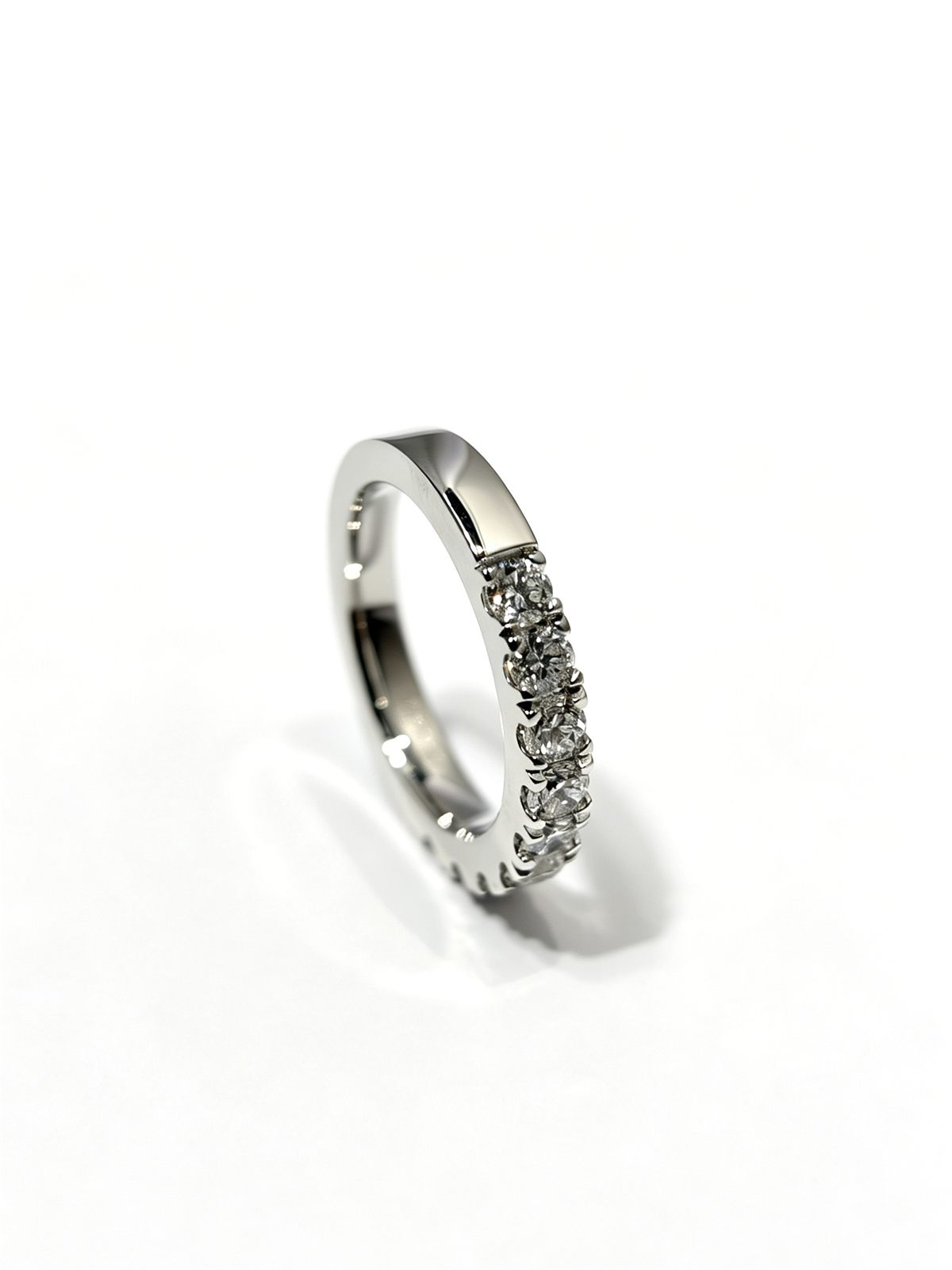
White gold is greyish in its natural alloy state and is normally rhodium plated to reach the bright white that buyers expect. That plating wears at the points of contact — the clasp, the area against the neck, the edges of the setting — and needs renewing periodically. Silver is already white and does not lose a coating, though it develops a patina that some wearers like and others want removed.
The practical trade is between re-plating a white gold piece and polishing a silver one. Neither is a failure; both are scheduled maintenance, and the interval depends on how often the piece is worn.
When silver is the right answer
Pendants, lighter stones, design-led pieces and volume programmes.
Silver keeps the metal cost low, which leaves more of the budget for the stone or for stone count. It suits pendants because the setting is not exposed to continuous abrasion, and it suits fashion-led pieces where the design changes before the metal has time to wear. For a brand building an entry price point without compromising the stone, silver is the obvious metal.
It also engraves, plates and finishes well, which makes it practical for personalised and private-label work.
When gold is the right answer
Heavy lines, valuable stones and pieces intended to be worn daily for years.
Where the setting carries continuous load — a tennis or rivière necklace — harder alloys hold their shape longer and the prongs need attention less often. For a stone whose replacement cost is significant, the incremental cost of the metal is small against the risk of a setting that needs rebuilding. Gold also holds resale value in a way silver does not, which matters for certain buyers.
Between alloys, 14K is the usual working compromise: harder than 18K in most white gold formulations and less expensive, while 18K accepts a higher polish and is the traditional choice for high-value pieces.
What to verify on the specification
Five lines that decide how the piece behaves in wear.
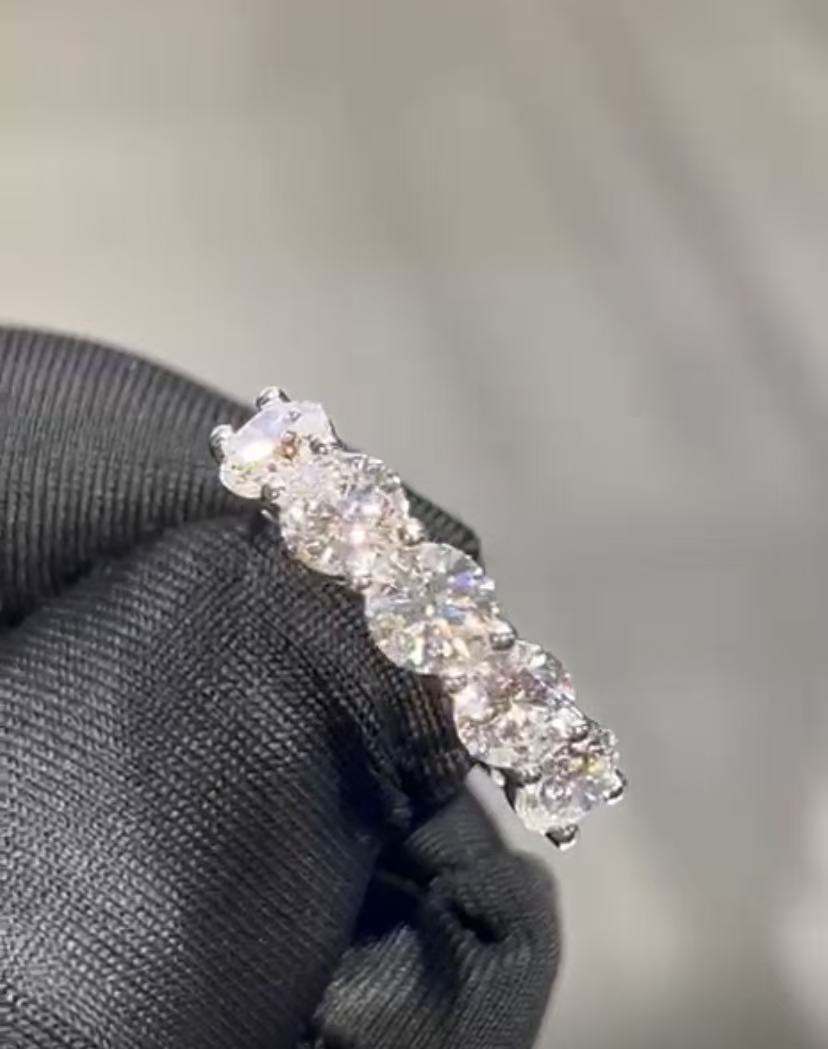
One: the alloy and its hallmark, 925 for silver and the carat mark for gold. Two: prong thickness and the number of prongs, since this is what holds the stone. Three: whether the piece is plated, and with what. Four: the setting type, because a bezel protects the girdle in a way prongs do not. Five: the expected maintenance interval for the metal and wear pattern.
For silver going into a consumer piece, ask about tarnish resistance as well — alloy choice and finish affect how quickly the surface darkens.
Care differences between the two metals
Silver needs more frequent light cleaning; gold needs plating maintenance instead.
Silver darkens faster in humid air and in contact with sulphur compounds, so a silver necklace benefits from being wiped after wear and stored dry. Gold does not tarnish, but rhodium plating on white gold wears and needs renewal, and the worn areas show as a faintly warmer grey before they are re-plated. Both metals should be kept away from chlorine, which attacks alloys, and both should be checked for prong tightness at roughly the same interval.
Neither metal should be cleaned with abrasive polishes, which round off prong tips over time. If the wearer reacts to certain metals, the guidance on hypoallergenic silver explains which patterns point to the alloy rather than to the surface finish.
FAQ
Is silver good for diamond necklaces?
Yes, for pendants, light chains and design-led pieces. Sterling silver is hard enough to hold a diamond securely when the prongs are properly formed and thick enough. The limitation is wear rate: on a heavy line worn daily, prongs in a softer alloy need inspection more often than the same design in a gold alloy.
White gold or silver for diamonds?
They look similar but wear differently. White gold is normally rhodium plated for colour, and that plating wears at contact points and needs re-plating. Silver is white throughout and develops a patina instead of losing a coating. Choose based on which maintenance you prefer, not on appearance.
Does silver make diamonds look worse?
No. The stone’s appearance is set by its own cut, colour and clarity and by the setting style, not by the metal. What the metal changes is the contrast around the stone: a white metal makes a colourless stone read cooler, while yellow gold warms the surrounding tone and can flatter a coloured stone.
How often does a silver setting need checking?
For a piece worn daily, inspect the prongs every six to twelve months and have them tightened or re-tipped if a stone moves under light finger pressure. The interval is shorter for silver than for a gold alloy because the metal wears faster, and shorter again for a heavy piece resting against the skin continuously.
Sources and further reading
- The Silver Institute — sterling silver alloys and properties
- ASTM B700 — electrodeposited silver coating specification
- Assay Office — hallmarking for silver and gold
- GIA — treatments and disclosure relevant to setting work
- CIBJO Blue Books — precious metal nomenclature
- International Gem Society — metal and setting reference
Next step: Tell us the stone value, the intended wear pattern and your target price point, and we will recommend the metal and setting construction — alloy, prong thickness, plating and setting type — that will hold the stone for the life you expect from the piece. Silver and gold programmes are both supplied OEM/ODM. Contact vinico@zkzdiamonds.com or WhatsApp +86 135 3037 8229.
Part of our sterling silver necklaces and pendants guide.
Recommended
 Does a lab-grown diamond need Kimberley Process paperwork when shipped?Lab Grown Diamond Guide
 Is it better to buy a loose lab-grown diamond and set it, or buy finished jewelry?Lab Grown Diamond Guide
 Is Lab Grown Diamond Jewelry a Good Investment?Buying Guides
 What is a “hearts and arrows” cut, and is it available in lab-grown stones?Lab Grown DiamondsDoes a lab-grown diamond need an appraisal, and what does one include?Lab Grown Diamonds
 Custom Lab Grown Diamond Jewelry: A Step-by-Step GuideCustom Jewelry