Why do two similar lab diamond rings have very different prices?
925 sterling silver jewellery, set with lab grown diamonds and made in our own Shenzhen workshop.
Talk · Buying & value
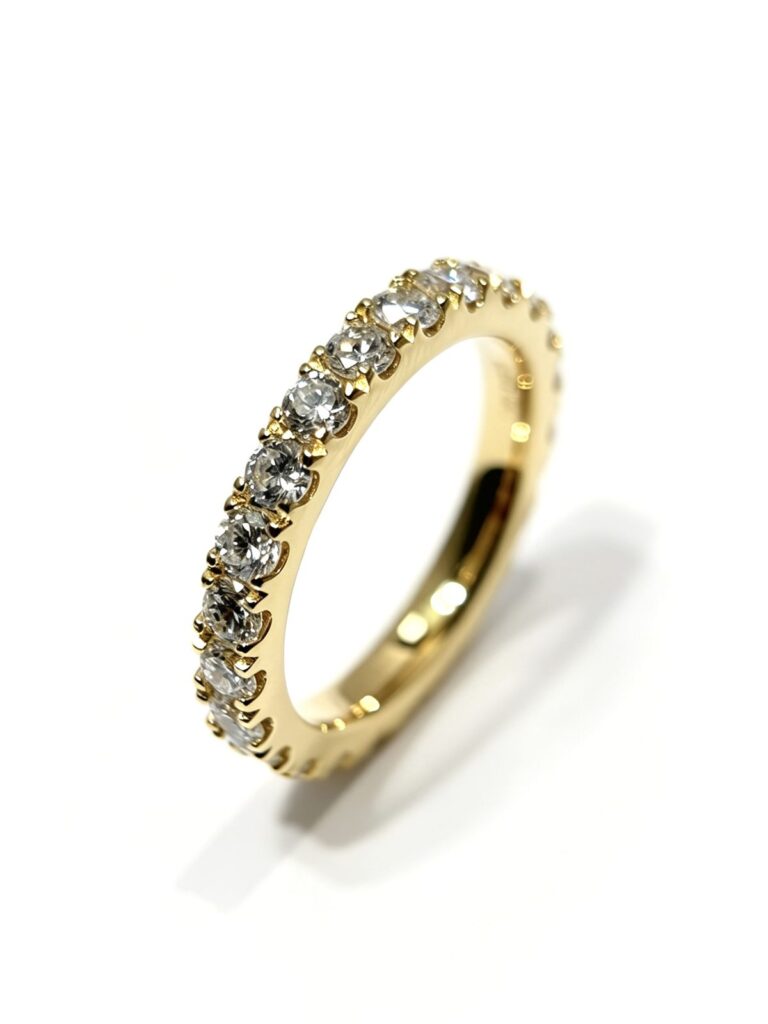
A shopper compares two sterling silver rings with what look like the same one-carat lab-grown diamond. One costs almost double the other. The photos look similar, and the shopper wants to know what accounts for the gap and how to compare fairly.
 ZKZ Editorial TeamMain answer · Product & gemmology desk
Similar photos hide differences you cannot see. The usual causes are the stone's exact weight, colour, clarity and cut quality, whether it has an independent report, the amount and quality of the metal, the finish and plating, the setting's complexity, and what the seller adds for service and warranty. Compare the written specifications, not the pictures.
Differences inside the stone
Fact Since October 2025 GIA classifies lab-grown diamonds as "Premium" (D colour, VVS clarity or better, excellent cut finish) or "Standard" (E to J colour, VS clarity or better, very good finish). Stones below those limits get no GIA assessment. A stone that is Premium can be priced above one that is Standard.
Fact Weight must be stated accurately under the FTC Guides, and a decimal weight should be accurate to the last decimal place. So "1.00 ct" and "0.95 ct" are different stones, and a figure rounded up can hide a gap in size. Per-carat prices also rise at round-number sizes.
Our advice Cut quality changes how bright the stone looks, and it is not visible in a listing photograph. A report with cut or finish information is more useful than any adjective.
Differences around the stone
- Metal weight and thickness. A heavier band uses more silver, takes more labour and is less likely to bend.
- Finish and plating. A thicker or better-prepared rhodium layer costs more to apply.
- Setting. Prongs, bezels and pave work differ in how much time they take, and a secure setting is not obvious from a picture.
- Stamp and quality control. Some sellers inspect each piece and others do not.
Differences in what you get with the ring
- A report from a named laboratory, or none.
- The return policy, warranty and resizing offer.
- Packaging, insurance on delivery and after-sales service.
- The seller's own margin: brand, location, and advertising costs.
How to compare fairly
- Put the two listings side by side with weight, colour, clarity, cut, laboratory, metal and finish for each.
- Find the details that are missing from the cheaper one and ask for them.
- Compare the return and warranty terms.
- Decide what you value: a better stone, a stronger setting or a better service.
It depends A higher price does not guarantee a better ring, and a lower price is not always a bargain. What matters is whether the specifications and terms justify the difference.
Uncertain We cannot say how much each factor adds, because pricing differs by seller and changes over time.
Related reading: How Much Do Lab Grown Diamonds Cost? Price Factors Explained · How to Choose a Lab Diamond: The 4Cs Without the Jargon
Sources
- GIA, Updated laboratory-grown diamond services (launched October 1, 2025)
- GIA, Laboratory-grown diamond assessment criteria chart (PDF)
- 16 CFR 23.18, FTC Jewelry Guides: misrepresentation of weight and "total weight"
- FTC, In the Loupe: Advertising Diamonds, Gemstones and Pearls
Fact = stated by the cited source. Our advice = editorial recommendation. Uncertain / it depends = limits of what can be said in general.
Other perspectives from the ZKZ team
Ask each seller the same six questions in writing: weight, colour, clarity, report, metal fineness and plating. A seller who answers fully is usually a safer purchase.
Decide your priorities before looking at price. If you wear the ring daily, a stronger setting and good cut often matter more than an extra step in colour.
If one listing says only "diamond" and the other says "laboratory-grown diamond", they are not comparable until the origin wording is clear. Check weight claims for rounding.
Have a different question? Ask our team, or browse more answers in Talk.
Related products
Related articles & topics
- Will a Lab-Grown Diamond Hold Its Resale Value?Talk
- Should I insure a sterling silver lab-diamond ring, and what value should I declare?Talk
- What colour grade is enough for a lab diamond set in white-plated silver?Talk
- Is a Lab-Grown Diamond on Sterling Silver a Good Engagement Ring for Daily Wear?Talk
- Can a seller call a lab-grown diamond "real" or "conflict-free"?Talk
- Personalised Lab Diamond Pendants: Initials, Birthstones and EngravingGuide
- Silver Engagement Rings With Lab Diamonds: Pros and ConsGuide
- Caring for 925 Sterling Silver Jewelry with Lab Grown Diamond SettingsGuide
- Lab Grown Diamond Tennis Necklaces: What to Check Before You BuyGuide
- How Much Do Lab Grown Diamonds Cost? Price Factors ExplainedGuide
Recommended
 What is the difference between GIA, IGI and in-house reports for lab-grown diamonds?Talk
 What bracelet size should I order if I have a small, medium or large wrist?Talk
 What are flat-back studs, and who needs them for cartilage or sleeping?TalkWhat jewelry suits an engagement-party or bridal-shower gift?Talk
 Can nickel-free silver jewelry still cause a reaction?Talk
 What are the black spots on my silver jewelry, and are they damage or tarnish?Talk