Caring for a Lab Diamond Necklace: Cleaning and Storage
925 sterling silver jewellery, set with lab grown diamonds and made in our own Shenzhen workshop.
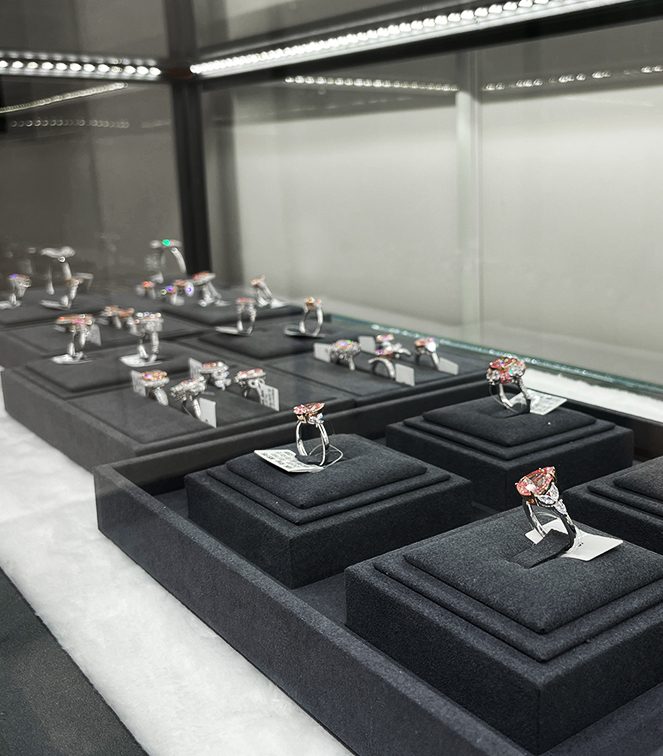
The necklace comes back with a complaint that the stones have gone dull, and the stones are fine. Almost always the cause is a film of skin oils, soap residue and cosmetics on the pavilion — the underside of the stone, where light enters and leaves. The film scatters light before it reaches the eye, so the whole piece reads flat. The second most common arrival is a necklace that looks perfect and has a clasp that has worn halfway through. Both are fixed by the same routine, and neither requires sending the piece away.
Last updated:
Why a diamond necklace goes dull
Because the underside of the stone is dirty, not because the stone has changed.
A diamond does not cloud, scratch easily or lose its brilliance with age. What changes is the surface it sits on and the film on its pavilion. Skin oils, hand cream, hair products and soap residue collect in the space under the setting, and because that area is enclosed by the setting and the neck, it is the one part of the necklace that never gets accidentally wiped clean.
That is why a necklace can look bright under shop lighting and dull at home three months later, and why cleaning the top of the stone alone makes little difference.
What actually damages a diamond necklace
Chemicals, impact, snagging and storage — in that order of frequency.
Chlorine and harsh cleaning agents attack metal alloys and plating, and they are the most common avoidable cause of damage. Physical impact can chip a diamond along its girdle, since hardness does not equal toughness. Snagging on knitwear and hair bends prongs and is the usual reason a stone starts to move. Storage causes more damage than owners expect: a necklace coiled against other pieces presses prongs flat and scratches metal across the whole line.
| Risk | What it does | Prevention |
|---|---|---|
| Chlorine and cleaners | Attacks alloys and plating | Remove before swimming and cleaning |
| Impact | Chips the girdle | Remove for sport and heavy work |
| Snagging | Bends prongs, loosens stones | Fewer prongs, or a bezel setting; check after snags |
| Storage contact | Pressed prongs, scratched metal | Flat, separate compartment |
| Cosmetics | Film on the pavilion | Apply products before putting the piece on |
The cleaning routine, step by step
Warm water, mild soap, a soft brush, and a careful dry — in that order.
One: close the clasp and check for any loose stone before wetting the piece. Two: fill a bowl with warm water and a drop of mild washing-up liquid or hand soap; avoid anything with abrasives, bleach or ammonia if the piece is silver or plated. Three: soak for five to ten minutes to soften the film. Four: brush gently with a soft-bristled brush — a clean makeup brush works — paying attention to the underside of each stone and behind the setting. Five: rinse in clean warm water, or hold under a running tap with the drain closed. Six: pat dry with a lint-free cloth and leave to air for an hour before storing.
Do not use toothpaste, baking soda or abrasive polishes. They scratch metal and round off prong tips, which is the opposite of what a worn piece needs.
Ultrasonic and steam cleaning
Effective, and not safe for every necklace.
Ultrasonic cleaning removes the film thoroughly and is standard in workshops. It is not appropriate for every piece: stones with fractures, glued settings, emerald and other treated stones, and some plated finishes should not go into an ultrasonic tank. A diamond necklace with sound stones and standard prong settings normally tolerates it, but the decision belongs with whoever built the piece and knows the settings.
Steam cleaning is gentler on settings and does not require removing the piece from the neck first, which is why jewellers use it for a quick finish.
Cleaning by metal
Silver and gold need different treatment, and plated pieces need the most care.
Silver darkens through a surface reaction, and silver dips will strip plating and can dull some finishes, so a silver necklace with a plated or oxidised finish should be cleaned with soap and water only. Yellow and rose gold do not tarnish and tolerate the same routine. White gold depends on its rhodium plating, which soap and water preserve and abrasives wear away.
Where a silver piece is not plated, a silver polishing cloth used lightly will remove tarnish. Keep it away from the diamond settings so the cloth does not catch on prongs.
Storage that protects the piece
Flat, separate, dry, and with the clasp closed.
A necklace should be laid flat in its own compartment or pouch rather than coiled in a shared box. Coiling forces the line into a circle, which presses the prongs of adjacent settings against one another and against the chain. If the piece has to travel, wrap it in a soft pouch and keep it away from harder jewellery, which is what actually scratches metal.
Humidity matters for silver. A dry drawer with a tarnish-inhibiting strip slows the patina considerably compared with leaving the piece out on a tray. Our care and sizing notes cover the storage approach for each metal type.
The prong check
The five-minute inspection that prevents most stone losses.
Once every few months, hold the necklace up to a light and look along the line rather than at it. Each stone should sit level, each prong should be uniform in size and finish, and no gap should be visible between the prong tip and the stone. Then run a fingertip lightly across each stone: a stone that moves under light pressure is loose, and loose means the setting needs attention before it becomes a loss.
On a continuous line, check the two end links and the clasp at the same time. They take the most load and are the first to show wear.

When to send the piece for service
Four triggers that mean it is a jeweller’s job rather than a home one.
Send the piece if any stone moves under light pressure, if plating has worn through to show a different colour underneath, if the clasp does not engage firmly at every attempt, or if a link is stiff enough to feel when lifting the line. Each of these gets more expensive with time: a loose stone becomes a lost stone, and a stiff link transfers load until a neighbour opens.
Beyond those triggers, an annual inspection covers everything, and the routine in this guide covers everything in between.
FAQ
How do I clean a diamond necklace at home?
Soak it in warm water with a drop of mild soap for five to ten minutes, brush gently with a soft brush focusing on the underside of each stone and behind the setting, rinse in clean warm water and dry with a lint-free cloth. Avoid toothpaste, baking soda and abrasive polishes, which scratch metal and round off prong tips.
Can I use vinegar on diamond earrings or necklaces?
Vinegar is mildly acidic and will not damage a diamond, but it attacks plated finishes and can dull the metal around the settings, and it does not remove oil films as well as soap. Warm water with mild soap is safer for the piece as a whole and does the job with less risk to the metal.
How should I store diamond necklaces?
Flat, in their own compartment or pouch, with the clasp closed. Coiling a necklace in a shared jewellery box presses the prongs of adjacent settings against each other and scratches metal along the line. For silver, add a tarnish-inhibiting strip and keep the drawer dry.
How often should a diamond necklace be professionally checked?
Once a year for a piece in regular wear, and sooner if any stone moves under light finger pressure, if the clasp feels soft, or if a link has become stiff. A loose stone and a worn clasp are both inexpensive to correct early and much more costly once a stone is lost or a line has to be rebuilt.
Sources and further reading
- The Silver Institute — silver tarnish and alloy behaviour
- ASTM B700 — electrodeposited silver coatings
- Assay Office — precious metal standards and care guidance
- GIA — why certain stones should not be cleaned ultrasonically
- CIBJO Blue Books — jewellery terminology
- International Gem Society — gemstone and jewellery care reference
Next step: If a piece has a loose stone, a worn clasp or plating that has gone through, send us the specification and a photograph and we will tell you whether it needs a repair or a rebuild, and what the replacement stones would have to match. Ready-stock pieces, repairs and OEM programmes are all handled. Contact vinico@zkzdiamonds.com or WhatsApp +86 135 3037 8229.
Part of our 925 sterling silver jewelry guide.
Recommended
 Does a matte, brushed or satin finish on silver wear differently from polish?Care & Cleaning
 How are solder joints on silver jewelry repaired without damaging stones?Care & CleaningWhat is a good gift for a self-purchase to celebrate a milestone?Jewelry Guides & Sizing
 Jewelry Care Myths: What Actually Damages Silver and DiamondsCare & Cleaning
 Is Lab Grown Diamond Jewelry a Good Investment?Buying Guides
 How do I repair a broken bracelet clasp or replace it with a better one?Care & Cleaning