What should I ask about a “free diamond upgrade” or trade-in offer?
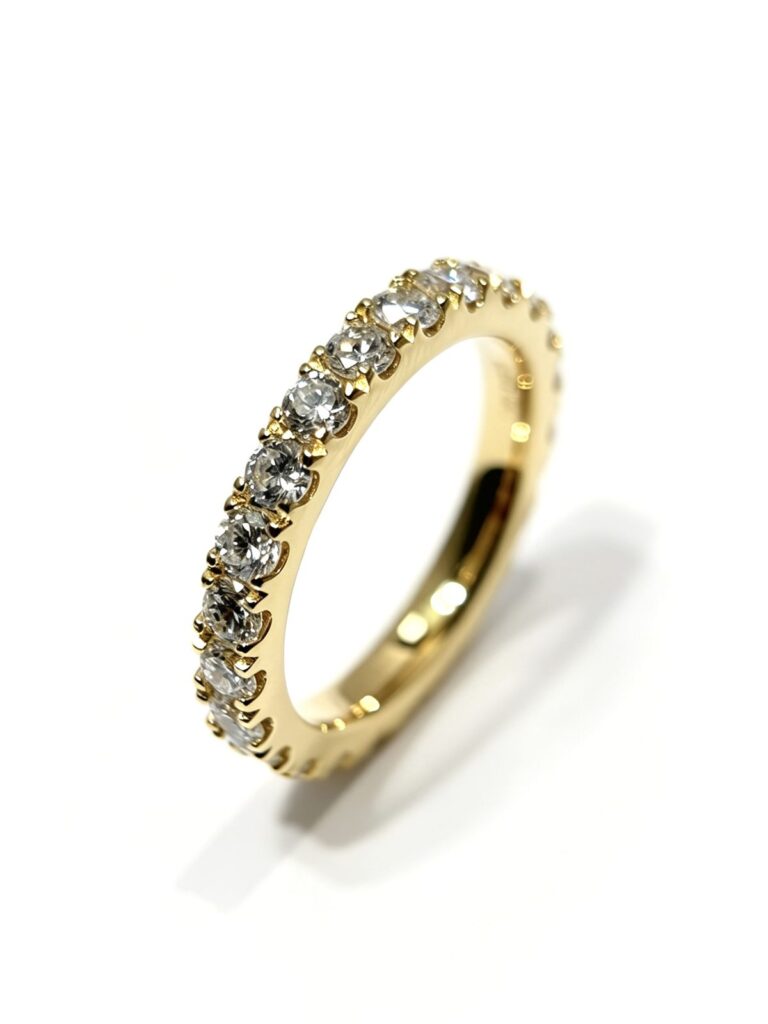
925 sterling silver jewellery, set with lab grown diamonds and made in our own Shenzhen workshop.
Talk · Buying & value
A shopper is offered a "free diamond upgrade" or a trade-in credit if they buy a silver diamond ring now and bring it back later for a larger stone. They want to know what to ask before accepting.
 ZKZ Editorial TeamMain answer · Product & gemmology desk
Treat "free" and "trade-in" as questions, not facts. Ask what you pay for the first purchase, what the upgrade or credit is worth, what conditions apply and in writing, and whether the same ring is sold for less without the offer. Get all terms before you buy, not after.
What the FTC says about "free"
Fact The FTC's Guide Concerning Use of the Word "Free" says that when a consumer is told an article is "Free" if another is purchased, the consumer is paying nothing for that article and no more than the regular price for the other, and has a right to believe the seller will not recover the cost by marking up the other article or substituting inferior goods. It says that all terms, conditions and obligations should be set out clearly and conspicuously at the outset of the offer, and not in a footnote (16 CFR 251.1).
Uncertain The Guide applies in the US, and other countries have their own rules. It is guidance, and we cannot say whether a given offer complies.
Questions to ask
- What is the total price, and is it the regular price? Compare it with the same item without the offer.
- What exactly is the upgrade? A larger stone, a better grade or a different setting? Give the weight, colour, clarity, report and price.
- When can I use it? Is there a deadline, and does it start from purchase or delivery?
- What must I pay later? Is there a fee, a difference in price, or a condition on the original piece?
- What condition must the first piece be in? Is damage, resizing or engraving a problem?
- How is the trade-in value set? A fixed amount, a percentage of the original price, or the current market value?
- Can I get my money back instead? Is credit the only option?
- What is in writing? Ask for the terms by email or on the receipt.
Why trade-in values may differ from the price you paid
Our advice The price of a resold piece is usually lower than the price of a new one, and lab-grown stone prices have changed over time, so a promise tied to the original price may be worth more or less than it seems. Ask whether the value is guaranteed at the date of purchase.
Warning signs
- Terms that appear only after you pay.
- An unusually high regular price used to make the offer look better. See our article on telling whether a discount is genuine.
- Pressure to decide today.
- A refusal to put the offer in writing.
It depends An upgrade programme can be useful if you plan to buy a larger stone later and the terms are clear. It is less useful if you are unlikely to use it.
Related reading: Return Policy — 925 Silver Jewelry Orders · 2026 Lab-Grown Diamond Industry Outlook: Prices, Supply and Jewelry Demand
Sources
- 16 CFR 251.1, FTC Guide Concerning Use of the Word "Free"
- 16 CFR 233.1, FTC Guides Against Deceptive Pricing
Fact = stated by the cited source. Our advice = editorial recommendation. Uncertain / it depends = limits of what can be said in general.
Other perspectives from the ZKZ team
Ask for the full terms by email before you pay. A good offer survives being written down.
If you run such an offer, state every condition next to the offer itself, keep records of the regular price, and honour what you advertise.
As a buyer, compare the value of the upgrade with a simple alternative: the same money used for a better stone now, or kept for later. Do the sums with the written terms.
Have a different question? Ask our team, or browse more answers in Talk.
Related products
Related articles & topics
- Should I insure a sterling silver lab-diamond ring, and what value should I declare?Talk
- Can a seller call a lab-grown diamond "real" or "conflict-free"?Talk
- Will a Lab-Grown Diamond Hold Its Resale Value?Talk
- How do I compare two silver diamond pendants with the same stone size?Talk
- Is a piece with many small diamonds better value than one larger stone?Talk
- How to Choose a Lab Diamond: The 4Cs Without the JargonGuide
- Prong vs Bezel vs Halo Settings for Diamond EarringsGuide
- Diamond Pendant Necklace Length and Chain PairingGuide
- Sterling Silver Rings: How to Choose a Ring That LastsGuide
- Solitaire Pendant vs Diamond Necklace: Which Suits You?Guide
Recommended
 What is the difference between GIA, IGI and in-house reports for lab-grown diamonds?Talk
 What bracelet size should I order if I have a small, medium or large wrist?Talk
 What are flat-back studs, and who needs them for cartilage or sleeping?TalkWhat jewelry suits an engagement-party or bridal-shower gift?Talk
 Can nickel-free silver jewelry still cause a reaction?Talk
 What are the black spots on my silver jewelry, and are they damage or tarnish?Talk