Diamond Pendant Necklace Length and Chain Pairing
925 sterling silver jewellery, set with lab grown diamonds and made in our own Shenzhen workshop.
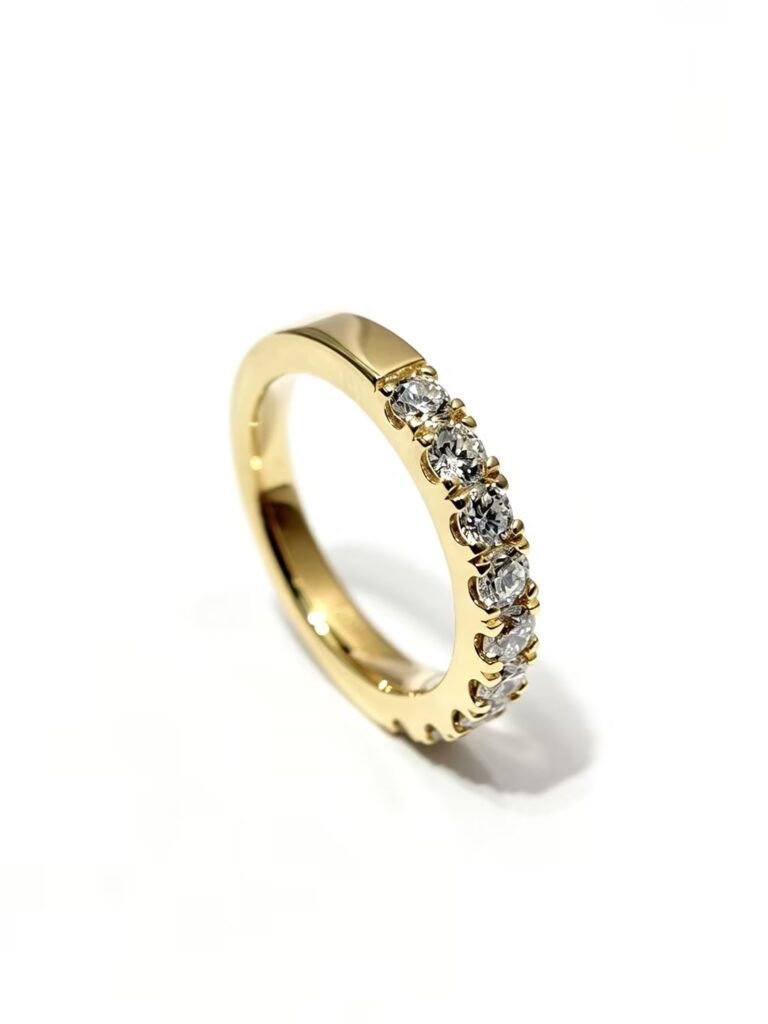
Three centimetres of chain is the difference between a pendant that sits in the opening of a neckline and one that disappears under the fabric, and between a pendant that hangs face-on and one that turns sideways with every movement. Length is not a stylistic afterthought on a pendant; it is the specification that decides whether the stone is ever actually seen. Working it out takes one measurement and one test, and both are done on the wearer rather than from a chart.
What length should a diamond pendant necklace be?
The length that puts the stone where the neckline leaves it visible.
There is no standard answer, because the same chain length reads completely differently on different necklines and different frames. What can be specified is the resting position: where the stone ends up. Four positions cover almost every case — above the collarbone, on the collarbone, in the hollow below it, and mid chest.
For a first pendant, the hollow below the collarbone is the most versatile: it sits in the opening of most necklines, stays visible with a collared shirt, and does not interfere with a second chain worn above it.
Choosing by resting position
Each position does a different job and suits a different wardrobe.
| Resting position | Where the stone sits | Suits | Layering role |
|---|---|---|---|
| Above collarbone | Base of the neck | Open necklines, high necklines | Inner layer |
| On collarbone | Across the clavicle | Most necklines, daily wear | Middle layer |
| Below collarbone | In the hollow beneath the clavicle | Pendants, V necklines | Outer layer for a small pendant |
| Mid chest | On the sternum | Long pendants, worn over clothing | Outermost, needs chain weight |
Measuring the length you want
Measure the resting position on the wearer, then add the drop to the bail.
Run a loose string around the neck at the position the stone should occupy, mark where it closes comfortably, then measure the mark. Add the distance from the chain line down to the top of the stone, because the pendant’s own drop moves the visible stone lower than the chain itself. A string pulled tight reads several centimetres short and is the most common reason a first order arrives too short.
The other reliable method is a necklace the wearer already likes: measure it closed and laid flat, and note where it rests.
Chain format against stone weight
The chain has to carry the pendant without stretching or turning over.
A light pendant sits comfortably on a fine cable or curb chain. As the stone gets heavier, the load at the jump ring rises and the mass in front of the chain line pulls the pendant over. Rope and box formats carry more weight with less stretch but weigh more per centimetre; snake and herringbone lie flat and look substantial at small diameters, but kink permanently if bent sharply.
For pendants above roughly 5 g, rope, box or a double cable with a soldered jump ring is the specification that lasts.
The bail and the jump ring
The two components that decide whether the pendant hangs straight.
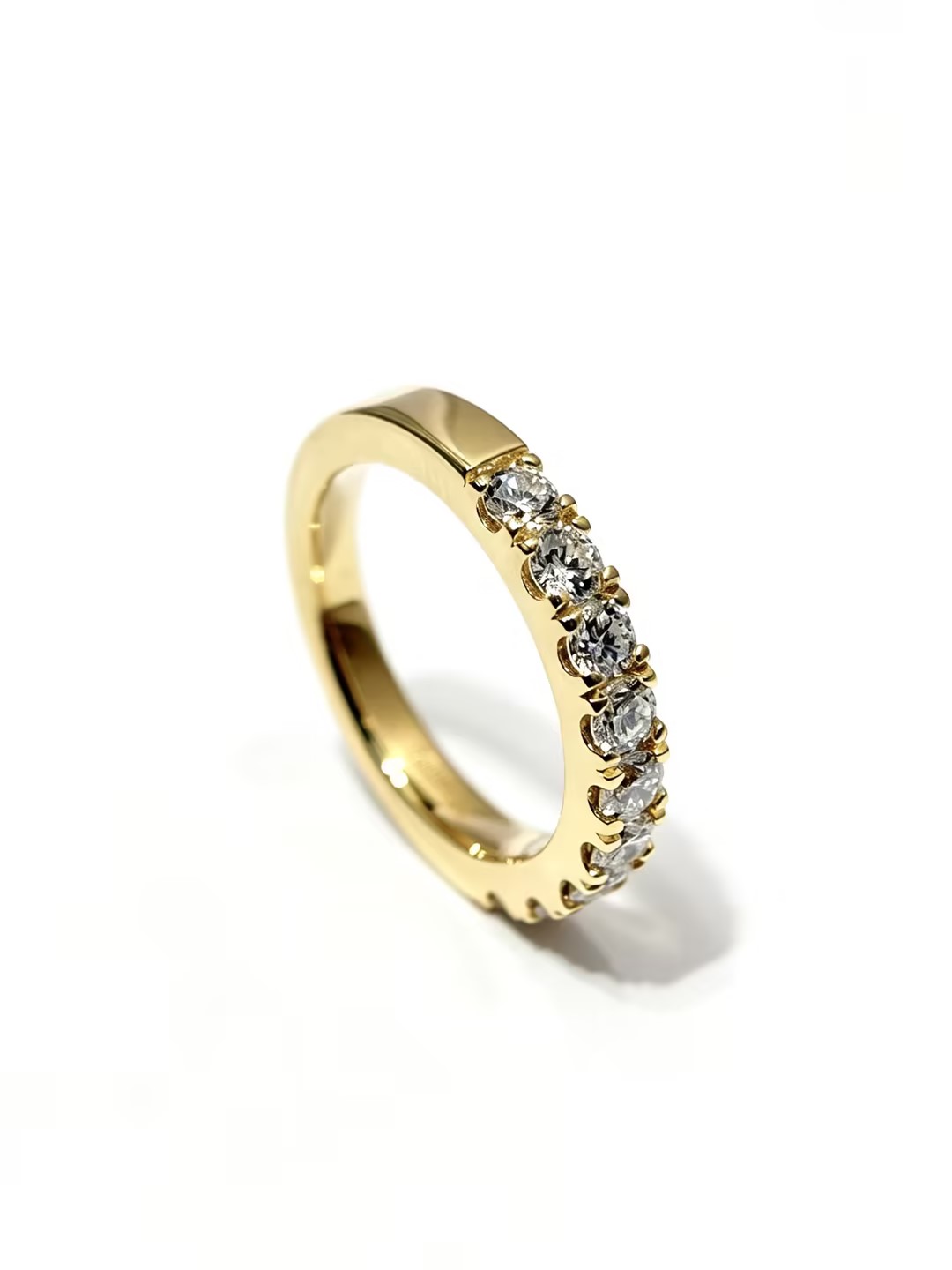
A bail that sits above the stone’s centre of mass lets the pendant hang face-on; a bail positioned to one side or below centre makes it turn. The jump ring carries the whole load and should be soldered and thick enough for the pendant’s weight — an unsoldered ring is the single most common point of failure. Both cost very little and both are specified at the order stage.
The general behaviour of chain formats and load is covered in the comparison of silver necklace chain types, and the principles carry across to gold.
Length by neckline and garment
The garment decides more than the neck does.
A crew neckline leaves the area below the collarbone clear, so a pendant in the hollow sits visibly against skin. A V neckline draws the eye down and carries a longer drop. A collared shirt covers the hollow entirely, which pushes the pendant either above the collar or over the fabric, and both require a different length. A high neckline leaves only the area above the collarbone, which is where a short pendant belongs.
Because garments change, the practical approach is to choose the length for the most common neckline in the wearer’s wardrobe rather than for the best case.
Layering with a pendant
A pendant layers easily because the chain can be changed or extended; a made line cannot.
Keep at least three centimetres between the resting position of a pendant and any chain above it, and keep the heavier piece underneath so the lighter one rests against it rather than riding over it. Clasps should be staggered so the two closures do not sit on top of each other and catch.
Where a pendant is layered under a diamond line, the pendant should sit clearly inside the opening of the line rather than level with it, or the pendant repeatedly passes behind the line as the wearer moves.
Adjusting a pendant that hangs wrong
Four symptoms and what each one actually needs.
A pendant that turns face-inward has a bail problem, not a chain problem: repositioning the bail above the centre of mass fixes it. A pendant that rides up and sideways is too heavy for the chain gauge, so the chain needs to be heavier. A pendant that disappears under a collar is simply at the wrong resting position and needs a different length. And a pendant that tugs uncomfortably at the back of the neck is usually on a chain whose length puts the clasp at the point of movement.
Only one of the four is solved by a heavier chain; the others are geometry and length, which is why changing the chain is often the wrong first response.
FAQ
What length should a diamond pendant necklace be?
Choose the resting position first, then measure to it on the wearer. The hollow below the collarbone is the most versatile starting point because it stays visible across most necklines. Remember to add the pendant’s drop below the chain line when judging where the stone will sit.
What chain should a diamond pendant go on?
One that is visually lighter than the pendant and strong enough for its weight. Cable and curb suit light pendants; rope, box or a double cable suit heavier ones. Avoid mixing formats at similar lengths when layering, because two different constructions twist around each other.
Why does my pendant keep turning over?
Because the bail sits below or to one side of the stone’s centre of mass, so the pendant rotates under its own weight. The fix is repositioning the bail, not changing the chain. A pendant that turns only when moving quickly may also be too heavy for the chain gauge.
Can a pendant chain be lengthened?
Usually yes, because a pendant chain can be extended, re-clasped or replaced. That is one practical advantage over a continuous diamond line necklace, which cannot be lengthened without matching new stones. Keep the extension in the same format and gauge as the original.
Sources and further reading
- GIA 4Cs — how a single stone’s grades are assessed
- GIA — diamond grading overview
- International Gemological Institute — grading and reports
- The Silver Institute — chain behaviour and load
- ASTM B700 — electrodeposited silver coating specification
- CIBJO Blue Books — jewellery terminology
Next step: Tell us the stone size, the necklines it will be worn with and the resting position you want, and we will specify the chain format, gauge, length and bail geometry, then confirm the jump ring at the same time. Ready-stock pendants and OEM programmes are both available. Contact vinico@zkzdiamonds.com or WhatsApp +86 135 3037 8229.
{“@context”:”https://schema.org”,”@type”:”FAQPage”,”mainEntity”:[{“@type”:”Question”,”name”:”What length should a diamond pendant necklace be?”,”acceptedAnswer”:{“@type”:”Answer”,”text”:”Choose the resting position first, then measure to it on the wearer. The hollow below the collarbone is the most versatile starting point because it stays visible across most necklines. Remember to add the pendant’s drop below the chain line when judging where the stone will sit.”}},{“@type”:”Question”,”name”:”What chain should a diamond pendant go on?”,”acceptedAnswer”:{“@type”:”Answer”,”text”:”One that is visually lighter than the pendant and strong enough for its weight. Cable and curb suit light pendants; rope, box or a double cable suit heavier ones. Avoid mixing formats at similar lengths when layering, because two different constructions twist around each other.”}},{“@type”:”Question”,”name”:”Why does my pendant keep turning over?”,”acceptedAnswer”:{“@type”:”Answer”,”text”:”Because the bail sits below or to one side of the stone’s centre of mass, so the pendant rotates under its own weight. The fix is repositioning the bail, not changing the chain. A pendant that turns only when moving quickly may also be too heavy for the chain gauge.”}},{“@type”:”Question”,”name”:”Can a pendant chain be lengthened?”,”acceptedAnswer”:{“@type”:”Answer”,”text”:”Usually yes, because a pendant chain can be extended, re-clasped or replaced. That is one practical advantage over a continuous diamond line necklace, which cannot be lengthened without matching new stones. Keep the extension in the same format and gauge as the original.”}}]}
Part of our 925 sterling silver jewelry guide.
Recommended
 Does a lab-grown diamond need Kimberley Process paperwork when shipped?Lab Grown Diamond Guide
 Is it better to buy a loose lab-grown diamond and set it, or buy finished jewelry?Lab Grown Diamond Guide
 Is Lab Grown Diamond Jewelry a Good Investment?Buying Guides
 What is a “hearts and arrows” cut, and is it available in lab-grown stones?Lab Grown DiamondsDoes a lab-grown diamond need an appraisal, and what does one include?Lab Grown Diamonds
 Custom Lab Grown Diamond Jewelry: A Step-by-Step GuideCustom Jewelry