What is an “eye-clean” diamond, and who decides?
925 sterling silver jewellery, set with lab grown diamonds and made in our own Shenzhen workshop.
Talk · Lab-Grown Diamond Knowledge
A shopper sees the phrase "eye-clean" on a lab-grown diamond listing and asks whether it is an official grade or just a sales term.
 ZKZ Editorial TeamMain answer · Product & gemmology desk
Eye-clean is not a grade. Laboratories grade clarity under 10x magnification, and whether you can see an inclusion without magnification depends on the stone, the lighting and your eyesight. The person who decides is, in practice, the seller, unless you check the stone yourself.
What the sources say
Fact IGI states that its traditional 4Cs assessment was not designed to judge whether a person can see inclusions, and that IGI and other laboratories do not make an eye-clean judgement.
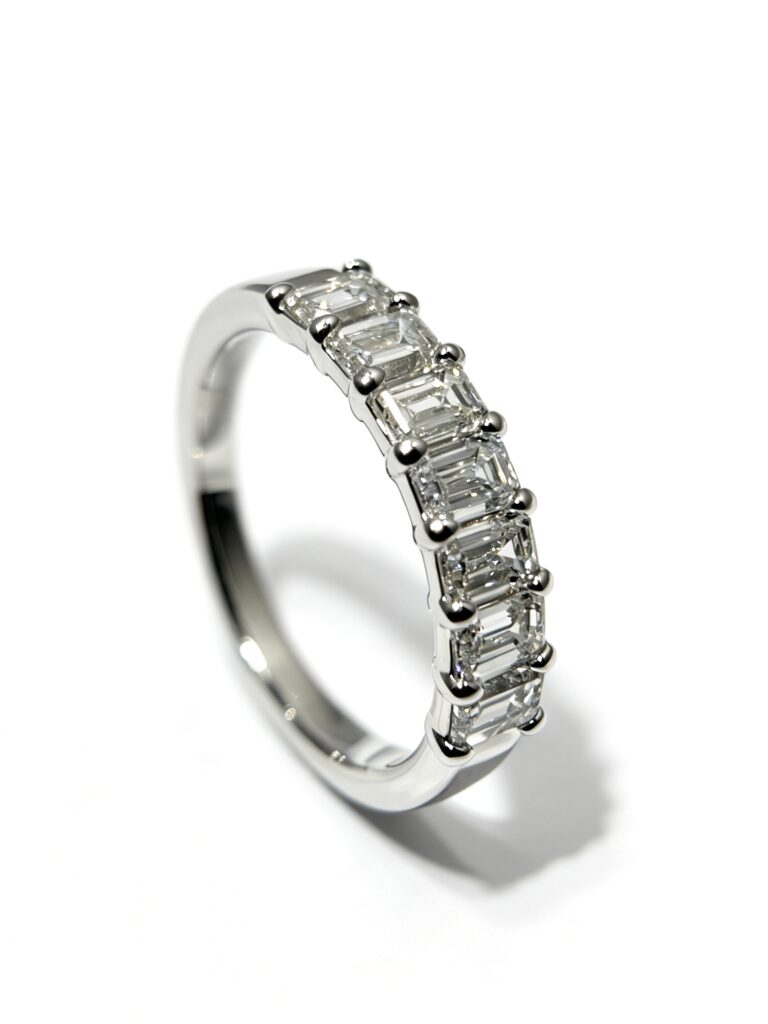
Fact IGI cites a gemologist survey on the PriceScope community that defined eye-clean as no inclusions visible to the unaided eye, face up, in daylight-equivalent or fluorescent light, 6 to 12 inches from the eye, with 20/20 vision. By that definition IGI says round brilliants of VS2 clarity and higher are reliably eye-clean, while step cuts such as emerald cuts, and round brilliants over 3 carats, should be checked case by case.
Fact GIA says clarity grades are assigned under 10x magnification and that, of its grades, VS inclusions are "observed with effort but can be characterized as minor".
How to use this
Our advice Treat an eye-clean claim as the seller's opinion. Ask for the clarity grade, a clear photograph or video and the return terms.
Our advice Look at the stone in daylight at a normal distance, face up, before you decide.
It depends The same stone can look clean to one person and not to another, and shape matters: step cuts show inclusions more readily than brilliant cuts.
A simple test you can run
Our advice Hold the stone, or a magnified photograph from the seller, at the distance of a normal conversation. Look face up, then tilt it. If you cannot see anything distracting at that distance in daylight, the stone is clean for practical purposes. Repeat with a friend, because eyesight differs, and make sure the return period allows you to do this at home.
Uncertain The survey definition is a community consensus, not a standard. We have not verified how sellers apply the word.
Related reading: What does fluorescence mean on a lab-grown diamond report? · Cleaning Lab Diamond Earrings Without Damaging the Setting
Sources
Fact = stated by the cited source. Our advice = editorial recommendation. Uncertain / it depends = limits of what can be said in general.
Other perspectives from the ZKZ team
Ask the seller to say what they mean by the term and what they do if you disagree. A clear return window is the real protection.
Step cuts and larger stones show inclusions more easily. Be stricter on clarity for those shapes.
Request a video in daylight, not only studio images. It shows how the stone looks at a normal viewing distance.
Have a different question? Ask our team, or browse more answers in Talk.
Related products
Related articles & topics
- What is lab-grown white sapphire, and how does it compare with a lab diamond in silver?Talk
- Can a Lab-Grown Diamond Pass a Diamond Tester?Talk
- Why are lab-grown diamond prices falling while demand stays strong?Talk
- What does fluorescence mean on a lab-grown diamond report?Talk
- Will a Lab-Grown Diamond Hold Its Resale Value?Talk
- Lab Grown Diamond Necklaces: Styles, Sizes and How to ChooseGuide
- Coloured Lab Grown Diamonds: Pink, Blue, Yellow and BeyondGuide
- Lab Diamond Hoops and Drop Earrings: Styles and WeightGuide
- Silver vs Gold Settings for Lab Diamond NecklacesGuide
- Lab Diamond Bracelets for Everyday Wear: Styles and DurabilityGuide
Recommended
 What is the difference between GIA, IGI and in-house reports for lab-grown diamonds?Talk
 What bracelet size should I order if I have a small, medium or large wrist?Talk
 What are flat-back studs, and who needs them for cartilage or sleeping?TalkWhat jewelry suits an engagement-party or bridal-shower gift?Talk
 Can nickel-free silver jewelry still cause a reaction?Talk
 What are the black spots on my silver jewelry, and are they damage or tarnish?Talk