Coloured Lab Grown Diamonds: Pink, Blue, Yellow and Beyond
925 sterling silver jewellery, set with lab grown diamonds and made in our own Shenzhen workshop.
Two pink lab grown diamonds of the same weight can reach a buyer by completely different routes. One grew into its colour; the other was grown near-colourless and then treated to reach it. Both are diamonds, both can be certified, and both can look extraordinary in a finished piece. What separates them is disclosure and, sometimes, price. That distinction is the one most often missing from the conversation, and it is the first thing to establish before comparing coloured stones at all.
Last updated:
Are coloured lab diamonds treated?
Some are grown in their colour, some are treated after growth, and both are legitimate if disclosed.
As-grown colour means the growth conditions produced the colour, typically through dopants introduced during synthesis. Post-growth treatment means the stone was grown and then processed — commonly by annealing, sometimes with irradiation — to shift or intensify its colour. Neither route is a defect, and reputable grading reports state treatment status.
The risk for a buyer is not treatment itself. It is a treated stone presented as as-grown, because that changes what the stone is and what it should cost.
As-grown versus post-growth colour
The difference is in origin of colour, and it is recorded rather than observed.
As-grown colour usually relates to elements incorporated during growth: boron for blue, nitrogen for yellow, and more complex combinations or specific growth conditions for pink. Post-growth treatment changes colour after the crystal exists. Because both produce a diamond with the same physical properties, the distinction cannot be made at the counter and must come from documentation and, where relevant, laboratory analysis.
For a brand, the practical requirement is a written statement per parcel naming the colour origin and the treatment status, consistent between the invoice and the product page.
Pink: light, fancy and the naming problem
Pink covers a wide range, and trade names add confusion rather than information.
Pink lab grown stones run from a very pale blush to saturated tones, and the same stone can be described with several different marketing names depending on the supplier. Grading uses a hue, tone and saturation vocabulary rather than brand terms, so the report is the comparable reference and the trade name is not.
Consistency is the harder problem. Pink stones that match one another across a parcel are more difficult to assemble than near-colourless ones, and a piece built from mismatched pinks shows the mismatch immediately. Buyers should specify the tolerance within which stones will be matched, not just the colour description.
Blue and yellow: where boron and nitrogen fit
Two of the more predictable coloured categories, for two different reasons.
Blue colour in lab grown diamonds is commonly associated with boron incorporated during growth, which also affects electrical behaviour and is one of the features laboratories use when identifying the stone. Blue lab grown stones are produced in a range of intensities from pale ice to deep blue. Yellow is associated with nitrogen and can also be produced by treatment routes, and the yellow range runs from a light lemon to a deeper canary tone.
Both categories have broader reliable supply than pink in the more saturated grades, which keeps their price behaviour more predictable.
The colour-stability question
Properly treated stones are stable in normal wear; the risk is undocumented treatment.
Concerns about colour changing in sunlight or with heat relate mostly to older or lower-quality treatments, or to stones whose treatment status is unknown. A stone documented as treated and produced to standard practice does not change colour in ordinary use. The buyer’s protection is the disclosure, not a handling restriction.
Practical care is the same as for any diamond: avoid impact, avoid harsh chemicals on the setting, clean with mild soap and water.
How fancy colour is graded
By hue, tone and saturation, in that order of influence.
Fancy colour grading describes the colour family, how light or dark it is, and how strong it is, and then assigns a descriptive grade such as light, fancy, intense or vivid. Secondary colours matter too: a pink with a brownish modifier is described and valued differently from a pure pink of the same depth. This is why two stones described as pink can sit at very different points in the market.
For buyers assembling a piece, the useful reference is the full colour description plus the matching tolerance, not the single word.
Price behaviour: which colours command a premium
Saturated, evenly coloured stones carry a premium; light tones are the value end.
In lab grown coloured stones, price tracks intensity, evenness and size. Light pink and light yellow are the most accessible; deep pink, vivid yellow and stronger blues command more because producing them consistently is harder. Size interacts with colour: a large stone with even saturation is disproportionately more difficult to produce than a small one, which is why the price curve steepens with both.
Budgeting therefore works differently from near-colourless stones: there, buyers trade grade for size; here they trade intensity or size, and the visual impact of intensity is usually larger.
Colour matching across a parcel
In coloured goods, matching is the specification that determines yield.
A strand, a bracelet or a pair of earrings needs stones that match in colour and size across the run. The tighter the tolerance, the fewer stones from any parcel will qualify, so a tight tolerance raises the effective cost even when the per-stone price is unchanged. Suppliers select by eye and by comparison set, and the tolerance should be stated numerically wherever possible.
Ordering a small quantity with a very tight colour tolerance is the most common reason coloured projects run late.
Setting metal and perceived colour
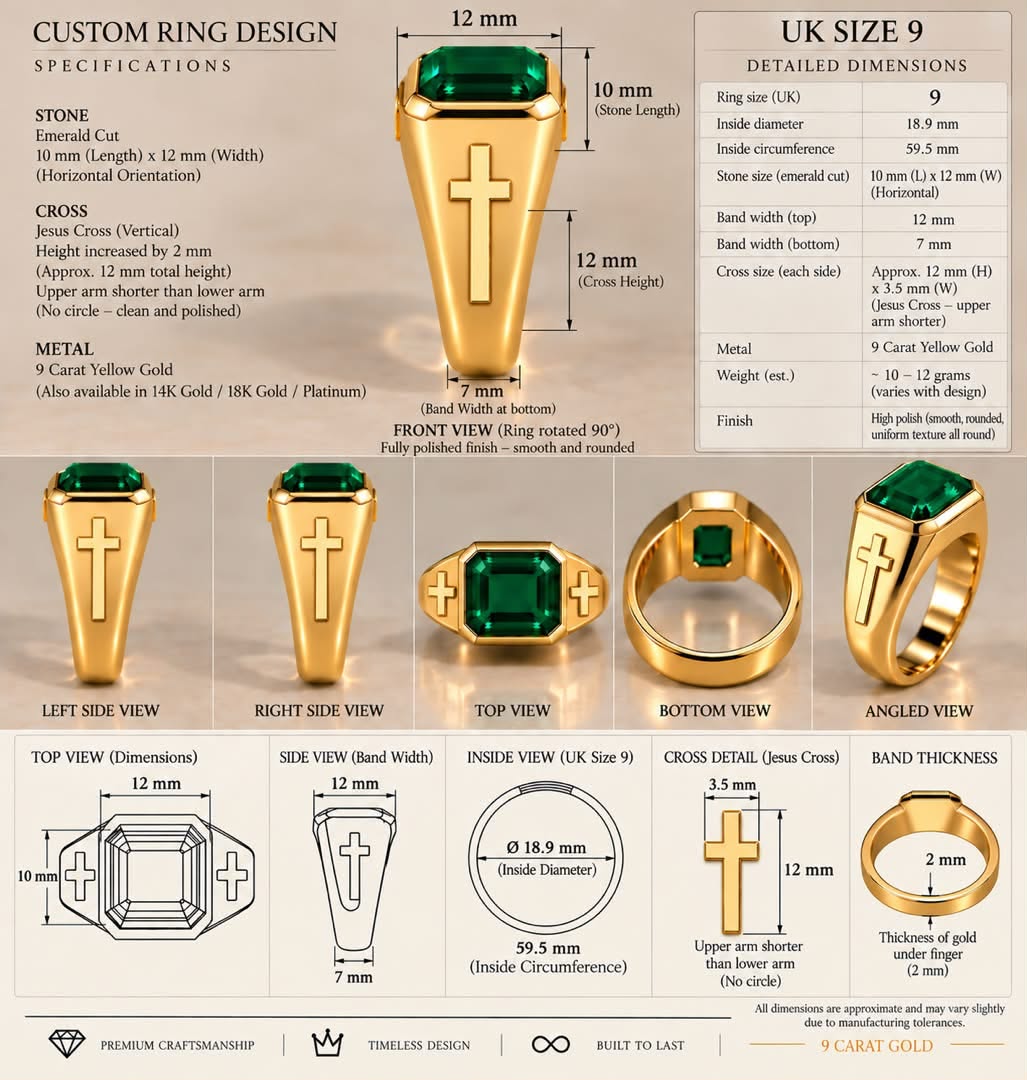
The same stone reads differently in yellow gold, white gold, and silver.
Yellow gold warms a coloured stone and can make a light yellow appear richer; white metals cool pink and blue, sometimes making a pale pink look paler still. Rhodium plating over white gold pushes contrast further. Halo settings and surrounding white melee amplify saturation by contrast, while a plain bezel isolates the stone and makes its own colour the only reference.
Because perception changes this much, colour approval should always happen on a finished sample rather than on a loose stone. The finish chosen for the metal also affects how the setting wears over time, which is covered in our notes on rhodium plating on silver jewellery.
What to verify on the report for a coloured stone
Colour description, treatment status, measurements and origin.
The report should give the colour grade in the laboratory’s vocabulary, state whether the stone is laboratory grown, disclose treatment where the laboratory detects it, and record the measurements and finish grades. For higher-value coloured stones, check that the colour description matches the supplier’s description, because that is where marketing language and technical language diverge most.
The final check is consistency across the shipment: if a parcel is described as one colour origin, every stone in it should be documented the same way.
FAQ
Are coloured lab diamonds treated?
Some are and some are not. As-grown colour comes from growth conditions and dopants such as boron for blue or nitrogen for yellow. Post-growth treatment, often annealing, shifts colour after the crystal is grown. Both are legitimate, and the requirement is disclosure on the report and in the supplier documentation.
Do coloured lab diamonds fade?
A stone produced with a standard treatment and properly documented does not change colour in normal wear, including in sunlight. Reports of fading relate largely to undocumented or poor-quality treatments. The practical protection is a stated treatment status rather than a care restriction.
Are pink lab diamonds more expensive than white ones?
Generally yes at comparable size when the pink is even and saturated, because producing consistent colour is harder than producing near-colourless material. Pale pinks sit closer to near-colourless pricing. Within pink, price rises with intensity, evenness and size rather than following a single published rate.
How do I buy matching coloured stones for a piece?
Specify a numerical matching tolerance for both colour and size, order a sample piece for approval, and expect a longer lead time and a lower yield from the parcel as the tolerance tightens. Matching, not the individual stone grade, is what determines how many stones in a parcel can be used in one piece.
Sources and further reading
- GIA Gem Encyclopedia — fancy colour diamond grading terms
- GIA — treatment types and disclosure requirements
- Gems & Gemology — research on coloured laboratory-grown diamonds
- International Gemological Institute — coloured diamond grading and reports
- CIBJO Blue Books — colour and origin terminology
- International Gem Society — colour grading explained for buyers
Next step: Send the colour range you are working to, the sizes you need and the matching tolerance you can accept, and we will confirm availability, treatment status and price for the parcel. Coloured lab grown stones, matched parcels and finished pieces are supplied OEM/ODM, with the documentation stated before production. Contact vinico@zkzdiamonds.com or WhatsApp +86 135 3037 8229.
Part of our lab grown diamonds guide.
Recommended
 Does a lab-grown diamond need Kimberley Process paperwork when shipped?Lab Grown Diamond Guide
 Is it better to buy a loose lab-grown diamond and set it, or buy finished jewelry?Lab Grown Diamond Guide
 Is Lab Grown Diamond Jewelry a Good Investment?Buying Guides
 What is a “hearts and arrows” cut, and is it available in lab-grown stones?Lab Grown DiamondsDoes a lab-grown diamond need an appraisal, and what does one include?Lab Grown Diamonds
 Custom Lab Grown Diamond Jewelry: A Step-by-Step GuideCustom Jewelry