Can a Lab-Grown Diamond Pass a Diamond Tester?
925 sterling silver jewellery, set with lab grown diamonds and made in our own Shenzhen workshop.
Talk · Testing & identification
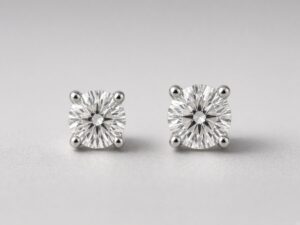
A buyer has a pair of lab-grown diamond studs checked on a jeweller's handheld multi-tester. One stone reads "diamond"; the other briefly flashes "moissanite". The buyer wants to know whether the second stone is genuine and what to do next.
 ZKZ Editorial TeamMain answer · Product & gemmology desk
Usually yes. A lab-grown diamond is diamond, so it passes a thermal tester the same way a mined diamond does. But a pass only says “diamond-like material”; it says nothing about origin. And a minority of lab-grown stones, mainly HPHT-grown ones containing trace boron, can read “moissanite” on electrical or multi-testers. That reading is a reason to escalate, not proof of a fake.
Why the two readings can differ
Fact Thermal testers measure how fast heat leaves a probe tip. Natural and lab-grown diamond share the same thermal conductivity, so both read as diamond. IGI notes that thermal testers make no distinction between the two.
Fact Electrical testers were added because moissanite also conducts heat well. Diamond normally does not conduct electricity, but boron does make it conductive. GIA reported that more than 80% of colourless HPHT-grown diamonds it examined since 2020 contained detectable boron. Metallic flux remnants from HPHT growth can also affect readings (IGI). A conductive diamond can therefore trigger the “moissanite” alert.
What to do with a mixed result
- Clean and dry both stones and repeat the test at the correct probe angle. Oil, dirt and very small stones cause unreliable readings.
- Check the paperwork: an independent report number and any girdle inscription can be looked up on the lab’s website.
- Have a gemmologist look under magnification. Moissanite is doubly refractive, so facet edges look doubled at certain angles. Diamond is singly refractive.
- If doubt remains, ask a laboratory for identification. Only lab-grade instruments separate natural from lab-grown diamond reliably.
Where the limits are
Our advice Treat any handheld result as a screen. It can rule out glass and cubic zirconia, it usually flags moissanite, and it cannot judge origin at all. Do not use a tester result to decide whether a seller disclosed origin correctly. Under the FTC Jewelry Guides, a laboratory-grown diamond should be described with a qualifier such as “laboratory-grown” placed immediately before “diamond”, so the disclosure should already be on the listing and invoice.
Uncertain Tester models differ in sensitivity. We cannot say how any specific device will respond to a specific stone, so a repeat “moissanite” result needs a lab check rather than an assumption either way.
Sources
- IGI: Diamond detection and handheld testers
- GIA, Gems & Gemology (Summer 2024): Laboratory-Grown Diamonds, an update on identification
- FTC: In the Loupe, advertising diamonds, gemstones and pearls
- 16 CFR 23.12, FTC Jewelry Guides: definition of "diamond"
Fact = stated by the cited source. Our advice = editorial recommendation. Uncertain / it depends = limits of what can be said in general.
Other perspectives from the ZKZ team
When a tester result is disputed, the quickest route is documentary: ask the seller which report or inscription belongs to each stone, in writing. For matched studs, confirm whether both stones were graded or only described, because small stones are often sold without individual reports.
If you want to avoid tester confusion altogether, choose stones with an independent report that states the growth method. A report does not change how a tester behaves, but it gives the jeweller something verifiable to check instead of a handheld reading.
Mention that the piece contains lab-grown diamonds whenever you hand it in for repair or cleaning. That prevents a surprise tester reading from turning a routine service into a dispute, and lets the bench record which stones went in and came out.
Have a different question? Ask our team, or browse more answers in Talk.
Related products
Related articles & topics
- Are Lab-Grown Diamonds Really More Ethical? What to Ask the SellerTalk
- Will a Lab-Grown Diamond Hold Its Resale Value?Talk
- What Does a Lab-Diamond Grading Report Show, and Is a Seller's Report Enough?Talk
- Do Lab-Grown Diamonds Get Cloudy or Lose Their Sparkle Over Time?Talk
- Can I Shower or Swim in Sterling Silver Lab-Diamond Jewelry?Talk
- Sterling Silver Hoops vs Studs: Weight, Comfort and Everyday WearGuide
- Sterling Silver Necklace Care: Preventing Tangles and TarnishGuide
- Silver Necklace Chains Compared: Box, Cable, Rolo, Snake and FigaroGuide
- 925 Sterling Silver vs Sterling Silver: Is There a Difference?Guide
- What Does 925 Mean on Silver Jewelry?Guide
Recommended
 What is the difference between GIA, IGI and in-house reports for lab-grown diamonds?Talk
 What bracelet size should I order if I have a small, medium or large wrist?Talk
 What are flat-back studs, and who needs them for cartilage or sleeping?TalkWhat jewelry suits an engagement-party or bridal-shower gift?Talk
 Can nickel-free silver jewelry still cause a reaction?Talk
 Black spots on silver: is it tarnish or damage?Talk