Sterling Silver vs White Gold: Which Should You Choose?
925 sterling silver jewellery, set with lab grown diamonds and made in our own Shenzhen workshop.
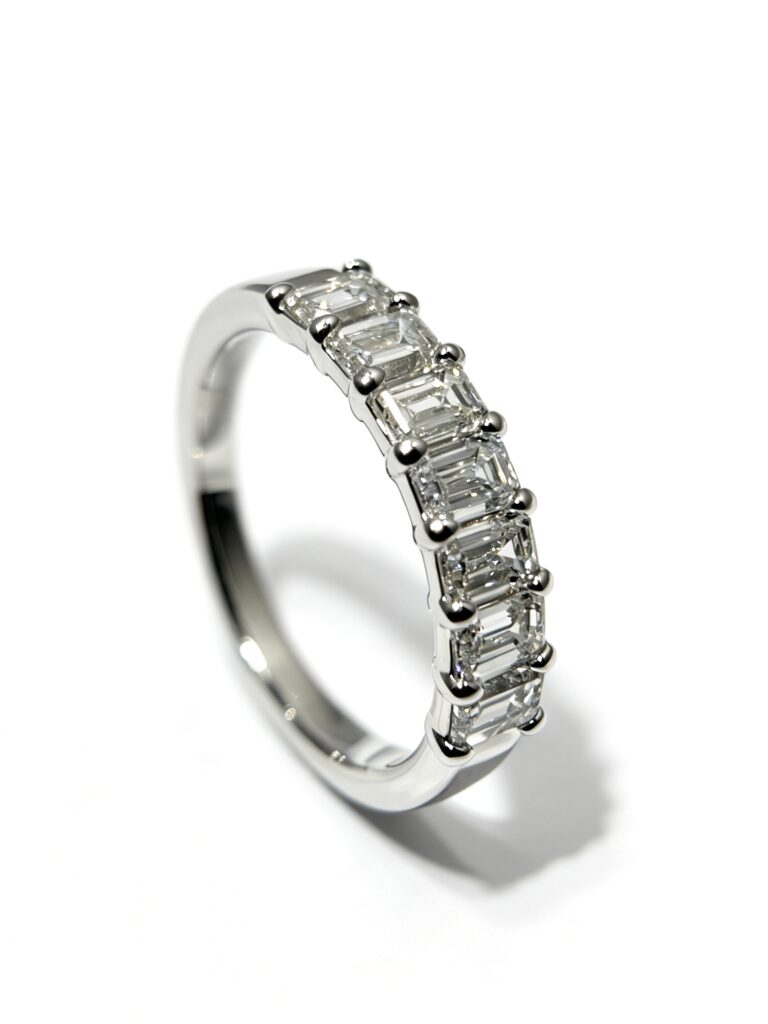
A ring comes back two-tone after a year: a warm grey showing through at the base of the finger and along the band edges, with the rest still bright white. Nothing failed. The rhodium plating on white gold wore through exactly where a ring contacts everything, and what is visible underneath is the white gold alloy itself, which is not white. That single misunderstanding causes more disappointment than any other in the silver-versus-white-gold decision, because the two metals look identical on the day of purchase and behave differently afterwards.
Last updated:
Is white gold better than sterling silver?
It is harder and holds settings better; it is not more resistant to wear, it simply wears differently.
White gold is an alloy of gold with white metals such as palladium or silver, and it is normally rhodium plated to achieve the bright white finish buyers expect. Sterling silver is 92.5 percent silver with copper or a similar addition, and it is white throughout. The result is a different maintenance requirement rather than a difference in quality: white gold needs re-plating at the contact points, silver needs polishing and can darken.
Where hardness matters — a daily-worn ring with fine prongs, or a piece with many small settings — white gold has the advantage. Where the piece is a pendant or a pair of earrings and the budget matters, silver does the same job for a fraction of the metal cost.
What each alloy actually is
Two different metals with one shared appearance.
| Property | 925 sterling silver | White gold (10K–18K) |
|---|---|---|
| Composition | 92.5% silver plus copper or similar | Gold plus white metals |
| Natural colour | White | Greyish white; plated to bright white |
| Hardness | Moderate | Higher, especially in lower karats |
| Tarnish | Darkens over time | Does not tarnish |
| Plating | Sometimes plated; wears | Normally rhodium plated; wears |
| Hallmark | 925 or sterling | Carat mark, for example 585 or 750 |
| Metal cost | Low | High, and moves with gold prices |
The plating question
The most misunderstood difference between the two, and the one that decides long-term appearance.
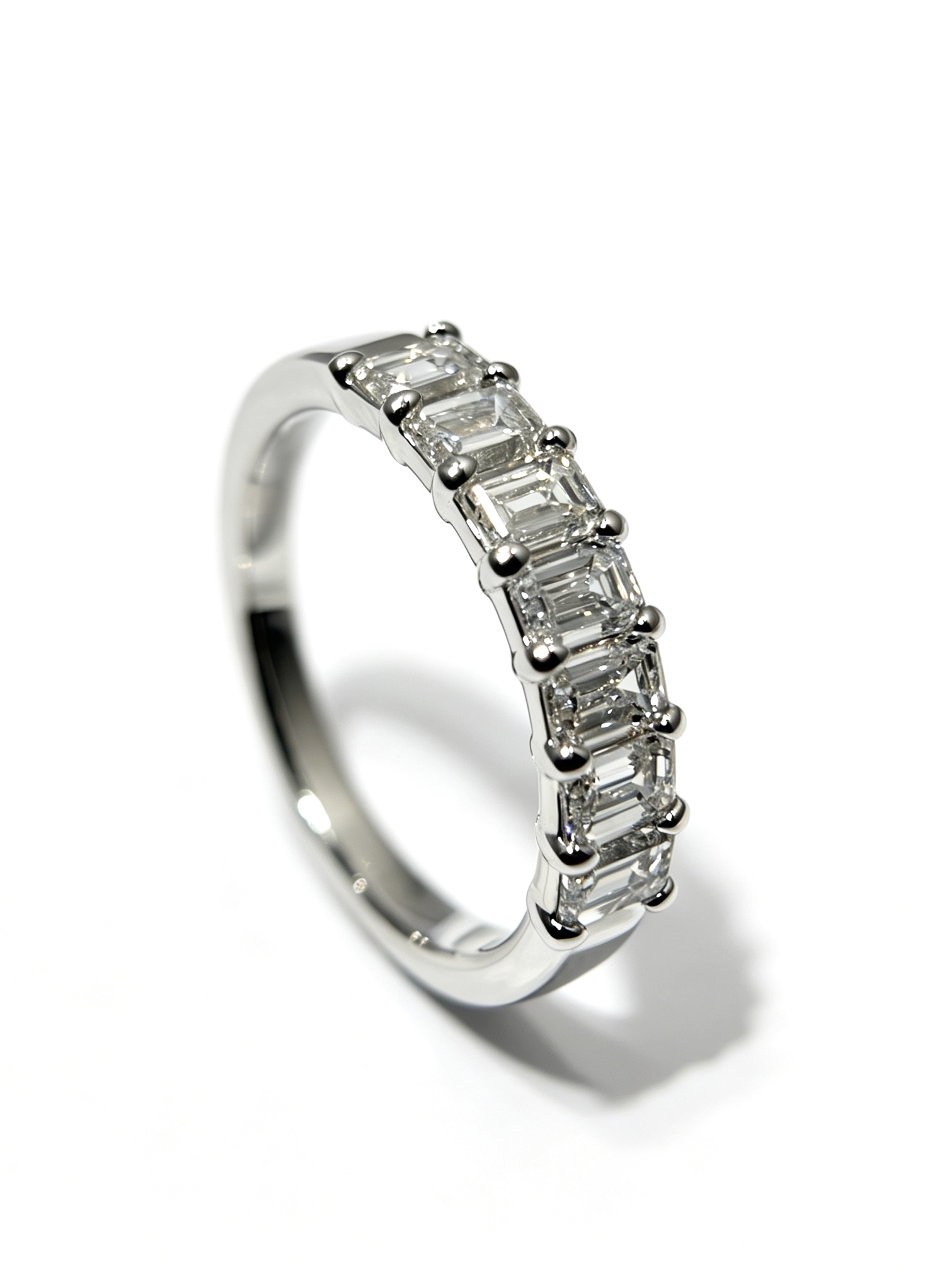
White gold in its natural alloy state is not bright white; it is closer to a soft grey, which is why the trade plates it. Rhodium plating is hard and bright but thin, and it abrades at the same places a piece is handled: the base of a ring, the clasp of a bracelet, the edges of a setting. Once it wears through, the piece shows two tones until it is re-plated. Silver used for a white appearance is often plated for the same reason, and its plating wears in the same way.
So the honest comparison is not plated versus unplated; it is how long each coating lasts under the specific wear the piece receives. A pendant’s plating lasts years; a ring’s lasts a fraction of that.
Tarnish against plating wear
Two different mechanisms with two different fixes.
Silver tarnishes through a reaction with sulphur compounds in air and on skin, which darkens the surface. It is removed by polishing, and a tarnish-inhibiting storage strip slows it considerably. Plating wear is mechanical rather than chemical: the coating is abraded away, revealing the alloy beneath, and the only fix is re-plating. Neither is a defect, and both are predictable from how the piece is worn.
Where a buyer dislikes the idea of polishing, silver is the wrong choice; where they dislike the idea of periodic re-plating, white gold is the wrong one. Yellow or rose gold avoids both, at the cost of a different colour.
Hardness and setting security
This is where the two separate most clearly in practice.
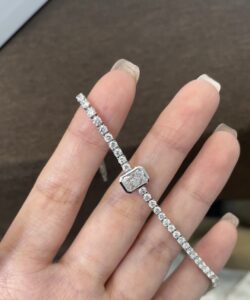
A prong is a small mass of metal, and the softer it is, the faster it wears and the sooner a stone can move. On a ring worn daily, silver prongs need inspection more often than gold ones, and a piece with many small settings — a pavé shoulder, a halo, a tennis line — has many places where that difference compounds. Where the design is a single stone in a bezel, the difference is much smaller, because the setting is not relying on thin claws.
For a heavy stone in a fine setting, the incremental cost of gold is small against the cost of replacing the stone.
Cost and what the difference buys
Silver leaves more budget for the stone and the design.
The metal cost gap between the two is large, which means a silver piece can be built heavier, wider or more sculpted for the same total spend, or can carry a larger stone. That is a rational trade for buyers who understand they are buying appearance rather than metal value. As the stone’s value rises, the argument weakens, because the metal becomes a smaller share of the total.
Metal prices also move, which is why gold quotations often carry a validity window while silver ones rarely do.
Sensitive skin
The metal underneath the plating is what reacts.
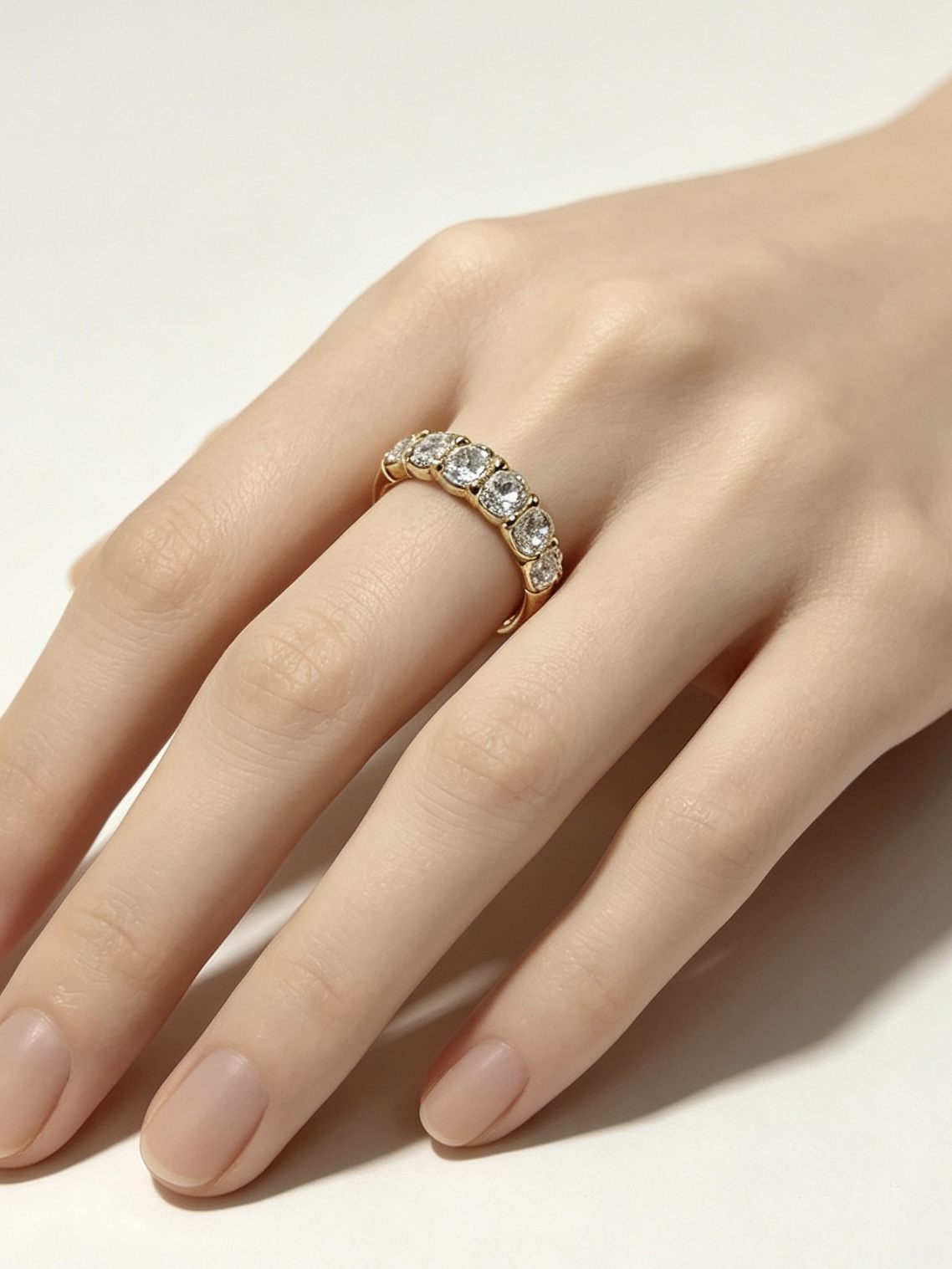
Contact reactions are usually caused by nickel, which appears in some white gold alloys and in base metals. Yellow gold in most formulations is nickel-free, platinum is inert, and sterling silver is generally well tolerated although its copper content bothers a small number of wearers. Because a coating wears through where the piece touches the skin, a plated piece reintroduces whatever is beneath it, which is why a known sensitivity is better addressed with a solid alloy. The wider picture is covered in our notes on hypoallergenic silver.
Which to choose
Four situations, four answers.
A ring worn every day with a delicate setting: white gold or platinum. A pendant, a pair of earrings or a fashion piece where the budget matters: sterling silver. A piece with many small settings, such as a tennis line or a pavé band: white gold or platinum, because every setting is a wear point. A buyer who dislikes scheduled maintenance of any kind: yellow or rose gold, which needs neither polishing for tarnish nor re-plating for colour.
The metal comparison in full, including platinum and the karat options, is set out in our metal comparison guide.
FAQ
Is white gold better than sterling silver?
White gold is harder and holds fine settings longer, which matters on a daily-worn ring or a piece with many small settings. Sterling silver costs far less and is white throughout. The two are not a quality hierarchy; they are a trade between hardness and cost, with different maintenance for each.
Does white gold tarnish?
White gold does not tarnish, but it is normally rhodium plated, and that plating wears at the contact points and shows a warmer grey beneath. What looks like tarnished white gold is usually worn plating. The fix is re-plating rather than polishing.
Why is my white gold ring turning yellow?
Because the rhodium plating has worn through and the white gold alloy underneath is naturally greyish rather than bright white. A white gold alloy contains less gold than yellow gold but is still an alloy of gold with white metals, and its natural tone is warmer than plated rhodium.
Is sterling silver good enough for an engagement ring?
For a moderate stone worn occasionally, yes. Silver holds a diamond securely when the prongs carry enough metal. For a daily-worn ring with a large stone or many small settings, a harder alloy wears more slowly and needs less frequent inspection, which is why gold or platinum is usually recommended there.
Sources and further reading
- The Silver Institute — sterling silver alloys and properties
- ASTM B700 — electrodeposited silver coating specification
- Assay Office — hallmarking for silver and gold
- CIBJO Blue Books — precious metal nomenclature
- International Gem Society — metal and setting reference
- GIA 4Cs — stone grading relevant to setting choice
Next step: Tell us the piece, how often it will be worn and how much maintenance you accept, and we will recommend silver or a gold alloy with the finish and setting specification to match, then confirm it against a sample. Silver and gold programmes are both supplied OEM/ODM. Contact vinico@zkzdiamonds.com or WhatsApp +86 135 3037 8229.
Part of our 925 sterling silver jewelry guide.
Recommended
 What is a good gift for a self-purchase to celebrate a milestone?Jewelry Guides & Sizing
 Jewelry Care Myths: What Actually Damages Silver and DiamondsCare & Cleaning
 Is Lab Grown Diamond Jewelry a Good Investment?Buying Guides
 What jewelry makes a good Sweet 16 or teen birthday gift?Jewelry Guides & Sizing
 What is the best jewelry gift for a 10th, 25th or 30th anniversary?Jewelry Guides & Sizing
 Engagement Ring Etiquette: Budgets, Sizes and SurprisesGifting & Occasions