Can I Shower or Swim in Sterling Silver Lab-Diamond Jewelry?
925 sterling silver jewellery, set with lab grown diamonds and made in our own Shenzhen workshop.
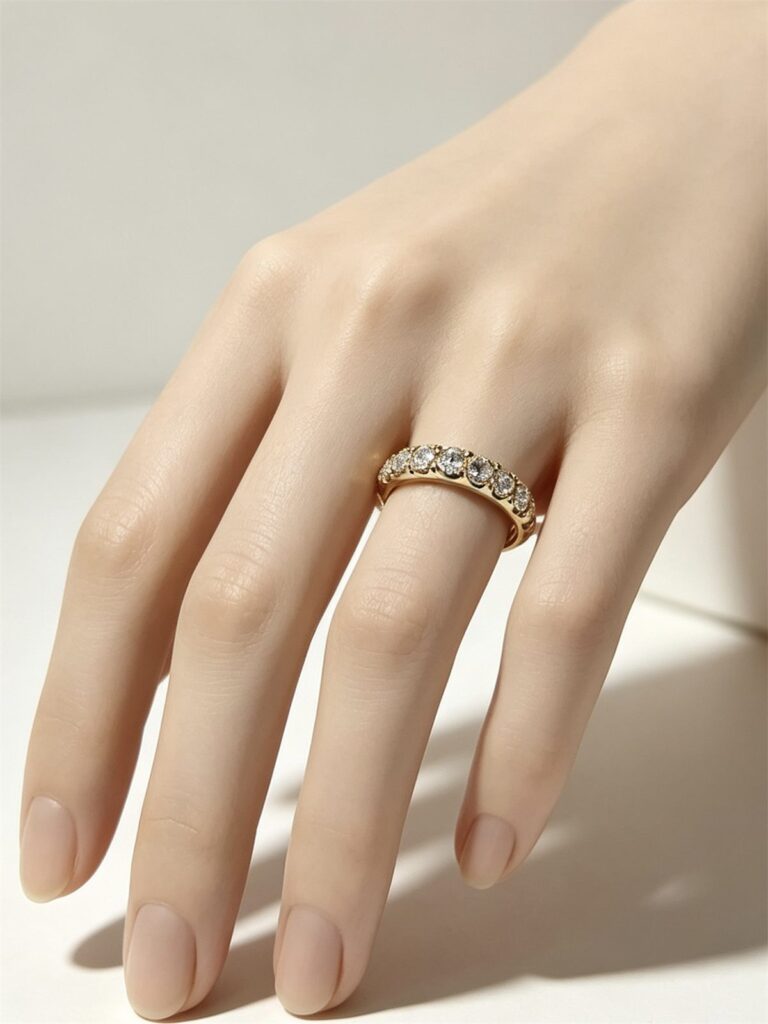
Talk · Use & care
Someone has started wearing sterling silver lab-diamond studs and a matching ring every day. They want to know whether they can leave them on in the shower, at the pool and on a beach holiday.
 ZKZ Editorial TeamMain answer · Product & gemmology desk
Short exposure to clean water will not damage the diamond, and a quick shower is unlikely to harm a piece. But sterling silver, its plating and the setting are more sensitive than the stone. Take pieces off for pools, hot tubs and the sea, and preferably for showers too. Leave small studs in only if you are happy to rinse and dry them regularly.
What is actually at risk
Fact Diamond is chemically very stable, so water, soap and pool chemicals do not affect the stone itself. Sterling silver is defined in the FTC Jewelry Guides as at least 925 parts per thousand pure silver. The remaining alloy, commonly copper, is what makes it react with sulphur compounds and chlorides and tarnish.
- Pools and hot tubs: chlorinated water can discolour silver quickly, and heat makes it worse. This is the main one to avoid.
- Sea water: salt leaves deposits in settings. Cold water shrinks fingers, which is a common way rings get lost.
- Shower products: shampoo and body wash leave a film under the diamond that makes it look dull, and soapy fingers let rings slip off.
A practical routine
- Take rings and bracelets off before swimming, cleaning or applying lotion.
- If a piece gets wet, rinse it in fresh water and dry it fully, including under the stone.
- Store each piece dry and separate, ideally in a closed pouch.
- Clean with warm water and mild soap every few weeks.
If a piece does go into a pool by accident, it is not ruined. Rinse it in fresh water as soon as you can, dry it thoroughly, and look at it in daylight the next day. Early discolouration on bare silver usually polishes off. On plated silver, patchy colour means the plating has been affected.
Where the limits are
Our advice Rhodium plating slows tarnish but is a thin layer. Frequent soaking and chemicals shorten its life, especially on ring shanks. Studs worn day and night are a reasonable exception if the backs are secure and you rinse and dry them periodically.
It depends How fast silver reacts varies with water chemistry, skin chemistry and how long the piece stays wet. We cannot give a safe number of swims. If you see darkening or a stone moving, stop wearing the piece until it has been cleaned or checked.
Sources
- 16 CFR 23.5, FTC Jewelry Guides: misrepresentation as to silver content ("sterling")
- FTC: In the Loupe, advertising diamonds, gemstones and pearls
Fact = stated by the cited source. Our advice = editorial recommendation. Uncertain / it depends = limits of what can be said in general.
Other perspectives from the ZKZ team
If a silver piece has already darkened after a swim, start with a silver polishing cloth on bare silver areas only. Avoid dips on plated or stone-set pieces unless the product says it is safe. Patchy discolouration on plated silver usually means the plating has worn and needs redoing.
For pieces you do not want to take off, choose simple shapes: bezel or solid four-prong settings and smooth surfaces rinse clean more easily than pavé or openwork, which trap soap and salt.
When buying, ask whether the silver is plated and with what. "Silver" alone tells you little; a 925 mark and a stated finish tell you how the piece will behave around water and what maintenance to budget for.
Have a different question? Ask our team, or browse more answers in Talk.
Related articles & topics
- Does Rhodium Plating Wear Off a Silver Diamond Ring, and Can It Be Redone?Talk
- Do Lab-Grown Diamonds Get Cloudy or Lose Their Sparkle Over Time?Talk
- 0.5 ct vs 1 ct Lab Diamond Studs: Is the Size Difference Noticeable?Talk
- Can a Lab-Grown Diamond Pass a Diamond Tester?Talk
- Is a Lab-Grown Diamond on Sterling Silver a Good Engagement Ring for Daily Wear?Talk
- Lab Grown Diamond Tennis Necklaces: What to Check Before You BuyGuide
- Lab Grown Diamond Necklaces: Styles, Sizes and How to ChooseGuide
- Will a Silver Ring Turn My Finger Green?Guide
- Lab Grown Diamond Earrings in Silver: Buying ChecklistGuide
- Silver Necklace Gift Guide: Minimal, Layered and PersonalisedGuide
Recommended
 What is the difference between GIA, IGI and in-house reports for lab-grown diamonds?Talk
 What bracelet size should I order if I have a small, medium or large wrist?Talk
 What are flat-back studs, and who needs them for cartilage or sleeping?TalkWhat jewelry suits an engagement-party or bridal-shower gift?Talk
 Can nickel-free silver jewelry still cause a reaction?Talk
 What are the black spots on my silver jewelry, and are they damage or tarnish?Talk