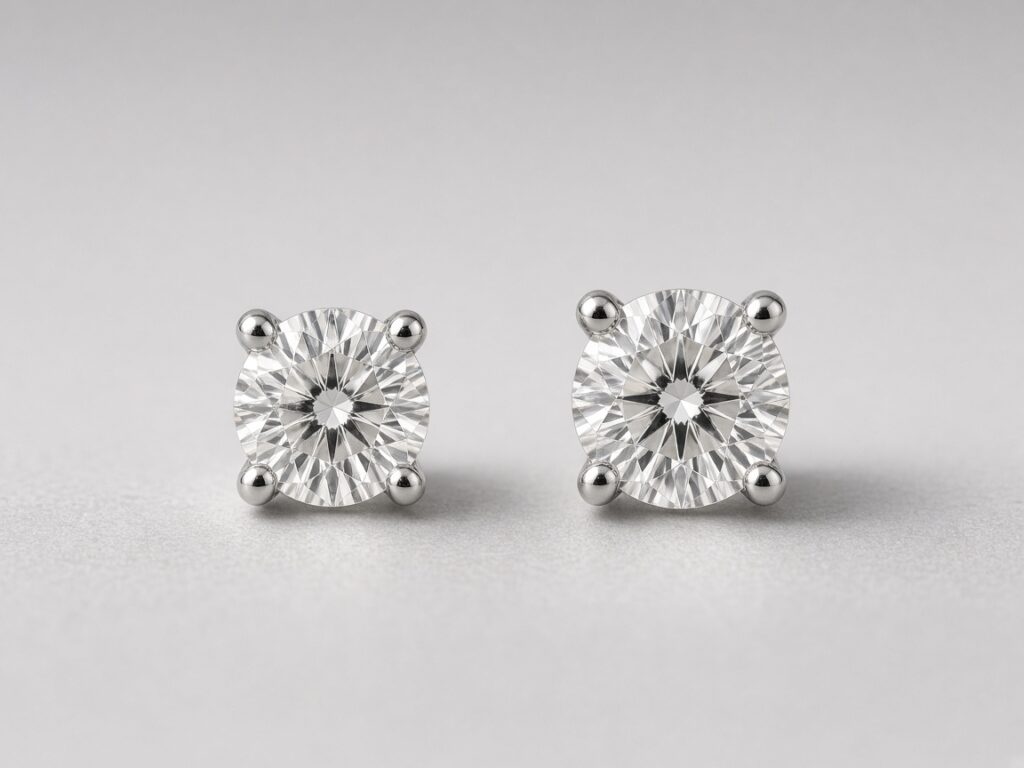
What does the “table” and “depth” on a report tell me about sparkle?
925 sterling silver jewellery, set with lab grown diamonds and made in our own Shenzhen workshop.
Talk · Lab-Grown Diamond Knowledge
A buyer sees table and depth percentages on a report and asks what they say about sparkle.
 ZKZ Editorial TeamMain answer · Product & gemmology desk
Table and depth describe a stone's proportions, and proportions affect how it handles light. But they are not a score for sparkle. For round brilliants a laboratory gives a cut grade, and for fancy shapes GIA says there is no internationally accepted system for cut. We could not verify target percentages and do not give any.
What we verified
Fact GIA says cut grades are given only to round brilliant diamonds, because they are the only cut with standardized facets, and that all other shapes are fancy shapes.
Fact GIA says proportions impact face-up appearance, that there is a nearly unlimited combination of proportions, and that each grade range represents a range of proportion sets, leaving room for personal preference.
Fact GIA says the table is the large flat facet on top of the diamond, and that the major components of a round brilliant are crown, girdle and pavilion.
Fact GIA says an internationally accepted system for visually evaluating the appearance of fancy-cut diamonds does not exist at this time.
How to use the report
Our advice For a round brilliant, start with the cut grade, then look at the stone in video or in person.
Our advice For fancy shapes, compare photographs and light-performance videos from the seller.
It depends Two stones with the same table and depth can look different, and two with different numbers can look similar.
A cautious way to use the numbers
Our advice Treat table and depth as clues, not verdicts. If two round brilliants have the same cut grade, compare them in video and choose the one that looks livelier. If a seller quotes ideal numbers without a cut grade, ask which laboratory graded the stone. For fancy shapes, look at how the seller photographs the stone under different lights.
Our advice Treat the numbers as a screen, not a verdict. If two stones have similar figures, compare them in person or in video under the same light before you decide.
Uncertain We did not verify any ideal table or depth percentages, and we do not know how they relate to sparkle for lab-grown stones in particular.
Related reading: What does fluorescence mean on a lab-grown diamond report? · Round vs Oval Diamonds: Sparkle, Size and Price
Sources
Fact = stated by the cited source. Our advice = editorial recommendation. Uncertain / it depends = limits of what can be said in general.
Other perspectives from the ZKZ team
For a round brilliant, look at the cut grade first. For other shapes, trust what you see in good video more than numbers alone.
Ask which laboratory issued the report and what its cut grade means. Systems differ between laboratories and shapes.
A well-cut stone still needs a clean surface and a setting that lets light in, so keep both in good condition.
Have a different question? Ask our team, or browse more answers in Talk.
Related products
Related articles & topics
- How do I check a lab-grown diamond report number is genuine?Talk
- What does fluorescence mean on a lab-grown diamond report?Talk
- Is a diamond a good April birthstone gift, and what are the lab-grown options?Talk
- What should a lab-grown diamond disclosure look like on a product page?Talk
- How does cubic zirconia differ from a lab-grown diamond in silver?Talk
- Silver vs Gold Settings for Lab Diamond NecklacesGuide
- Caring for a Lab Diamond Necklace: Cleaning and StorageGuide
- Lab Diamond Bracelets for Everyday Wear: Styles and DurabilityGuide
- How to Choose a Lab Diamond: The 4Cs Without the JargonGuide
- Coloured Lab Grown Diamonds: Pink, Blue, Yellow and BeyondGuide
Recommended
 What is the difference between GIA, IGI and in-house reports for lab-grown diamonds?Talk
 What bracelet size should I order if I have a small, medium or large wrist?Talk
 What are flat-back studs, and who needs them for cartilage or sleeping?TalkWhat jewelry suits an engagement-party or bridal-shower gift?Talk
 Can nickel-free silver jewelry still cause a reaction?Talk
 What are the black spots on my silver jewelry, and are they damage or tarnish?Talk