Can I supply my own lab-grown stones to a factory, and what changes?
925 sterling silver jewellery, set with lab grown diamonds and made in our own Shenzhen workshop.
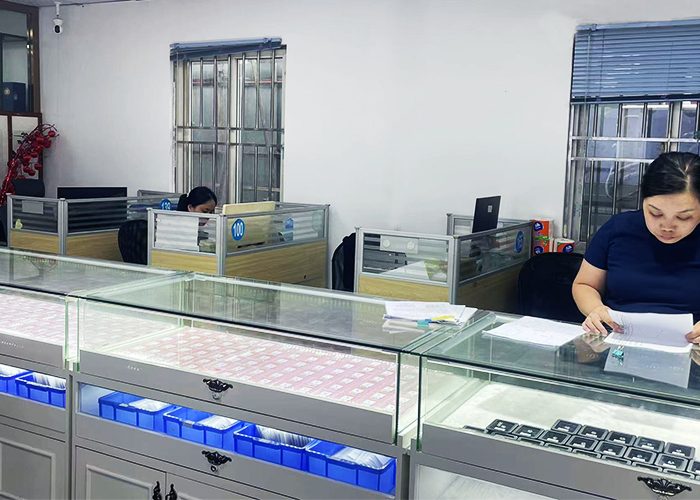
Talk · B2B / custom / OEM
A designer has a stock of lab-grown diamonds with reports and wants a factory to set them into silver jewelry. They want to know what changes compared with letting the factory buy the stones.
 ZKZ Editorial TeamMain answer · Product & gemmology desk
Yes, many factories will set customer-supplied stones, but the terms change: you carry the cost of the stones, the factory will want written counts, size tolerances and a loss allowance, and responsibility for breakage, loss or mismatched stones has to be agreed in writing before anything is shipped.
What changes when you supply the stones
- Ownership and risk. The stones stay yours, and so does the risk of loss during transit and while they are at the factory, unless the contract says otherwise.
- Counting and receipt. The factory should count, weigh and photograph the stones on arrival, and both sides should sign the record.
- Tolerances. Stones must match the setting, and the factory will state the allowed size variation. Stones outside the tolerance may not fit the mounting or may look uneven.
- Breakage and loss. Agree an allowance and who pays when it is exceeded. Replacement stones for a matched set need to come from you.
- Quality control. Stones that are chipped or off size may be rejected before setting, so check them first.
- Lead time. The factory cannot finish until the stones arrive, and a late or incomplete delivery delays the order.
- Paperwork. Shipping stones across a border needs correct customs documents and a clear description.
What to keep and send
- Reports and the stone numbers, matched to each lot.
- Girdle inscriptions, if any. GIA says its laboratory-grown reports carry a girdle inscription of "Laboratory-Grown" with the report number.
- A packing list with count, weight and sizes.
Disclosure does not change
Our advice A stone's origin must still be described correctly in your listing, whoever supplied it. The FTC Guides allow the word "cultured" for laboratory-created diamonds only with a clear and conspicuous disclosure that the product is not a mined stone (16 CFR 23.12(c)(3)), so plain wording such as "laboratory-grown" is the safest choice.
It depends Supplying stones can lower your cost per piece if you buy well. It can also add risk and effort if you lack the tracking systems.
Uncertain We have not seen a standard for loss allowances, so agree it with each factory.
Questions to ask the factory
- Do you accept customer-supplied stones, and is there a minimum order?
- What tolerances do you need?
- How do you count and store stones?
- What allowance do you apply, and what do you charge if it is exceeded?
- How do you return unused stones?
Related reading: Custom Lab Grown Diamond Jewelry: A Step-by-Step Guide · Jewelry Production Tolerances Explained
Sources
- GIA, What if my diamond is already inscribed?
- 16 CFR 23.12, FTC Jewelry Guides: definition and misuse of the word "diamond"
Fact = stated by the cited source. Our advice = editorial recommendation. Uncertain / it depends = limits of what can be said in general.
Other perspectives from the ZKZ team
Send a small test lot first. It shows how the factory handles stones, how it reports, and whether the stones suit the settings before a full order.
Tell the factory the exact stone dimensions and tolerance. A setting is cut for one size, and a stone that is a fraction too large can mean a rejected piece.
Keep a record that links each shipment of finished jewelry to the stones and reports used, so you can answer a customer or authority about a given piece.
Have a different question? Ask our team, or browse more answers in Talk.
Related products
Related articles & topics
- Can I Order a Custom Lab-Diamond Piece in Small Quantities?Talk
- How do I read a jewelry listing to tell what is lab-grown, what is silver and what is plated?Talk
- Are Lab-Grown Diamonds Really More Ethical? What to Ask the SellerTalk
- Can a Lab-Grown Diamond Pass a Diamond Tester?Talk
- Is a Lab-Grown Diamond on Sterling Silver a Good Engagement Ring for Daily Wear?Talk
- What Are Lab Grown Diamonds? A Plain-English ExplanationGuide
- Custom Jewelry: How to Design Your Own PieceGuide
- Lab Grown Diamond Necklaces: Styles, Sizes and How to ChooseGuide
- Lab Grown Diamond Stud Earrings: Sizes, Settings and PriceGuide
- How Much Do Lab Grown Diamonds Cost? Price Factors ExplainedGuide
Recommended
 What is the difference between GIA, IGI and in-house reports for lab-grown diamonds?Talk
 What bracelet size should I order if I have a small, medium or large wrist?Talk
 What are flat-back studs, and who needs them for cartilage or sleeping?TalkWhat jewelry suits an engagement-party or bridal-shower gift?Talk
 Can nickel-free silver jewelry still cause a reaction?Talk
 What are the black spots on my silver jewelry, and are they damage or tarnish?Talk