Are lab-grown diamonds ever treated, and must treatment be disclosed?
925 sterling silver jewellery, set with lab grown diamonds and made in our own Shenzhen workshop.
Talk · Compliance & disclosure
A buyer reads that some lab-grown diamonds are "treated" after they are grown. They want to know whether that is common, whether it is a problem, and whether the seller has to say so.
 ZKZ Editorial TeamMain answer · Product & gemmology desk
Yes, treatment is common among lab-grown diamonds. GIA reports that most CVD-grown diamonds it examines have had post-growth HPHT treatment, mainly to improve colour. Under the FTC Jewelry Guides, treatments should be disclosed when they are not permanent, create special care needs or significantly affect value. Whether a given treatment meets those tests is a judgment, so ask the seller to state what has been done.
What treatment means here
Fact GIA's 2024 review says that some CVD-grown diamonds are brown after growth, and that they can be improved with high-pressure, high-temperature (HPHT) treatment to reduce or remove the brown colour. It says that about 80% of the CVD-grown diamonds submitted to GIA have been subject to post-growth HPHT treatment to improve colour grade, and that low-pressure, high-temperature (LPHT) annealing can also change the colour of CVD-grown diamonds.
Fact GIA also says that HPHT treatment is different from HPHT growth: it is carried out at higher temperatures than growth, and does not make additional diamond material.
What the FTC Guides say
Fact The FTC Jewelry Guides treat a diamond as a gemstone product, and say treatments to diamonds should be disclosed as set out in 16 CFR 23.24 (23.14). Under 23.24 it is unfair or deceptive not to disclose a treatment if it is not permanent, if it creates special care requirements, or if it has a significant effect on the stone's value. For online sales, the disclosure should be in the description of the product.
Uncertain The Guides do not list HPHT annealing by name, and we have not found an FTC statement on whether it must be disclosed for lab-grown diamonds. That is a legal question for the seller to decide with advice. The conservative course is to state it.
Is it a problem for the buyer?
- GIA's article says that the colour changes it has studied in laboratory-grown diamonds, such as photochromic and thermochromic effects, were temporary and reversible in the cases it observed, and that stones submitted more than once showed no significant change in colour grade.
- Treatment of colour is not the same as filling or coating, which can need special care.
It depends Some buyers do not mind treatment, since it is part of how many stones are made, and others prefer untreated stones. This is a matter of preference.
What to ask
- Has the stone had any post-growth treatment, and which one?
- Does the report mention treatment, and which laboratory issued it?
- Are there any special care instructions?
- Is the information in the listing as well as in the report?
Our advice A good seller will answer plainly, and will put the answer in writing.
Fact GIA's page for laboratory-grown diamond reports says its colored laboratory-grown diamond reports include an assessment of growth type and post-growth treatment, while its Quality Assessment for colorless to near-colorless stones classifies each stone as Premium or Standard.
Uncertain We could not confirm how every laboratory lists treatment on every kind of laboratory-grown report, so read the report you are given.
Related reading: Lab Grown Diamond Certification: IGI, GIA and What to Check · Coloured Lab Grown Diamonds: Pink, Blue, Yellow and Beyond
Sources
- GIA Gems & Gemology (Summer 2024), update on laboratory-grown diamonds
- GIA, Laboratory-grown diamond reports
- 16 CFR 23.14, FTC Jewelry Guides: disclosure of treatments to diamonds
- 16 CFR 23.24, FTC Jewelry Guides: disclosure of treatments to gemstones
Fact = stated by the cited source. Our advice = editorial recommendation. Uncertain / it depends = limits of what can be said in general.
Other perspectives from the ZKZ team
Say plainly what you know and do not know. If the supplier cannot tell you whether a stone is treated, record that and tell your customer, rather than leaving the question blank.
Ask suppliers for treatment information in writing, for each lot or each stone, and keep it with the report.
Do not rule a stone out because it is treated. Compare grades, the report and what you see, and choose on that basis.
Have a different question? Ask our team, or browse more answers in Talk.
Related products
Related articles & topics
- What should a lab-grown diamond disclosure look like on a product page?Talk
- Are Lab-Grown Diamonds Really More Ethical? What to Ask the SellerTalk
- Do Lab-Grown Diamonds Get Cloudy or Lose Their Sparkle Over Time?Talk
- Is a Lab-Grown Diamond on Sterling Silver a Good Engagement Ring for Daily Wear?Talk
- Will a Lab-Grown Diamond Hold Its Resale Value?Talk
- 2026 Lab-Grown Diamond Industry Outlook: Prices, Supply and Jewelry DemandGuide
- Custom Lab Grown Diamond Jewelry: A Step-by-Step GuideGuide
- Lab Grown Diamond Certification: IGI, GIA and What to CheckGuide
- CVD vs HPHT Lab Diamonds: What the Difference Means for BuyersGuide
- Resizing and Maintaining a Lab Diamond RingGuide
Recommended
 What is the difference between GIA, IGI and in-house reports for lab-grown diamonds?Talk
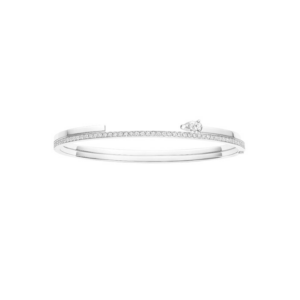 What bracelet size should I order if I have a small, medium or large wrist?Talk
 What are flat-back studs, and who needs them for cartilage or sleeping?TalkWhat jewelry suits an engagement-party or bridal-shower gift?Talk
 Can nickel-free silver jewelry still cause a reaction?Talk
 What are the black spots on my silver jewelry, and are they damage or tarnish?Talk