What should a lab-grown diamond disclosure look like on a product page?
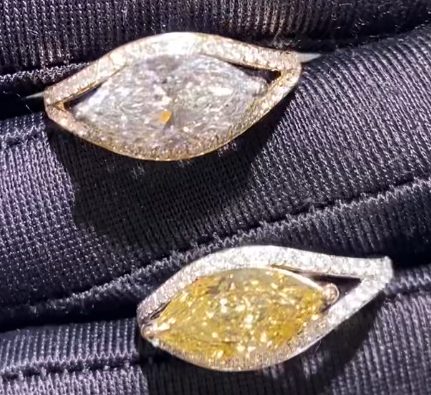
925 sterling silver jewellery, set with lab grown diamonds and made in our own Shenzhen workshop.
Talk · Compliance & disclosure
A small online seller is writing product pages for lab-grown diamond jewelry. They want to follow the FTC Jewelry Guides and ask what wording, placement and supporting details they should use, and what to avoid.
 ZKZ Editorial TeamMain answer · Product & gemmology desk
Put "laboratory-grown" (or a similar clear term) immediately before the word "diamond", in the same size and style, in the title, the description and any structured data. Do not use "real", "genuine" or "natural" for a lab-grown stone. Add the report, weight and any treatment information near the product, not hidden in small print.
What the FTC says
Fact The FTC's guidance says that sellers of laboratory-created diamonds should describe them as "laboratory-grown", "laboratory-created", "[manufacturer name]-created" or a similar term, placed immediately before the word "diamond" with equal conspicuousness, so that the nature of the product and the fact that it is not mined are clear.
Fact 16 CFR 23.12(c)(3) allows "cultured" for laboratory-created diamonds if it is qualified by such a clear disclosure, and 16 CFR 23.27 says "real", "genuine" and "natural" should not be used for products made artificially.
Fact The Guides say treatments to diamonds should be disclosed in the way set out for gemstones, which means disclosing if the treatment is not permanent, needs special care or has a significant effect on value. For products sold online, the disclosure should be in the description, not only at the point of sale (16 CFR 23.14 and 23.24).
A layout that works
- Title: "Laboratory-grown diamond solitaire ring, 925 sterling silver". Do not leave the qualifier for later in the description.
- Short description: one sentence that says what the stone is, in plain words.
- Specification list: origin (laboratory-grown), shape, weight, colour, clarity and cut where reported, laboratory and report number if there is one, metal fineness and plating.
- Treatments: state whether any are known, or that none are known, and who says so.
- Images and alt text: use the same wording in image alt text.
- Structured data and feeds: make sure product feeds, marketplace listings and schema also say "laboratory-grown".
- Weight: state decimal weight accurately, or explain any fractional range.
What to avoid
- "Real diamond", "genuine diamond" and "natural diamond" for a lab-grown stone.
- The unqualified word "diamond" in a headline.
- Hiding the origin in a tab or a footnote.
- "Faux" as a disclosure.
- Using "synthetic" or "lab-created" in some places and "diamond" alone in others.
Beyond the US
Uncertain The Guides are US guidance. Other countries have their own rules on the words used for lab-grown stones, and marketplaces have their own policies. If you sell abroad, check each market.
Our advice Where there is any doubt, a plain statement such as "This is a laboratory-grown diamond. It has the same chemical composition and crystal structure as a mined diamond but was grown in a laboratory" is clear and accurate.
Related reading: Lab Grown Diamond Certification: IGI, GIA and What to Check · How to Buy Jewelry Online Safely: Quality Checks Before You Pay
Sources
- FTC, In the Loupe: Advertising Diamonds, Gemstones and Pearls
- 16 CFR 23.12, FTC Jewelry Guides: definition and misuse of the word "diamond"
- 16 CFR 23.27, FTC Jewelry Guides: misuse of "real", "genuine", "natural", "precious" and similar words
- 16 CFR 23.14, FTC Jewelry Guides: disclosure of treatments to diamonds
- 16 CFR 23.24, FTC Jewelry Guides: disclosure of treatments to gemstones
- 16 CFR 23.18, FTC Jewelry Guides: misrepresentation of weight and "total weight"
Fact = stated by the cited source. Our advice = editorial recommendation. Uncertain / it depends = limits of what can be said in general.
Other perspectives from the ZKZ team
Check every place the stone is named: title, bullets, meta description, alt text, ads and product feeds. The Guides apply to each representation, not only to the main page.
Ask your supplier to state origin, treatments and weight in writing for each stone lot, so that your product pages are based on documents and not assumptions.
As a buyer, look for the origin word in the page title and in the spec list. A seller that says it in both places is easier to trust.
Have a different question? Ask our team, or browse more answers in Talk.
Related products
Related articles & topics
- Will a Lab-Grown Diamond Hold Its Resale Value?Talk
- Is a diamond a good April birthstone gift, and what are the lab-grown options?Talk
- What does "cultured diamond" mean, and is it the same as lab-grown?Talk
- Can a Lab-Grown Diamond Pass a Diamond Tester?Talk
- Is a Lab-Grown Diamond on Sterling Silver a Good Engagement Ring for Daily Wear?Talk
- Personalised Lab Diamond Pendants: Initials, Birthstones and EngravingGuide
- Lab Diamond vs Moissanite: Differences and Which to BuyGuide
- Lab Diamond Hoops and Drop Earrings: Styles and WeightGuide
- Lab Grown vs Natural Diamonds: Price, Quality and ResaleGuide
- Caring for a Lab Diamond Necklace: Cleaning and StorageGuide
Recommended
 What is the difference between GIA, IGI and in-house reports for lab-grown diamonds?Talk
 What bracelet size should I order if I have a small, medium or large wrist?Talk
 What are flat-back studs, and who needs them for cartilage or sleeping?TalkWhat jewelry suits an engagement-party or bridal-shower gift?Talk
 Can nickel-free silver jewelry still cause a reaction?Talk
 What are the black spots on my silver jewelry, and are they damage or tarnish?Talk