Are Lab-Grown Diamonds Really More Ethical? What to Ask the Seller
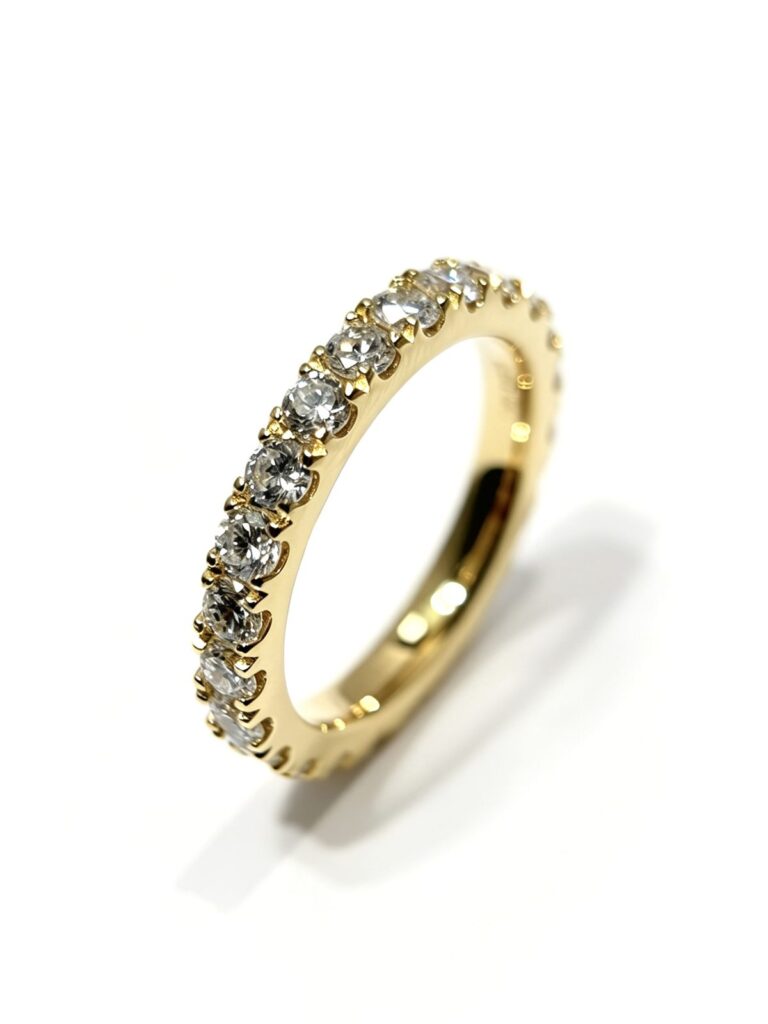
925 sterling silver jewellery, set with lab grown diamonds and made in our own Shenzhen workshop.
Talk · Buying & disclosure
A buyer chose lab-grown partly for ethical reasons. Two sellers both call their stones "sustainable" and "eco-friendly", but neither explains why. The buyer wants to know what is genuinely different and how to check the claims.
 ZKZ Editorial TeamMain answer · Product & gemmology desk
Lab-grown diamonds remove some real concerns: no mine, no excavation, and no link to the conflict-diamond trade. But “ethical” is not automatic. Growing diamonds takes substantial energy, cutting and jewellery-making still involve workers, and broad green claims are often unsupported. Judge the seller’s specific, checkable answers rather than the label.
What is established
Fact Lab-grown diamonds are made by HPHT or CVD processes rather than mined (GIA). They are outside the rough-diamond trade that the Kimberley Process was set up to control.
Fact Both growth methods require high temperatures, and HPHT also requires very high pressure (GIA), so electricity use is significant. The footprint depends heavily on the energy source.
Fact In the US, the FTC Green Guides say environmental claims should be specific and substantiated. Broad, unqualified terms like “eco-friendly” are hard to substantiate. Separately, the Jewelry Guides require lab-grown origin to be clearly disclosed.
Questions to ask the seller
- Is the stone disclosed as laboratory-grown on the listing, invoice and any report?
- What exactly does your “sustainable” claim refer to, and what evidence supports it, such as an independent certification, an energy statement or audit?
- Do you know where the stone was grown and cut? “We don’t know” is an acceptable honest answer.
- Is the metal recycled, and can you document it?
- Who makes the jewellery, and what workplace standards apply?
Labels can help but need reading carefully. Some producers hold third-party sustainability certifications. If a seller cites one, ask for the certificate holder and number and check what the certification actually covers, such as energy, labour or chain of custody, and whether it applies to the stone you are buying.
Where the limits are
Our advice Decide which factor matters most to you, whether that is avoiding mining, carbon, labour or minimising new production, and ask about that specifically. Recycled metal and vintage pieces are options if new production is your main concern.
Uncertain We do not publish carbon figures for stones because we cannot verify them for every supplier, and we would rather not imply precision we do not have. Treat any per-carat emissions figure without a stated method and source with caution.
Sources
- GIA, Gems & Gemology (Summer 2024): Laboratory-Grown Diamonds, an update on identification
- Kimberley Process Certification Scheme
- 16 CFR Part 260, FTC Green Guides (environmental marketing claims)
- FTC: In the Loupe, advertising diamonds, gemstones and pearls
Fact = stated by the cited source. Our advice = editorial recommendation. Uncertain / it depends = limits of what can be said in general.
Other perspectives from the ZKZ team
Two different rules apply. Origin disclosure ("laboratory-grown diamond") is a Jewelry Guides issue; environmental wording is a Green Guides issue. A listing can satisfy the first and still overstate the second, so check each separately.
Ask for evidence in a form you can keep, such as a document, certificate number or written statement, rather than a verbal assurance. If a supplier cannot document energy source or origin, a smaller, accurate claim is better than a large, unverifiable one.
The most ethical choice is usually a piece you will actually wear for a long time. Durable design, the right size and a setting you can service will do more to reduce waste than a marketing label.
Have a different question? Ask our team, or browse more answers in Talk.
Related products
Related articles & topics
- Can a Lab-Grown Diamond Pass a Diamond Tester?Talk
- Will a Lab-Grown Diamond Hold Its Resale Value?Talk
- What Does a Lab-Diamond Grading Report Show, and Is a Seller's Report Enough?Talk
- Does Rhodium Plating Wear Off a Silver Diamond Ring, and Can It Be Redone?Talk
- Do Lab-Grown Diamonds Get Cloudy or Lose Their Sparkle Over Time?Talk
- Silver vs Gold Settings for Lab Diamond NecklacesGuide
- Solitaire Pendant vs Diamond Necklace: Which Suits You?Guide
- Lab Grown Diamond Certification: IGI, GIA and What to CheckGuide
- Sterling Silver Rings: How to Choose a Ring That LastsGuide
- Sterling Silver Hoops vs Studs: Weight, Comfort and Everyday WearGuide
Recommended
 What is the difference between GIA, IGI and in-house reports for lab-grown diamonds?Talk
 What bracelet size should I order if I have a small, medium or large wrist?Talk
 What are flat-back studs, and who needs them for cartilage or sleeping?TalkWhat jewelry suits an engagement-party or bridal-shower gift?Talk
 Can nickel-free silver jewelry still cause a reaction?Talk
 What are the black spots on my silver jewelry, and are they damage or tarnish?Talk