Can I wear a diamond ring for manual work?
925 sterling silver jewellery, set with lab grown diamonds and made in our own Shenzhen workshop.
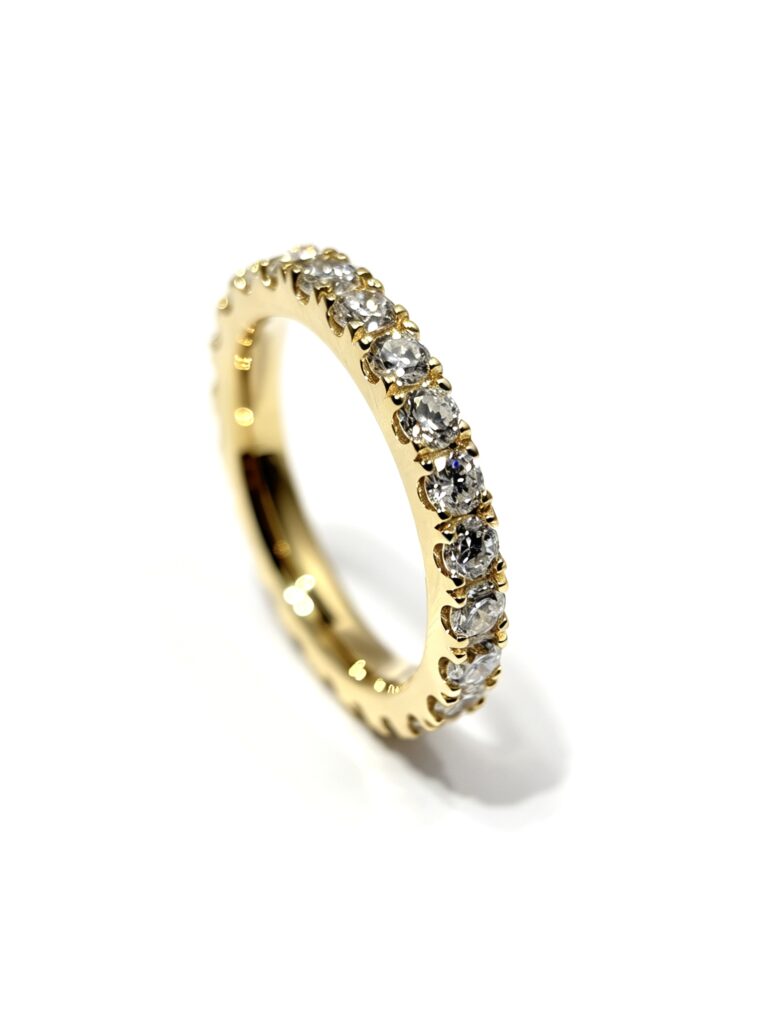
Talk · Everyday use
A wearer works with their hands, such as gardening, DIY or lifting at work, and wonders whether they can wear a sterling silver diamond ring through the day, or whether they should take it off.
 ZKZ Editorial TeamMain answer · Product & gemmology desk
It is better to take the ring off for manual work. A diamond is very hard, but the silver around it is soft, so knocks can bend the band, loosen prongs and put the stone at risk. Heavy gripping, tools and chemicals add to the danger. If you must wear a ring, choose a low, protected setting, and check it often.
Why manual work is hard on rings
Fact IGI says that no jewelry is indestructible, that metal pieces can bend under pressure, altering shape, loosening prongs and risking gemstone security, and that rings in particular should be removed during physical exercise, gardening and housekeeping, and when using household cleaning products. GIA also advises removing fine jewelry before household cleaners.
Fact Sterling silver is at least 92.5% silver (16 CFR 23.5), and Mindat gives native silver a hardness of 2.5 to 3 on the Mohs scale, which is far lower than diamond at 10.
Our advice The result is that the stone can survive an impact that bends or scratches the setting. A diamond can still chip if it is hit at the right angle.
What can go wrong
- A bent band. Gripping a tool or a rail can squeeze the ring out of shape.
- Loose prongs. A knock can open a prong enough for a stone to drop out.
- A caught ring. A ring can snag on a machine, a hook or a fence, which can injure the finger.
- Chemicals and dirt. Solvents, cement, oil and fertiliser can damage the metal and fill the gaps behind the stone.
What to do
- Take it off before work, and keep it in a safe place, not in a pocket.
- Wear a spare band such as a plain silicone ring, which is designed to be worn at work.
- Choose a protective setting for a ring you intend to wear often, such as a bezel or a low-profile setting.
- Check the ring each week for loose stones or bent prongs. Tap it by your ear to listen for a rattle.
- Get it checked by a jeweller regularly. IGI says that once a year is prudent, and GIA suggests every six months.
Safety first
Our advice If you work with machinery, avoid wearing any ring. A ring can catch and cause serious injury.
It depends Some people wear a ring for light manual work and accept the risk. How much risk you take is up to you, but the cost of repair or loss should be part of the decision.
Related reading: Silver Engagement Rings With Lab Diamonds: Pros and Cons · Men’s Lab Grown Diamond Rings and Bands
Sources
- IGI, Never do this with your jewelry
- GIA, Tips on caring for jewelry
- 16 CFR 23.5, FTC Jewelry Guides: misrepresentation as to silver content
- Mindat, Native silver: mineral information and data
Fact = stated by the cited source. Our advice = editorial recommendation. Uncertain / it depends = limits of what can be said in general.
Other perspectives from the ZKZ team
The most common damage from manual work is a bent shank and opened prongs. Both are often repairable, but a stone that has already fallen out may be lost.
Take the ring off before you start, not when you notice a problem. A habit of putting it in the same dish every time prevents most losses.
If you need a ring for daily wear at work, choose a simple, low band, with a protective setting, and consider a harder metal than sterling silver.
Have a different question? Ask our team, or browse more answers in Talk.
Related products


Related articles & topics
- Can I wear a lab-diamond ring while sleeping?Talk
- Is a Lab-Grown Diamond on Sterling Silver a Good Engagement Ring for Daily Wear?Talk
- Does Rhodium Plating Wear Off a Silver Diamond Ring, and Can It Be Redone?Talk
- How thick should a silver ring band be for daily wear?Talk
- How often should prongs on a lab-diamond ring be checked?Talk
- How Much Do Lab Grown Diamonds Cost? Price Factors ExplainedGuide
- Silver vs Gold Settings for Lab Diamond NecklacesGuide
- How to Find Your Ring Size at Home (Free Printable Method)Guide
- Diamond Stud Size Guide: 0.5 ct to 3 ct on the EarGuide
- Will a Silver Ring Turn My Finger Green?Guide
Recommended
 What is the difference between GIA, IGI and in-house reports for lab-grown diamonds?Talk
 What bracelet size should I order if I have a small, medium or large wrist?Talk
 What are flat-back studs, and who needs them for cartilage or sleeping?TalkWhat jewelry suits an engagement-party or bridal-shower gift?Talk
 Can nickel-free silver jewelry still cause a reaction?Talk
 What are the black spots on my silver jewelry, and are they damage or tarnish?Talk