Can you see the difference between D and G colour in a silver setting?
925 sterling silver jewellery, set with lab grown diamonds and made in our own Shenzhen workshop.
Talk · Lab-Grown Diamond Knowledge
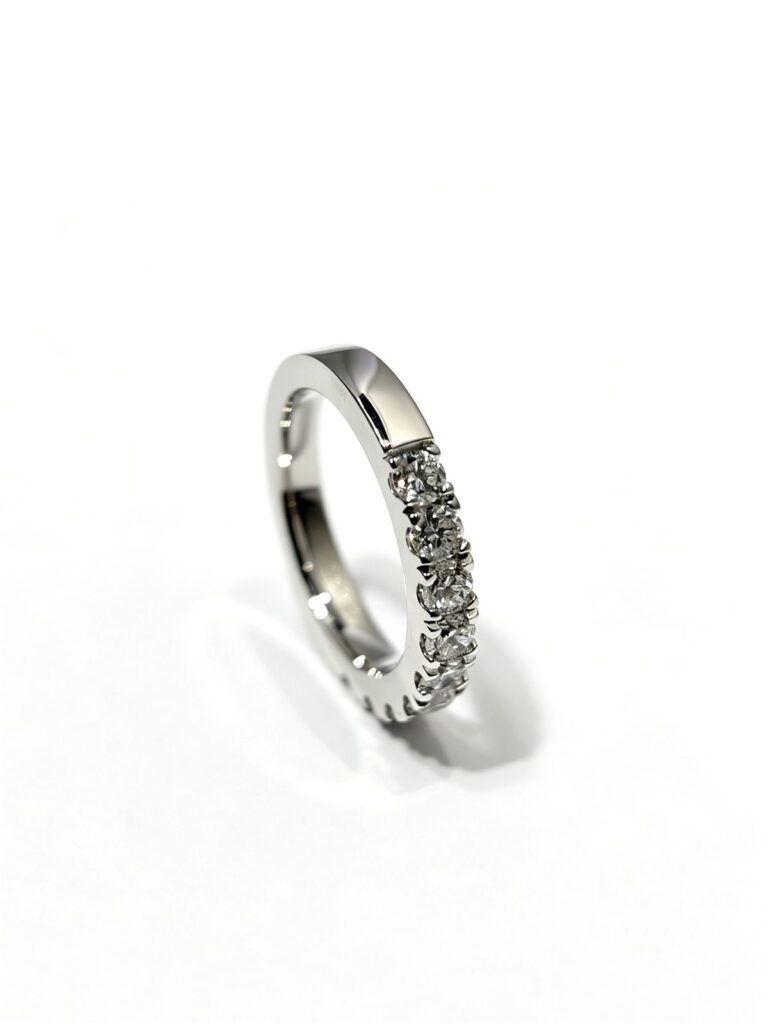
A buyer compares a D colour and a G colour lab-grown diamond for a silver ring and asks whether the difference can be seen.
 ZKZ Editorial TeamMain answer · Product & gemmology desk
We could not verify how visible the difference is to ordinary viewers, and we do not make a claim either way. What we can say is that GIA grades colour under controlled conditions against masterstones, so grades are not an eyeball judgement, and that colour differences in small steps can be subtle.
What we verified
Fact GIA says the correct way to evaluate diamond colour is in precise conditions, under controlled lighting, comparing stones to masterstones with established colour grades, and that colour is recorded on the D-to-Z scale, from D for colourless to Z for light.
Fact GIA says the colour of a diamond can drastically alter quality and price, as subtle as colour distinction may be.
Fact GIA says its laboratory-grown ‘Premium’ category needs colour D, and ‘Standard’ covers E to J, among other criteria.
Fact IGI groups D to F as colourless and G to J as near colourless.
How to decide
Our advice Compare in person if you can, or look at video in natural light. Set the stone against the metal you plan to use.
Our advice Decide what matters more: the grade, the size or the budget.
It depends The look of a stone depends on lighting, cut, size, setting and the viewer. The same grade can look different in different settings.
A practical way to decide
Our advice If your budget allows both, ask the seller for both stones in one video, held over the same white surface, and view it on a phone and on a computer. If you cannot tell them apart there, the difference is unlikely to be what drives your decision, and the saving may be better spent on size or cut. If you can tell them apart, you know what you prefer.
Our advice If you decide by price, spend the saving on something you can see, such as a better cut or a slightly larger stone.
Uncertain We did not find a verified study showing when a typical viewer can see the difference between D and G, so we give no rule. A silver setting may reflect light differently from other metals, but we did not verify an effect.
Related reading: What colour grade is enough for a lab diamond set in white-plated silver? · 925 Sterling Silver vs Sterling Silver: Is There a Difference?
Sources
- GIA 4Cs, Diamond colour
- GIA press release, updated laboratory-grown diamond services (2025)
- IGI, The 4Cs: diamond colour
Fact = stated by the cited source. Our advice = editorial recommendation. Uncertain / it depends = limits of what can be said in general.
Other perspectives from the ZKZ team
Compare the two stones side by side if you can, and decide whether the saving matters to you. Grades differ on paper more than they may to the eye.
Treat colour grades as ranges defined by each laboratory, and compare like with like. IGI and GIA group colours differently.
Keep the stones clean when you compare them, since oils and dust change the look. Check them in more than one light.
Have a different question? Ask our team, or browse more answers in Talk.
Related products
Related articles & topics
- What is lab-grown white sapphire, and how does it compare with a lab diamond in silver?Talk
- How does cubic zirconia differ from a lab-grown diamond in silver?Talk
- What colour grade is enough for a lab diamond set in white-plated silver?Talk
- How do I choose jewelry for a bride in silver and lab-grown diamond?Talk
- Is a Lab-Grown Diamond on Sterling Silver a Good Engagement Ring for Daily Wear?Talk
- Lab Grown Diamond Stud Earrings: Sizes, Settings and PriceGuide
- Lab Grown Diamond Tennis Bracelets: Complete Buying GuideGuide
- Silver Engagement Rings With Lab Diamonds: Pros and ConsGuide
- Lab Diamond Hoops and Drop Earrings: Styles and WeightGuide
- 925 Sterling Silver vs Sterling Silver: Is There a Difference?Guide
Recommended
 What is the difference between GIA, IGI and in-house reports for lab-grown diamonds?Talk
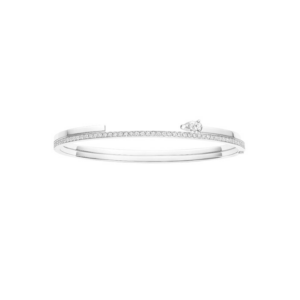 What bracelet size should I order if I have a small, medium or large wrist?Talk
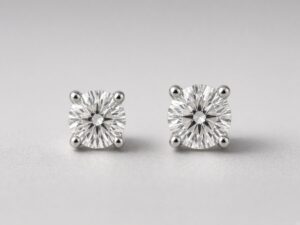 What are flat-back studs, and who needs them for cartilage or sleeping?TalkWhat jewelry suits an engagement-party or bridal-shower gift?Talk
 Can nickel-free silver jewelry still cause a reaction?Talk
 What are the black spots on my silver jewelry, and are they damage or tarnish?Talk