How do I buy loose lab-grown diamonds for custom settings?
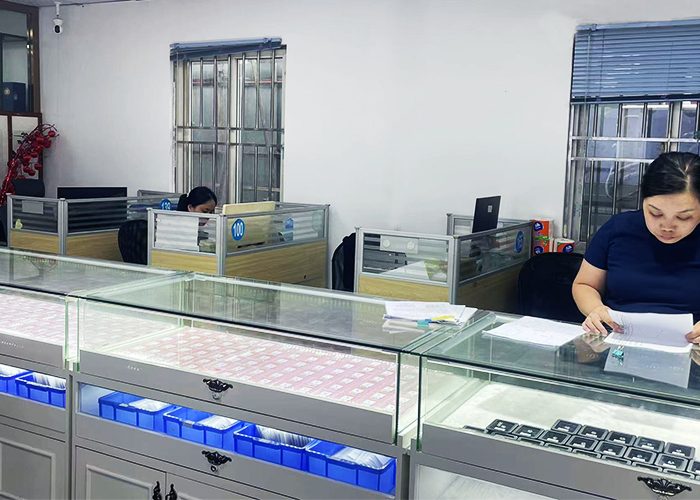
925 sterling silver jewellery, set with lab grown diamonds and made in our own Shenzhen workshop.
Talk · Sourcing & Ordering (B2B)
A small brand wants to buy loose lab-grown diamonds to set in its own silver designs and asks what to check when sourcing.
 ZKZ Editorial TeamMain answer · Product & gemmology desk
Buy against a written specification and a laboratory report, check each stone on arrival and keep the records. GIA states that its laboratory-grown reports are for loose stones of 0.15 carats or more and that the girdle is inscribed with the report number, so reported stones can be matched to their paper trail.
What we verified
Fact GIA says its Laboratory-Grown Diamond Quality Assessment is for loose, colourless to near-colourless stones of 0.15 carats or more, and the girdle is laser inscribed with the term Laboratory-Grown and its number.
Fact GIA says its laboratory-grown reports are digital only, and that if a report can be found on its Report Check, it is authentic.
Fact IGI lets you verify a report by report number, SKU lookup or QR code.
Fact The FTC Jewelry Guides (16 CFR 23.25) say a laboratory-grown stone should be described with laboratory-grown wording with equal conspicuousness to words such as gem, gemstone or stone.
A sourcing checklist
- Write the spec: shape, weight range, colour, clarity, cut or finish, report laboratory and tolerance.
- Ask for the report number before you pay and check it on the laboratory site.
- Inspect on arrival: weight, size, inscription and a loupe check against the report.
- Keep stones sealed and labelled with the order and report numbers.
- Agree return terms for stones that do not match.
Our advice Start with a small order from a new supplier before you commit to larger quantities.
It depends Reports differ between laboratories, and a supplier may offer several laboratories.
Planning the setting around the stone
Our advice Design the setting around a tolerance, not a single number. Loose stones of the same nominal size vary slightly, so ask the setter what range of diameter and depth each seat can accept. Keep a few spare stones per order for breakage during setting, and agree who bears that cost. Decide early whether the settings are made first and the stones set later, or stones are bought for each design, because that decides how much stock you hold.
Our advice Record the report number against the finished piece, so a customer question months later can be answered quickly.
Uncertain We did not verify supplier reliability checks, price levels or typical lead times.
Related reading: Can a Lab-Grown Diamond Pass a Diamond Tester? · Custom Lab Grown Diamond Jewelry: A Step-by-Step Guide
Sources
- GIA, Laboratory-grown diamond services
- GIA, How can I be sure my laboratory-grown diamond report is authentic?
- IGI, Verify your report
- 16 CFR 23.25, FTC Jewelry Guides: misuse of "ruby", "sapphire", "emerald", "birthstone", "gem" and similar words
Fact = stated by the cited source. Our advice = editorial recommendation. Uncertain / it depends = limits of what can be said in general.
Other perspectives from the ZKZ team
Ask for the report number and check it before you pay. Start with a small first order and compare each stone with its report on arrival.
Choose a few shapes and sizes to start. A narrower range is easier to source in matched quality and easier to design around.
Write the lab-grown wording into your invoices, product pages and packaging. Keep each report with the order records.
Have a different question? Ask our team, or browse more answers in Talk.
Related products
Related articles & topics
- Are Lab-Grown Diamonds Really More Ethical? What to Ask the SellerTalk
- Do Lab-Grown Diamonds Get Cloudy or Lose Their Sparkle Over Time?Talk
- Are coloured lab-grown diamonds stable, and do their colours fade?Talk
- Are lab-grown diamonds ever treated, and must treatment be disclosed?Talk
- Can I Order a Custom Lab-Diamond Piece in Small Quantities?Talk
- Lab Diamond vs Moissanite: Differences and Which to BuyGuide
- Silver Engagement Rings With Lab Diamonds: Pros and ConsGuide
- Men’s Lab Grown Diamond Rings and BandsGuide
- Silver vs Gold Settings for Lab Diamond NecklacesGuide
- Lab Grown Diamond Pendants: Solitaire, Halo and Bezel StylesGuide
Recommended
 What is the difference between GIA, IGI and in-house reports for lab-grown diamonds?Talk
 What bracelet size should I order if I have a small, medium or large wrist?Talk
 What are flat-back studs, and who needs them for cartilage or sleeping?TalkWhat jewelry suits an engagement-party or bridal-shower gift?Talk
 Can nickel-free silver jewelry still cause a reaction?Talk
 What are the black spots on my silver jewelry, and are they damage or tarnish?Talk