How hard is silver compared with diamond, and why does it matter?
925 sterling silver jewellery, set with lab grown diamonds and made in our own Shenzhen workshop.
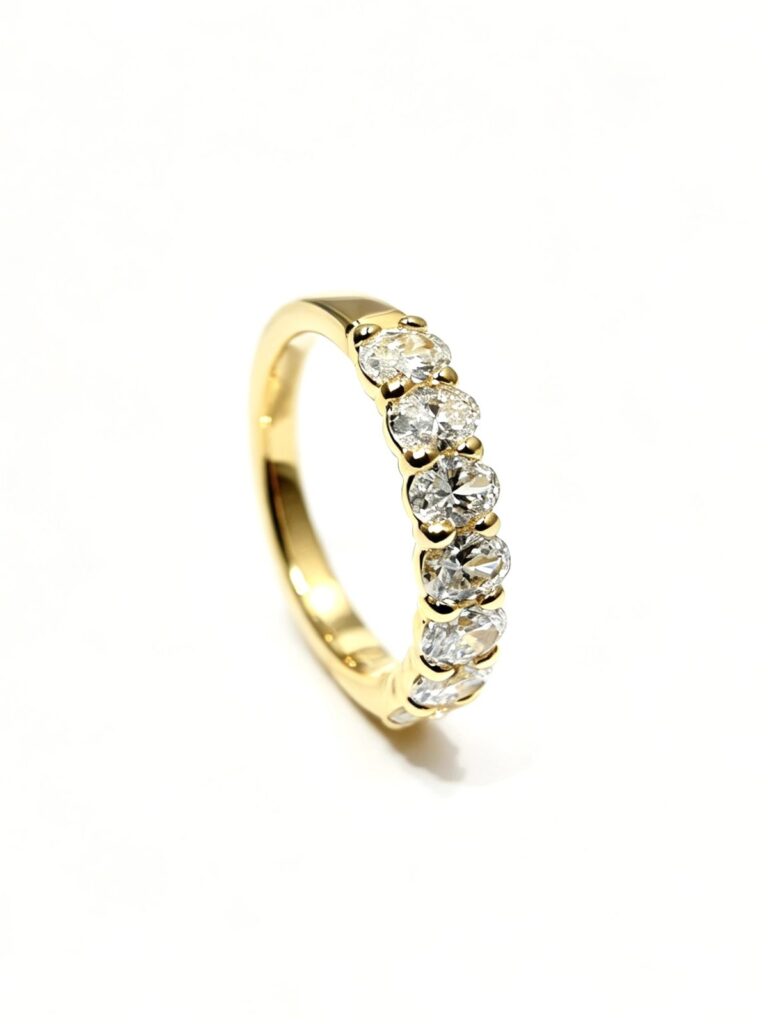
Talk · Materials & stone knowledge
A buyer asks why a sterling silver ring with a diamond is "tough" in one sense and "soft" in another. They want to understand the difference in hardness between silver and diamond, and what it means for scratches and wear.
 ZKZ Editorial TeamMain answer · Product & gemmology desk
A diamond is the hardest common gem material, while silver is soft. So the diamond will not be scratched by everyday contact, but the silver around it can be marked by many things, including other jewelry and the diamond itself. The difference shapes how you wear and care for a silver diamond ring.
The numbers
Fact The FTC Jewelry Guides define a diamond as having a hardness of 10 (16 CFR 23.12). The U.S. National Park Service's Mohs scale chart places diamond at 10, a fingernail at about 2.5 and a copper penny at about 3.5.
Fact Mindat gives the mineral native silver a Mohs hardness of 2.5 to 3.
Uncertain Sterling silver is an alloy, and its hardness depends on the composition and how it has been worked or heat-treated. Mohs is a scratch-resistance ranking, not a measure of strength, so the figures for pure silver are a guide, not a value for your ring.
Why it matters
- The diamond scratches silver, but not the other way round. If a diamond ring rubs against a silver band or a bracelet, the silver is marked.
- Silver can be scratched by many everyday things. Keys, zips, sand and hard surfaces can leave fine lines on silver.
- Hardness is not toughness. A diamond can chip or break if struck at the wrong angle, because hardness measures resistance to scratching, not to impact. Silver bends rather than chips.
- Dust is harder than silver. Fine dust that contains quartz (hardness 7) can scratch silver and, in time, even dull facets.
What to do about it
- Store pieces separately, so the diamond cannot rub against silver.
- Choose the right finish. A high polish shows scratches more. A brushed or satin finish hides them.
- Clean gently. Use a soft brush and mild soap, not abrasives.
- Do not expect a diamond ring to stay scratch-free. Fine scratches on the band are normal wear.
- Have the metal re-polished by a jeweller when you want a fresh look, knowing it removes a little metal.
Does this mean silver is a poor choice?
It depends Not at all. Silver is widely used and easy to repair, polish and re-plate. It needs a little more care than harder metals, and it costs less. Many people accept scratches as a part of wearing jewelry.
Our advice If you want a ring that stays smoother for longer, choose a thicker band, a satin finish and a simple design, and take it off for rough tasks.
Related reading: Sterling Silver vs White Gold: Which Should You Choose? · Silver Engagement Rings With Lab Diamonds: Pros and Cons
Sources
- 16 CFR 23.12, FTC Jewelry Guides: definition and misuse of the word "diamond"
- U.S. National Park Service, Mohs hardness scale
- Mindat, Native silver: mineral information and data
- IGI, Never do this with your jewelry
Fact = stated by the cited source. Our advice = editorial recommendation. Uncertain / it depends = limits of what can be said in general.
Other perspectives from the ZKZ team
If you like a mirror finish, accept that you will see fine lines in time. If that bothers you, a brushed or satin finish is a better match for a soft metal.
Re-polishing silver removes a thin layer each time, so do it when needed rather than often. A thicker band gives you more to work with.
Fine hairline scratches are surface marks. A deep gouge or a bend is a structural problem and needs a jeweller, not a polish.
Have a different question? Ask our team, or browse more answers in Talk.
Related products
Related articles & topics
- How do I compare two silver diamond pendants with the same stone size?Talk
- How do I price lab-diamond silver jewelry for retail from a factory quote?Talk
- Is an ultrasonic cleaner safe for a silver diamond ring?Talk
- Can I wear silver diamond jewelry through airport security and on a flight?Talk
- Should I insure a sterling silver lab-diamond ring, and what value should I declare?Talk
- Diamond Stud Size Guide: 0.5 ct to 3 ct on the EarGuide
- Rhodium Plating on Silver Jewelry: What It Does and How Long It LastsGuide
- How Much Do Lab Grown Diamonds Cost? Price Factors ExplainedGuide
- Silver Pendants: Shapes, Sizes and Chain PairingGuide
- Silver Necklace Gift Guide: Minimal, Layered and PersonalisedGuide
Recommended
 What is the difference between GIA, IGI and in-house reports for lab-grown diamonds?Talk
 What bracelet size should I order if I have a small, medium or large wrist?Talk
 What are flat-back studs, and who needs them for cartilage or sleeping?TalkWhat jewelry suits an engagement-party or bridal-shower gift?Talk
 Can nickel-free silver jewelry still cause a reaction?Talk
 What are the black spots on my silver jewelry, and are they damage or tarnish?Talk