Why do my diamond earrings droop or face forward?
925 sterling silver jewellery, set with lab grown diamonds and made in our own Shenzhen workshop.
Talk · Troubleshooting
A wearer has lab-diamond stud earrings that sit well at first but, after a few hours, tilt forward or droop so the stones face the floor. They want to know why it happens and whether a different back or a repair can fix it.
 ZKZ Editorial TeamMain answer · Product & gemmology desk
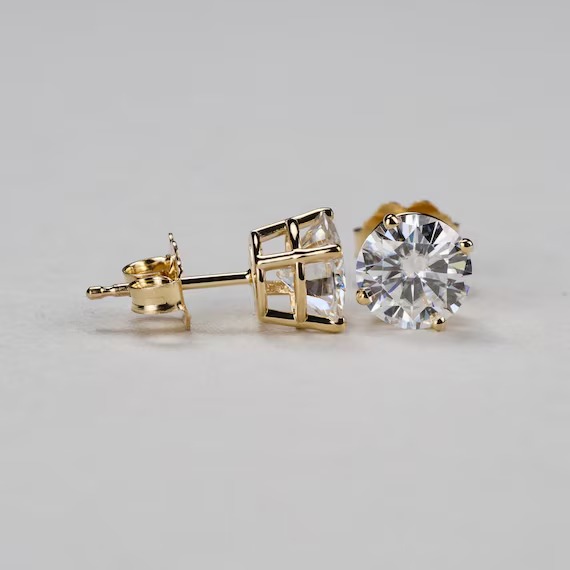
A stud tilts when the weight of the head is greater than the support the post and the back give it. The usual causes are a heavy head on a thin post, a back that is too loose or too small, a post that is too long or bent, or an ear lobe angle that the design does not suit. Most cases are simple to fix with a better back or a small adjustment.
Likely causes
- Weight at the front. A large stone or a deep setting pulls forward, particularly on a post with a loose back.
- A back that is too small or too soft. Small push-backs can slip down the post or tilt, and with time they lose grip.
- Post length. A post that is too long lets the head swing, while one that is too short squeezes the lobe.
- A bent post. A knock or repeated pulling can bend the post, and the stud then leans.
- Ear shape. Some lobes slope forward or are thin, so the stud sits at an angle.
- A loose or worn back. Backs wear out with use.
What usually helps
- Check the back. Try a larger or locking back, such as a disc back, a screw back or a friction back with a lock. A bigger back spreads the support behind the lobe.
- Check the post. Ask a jeweller whether the post is straight, the correct thickness and the correct length for your lobe.
- Choose a lighter or lower design. A stone set closer to the ear is less likely to tip than a tall basket setting.
- Replace worn backs. A stretched back is cheap to replace, so do this before you blame the stud.
- Consider the design. For heavier stones, a lighter back is not the answer. A balanced design with a thicker post and a secure back is.
Do not over-tighten
Our advice Pushing the back hard against the ear to stop tilt can cause pressure marks, irritation and swelling. If the ear is sore, red or the post feels embedded, take the earring out and see a professional piercer. This is a health question, not a jewelry fix.
It depends Whether a better back is enough or the earring needs a new post depends on the weight of the head and the shape of the ear. A jeweller can look at both and tell you.
Uncertain We cannot say how long a given earring will stay upright, because wear, hair, hats and sleeping position all play a part.
Related reading: Silver Earring Backs: Butterfly, Screw, Push and Locking · Diamond Stud Size Guide: 0.5 ct to 3 ct on the Ear
Sources
No external standard governs this question, so this answer is editorial advice from the ZKZ team and is labelled that way.
Fact = stated by the cited source. Our advice = editorial recommendation. Uncertain / it depends = limits of what can be said in general.
Other perspectives from the ZKZ team
Check the backs every few weeks. If one slides up and down the post without a click, replace it. Keep spare backs from the same maker, so the post and back are matched.
A post can be re-soldered or replaced on a silver stud if it has bent or fatigued. Thicker posts hold the head more firmly, but they have to match the piercing, so ask a piercer before changing thickness.
For daily wear, choose studs where the stone sits low and the metal head is small. A lighter head puts less torque on the post.
Have a different question? Ask our team, or browse more answers in Talk.
Related products
Related articles & topics
- What should I ask about a "free diamond upgrade" or trade-in offer?Talk
- What colour grade is enough for a lab diamond set in white-plated silver?Talk
- Is an ultrasonic cleaner safe for a silver diamond ring?Talk
- What should a lab-grown diamond disclosure look like on a product page?Talk
- Can a seller call a lab-grown diamond "real" or "conflict-free"?Talk
- Diamond Shapes Compared: Round, Oval, Emerald, Pear and MoreGuide
- Caring for a Lab Diamond Necklace: Cleaning and StorageGuide
- 2026 Lab-Grown Diamond Industry Outlook: Prices, Supply and Jewelry DemandGuide
- Resizing and Maintaining a Lab Diamond RingGuide
- Diamond Stud Size Guide: 0.5 ct to 3 ct on the EarGuide
Recommended
 What is the difference between GIA, IGI and in-house reports for lab-grown diamonds?Talk
 What bracelet size should I order if I have a small, medium or large wrist?Talk
 What are flat-back studs, and who needs them for cartilage or sleeping?TalkWhat jewelry suits an engagement-party or bridal-shower gift?Talk
 Can nickel-free silver jewelry still cause a reaction?Talk
 Black spots on silver: is it tarnish or damage?Talk