Which lab diamond shapes show scratches and inclusions least?
925 sterling silver jewellery, set with lab grown diamonds and made in our own Shenzhen workshop.
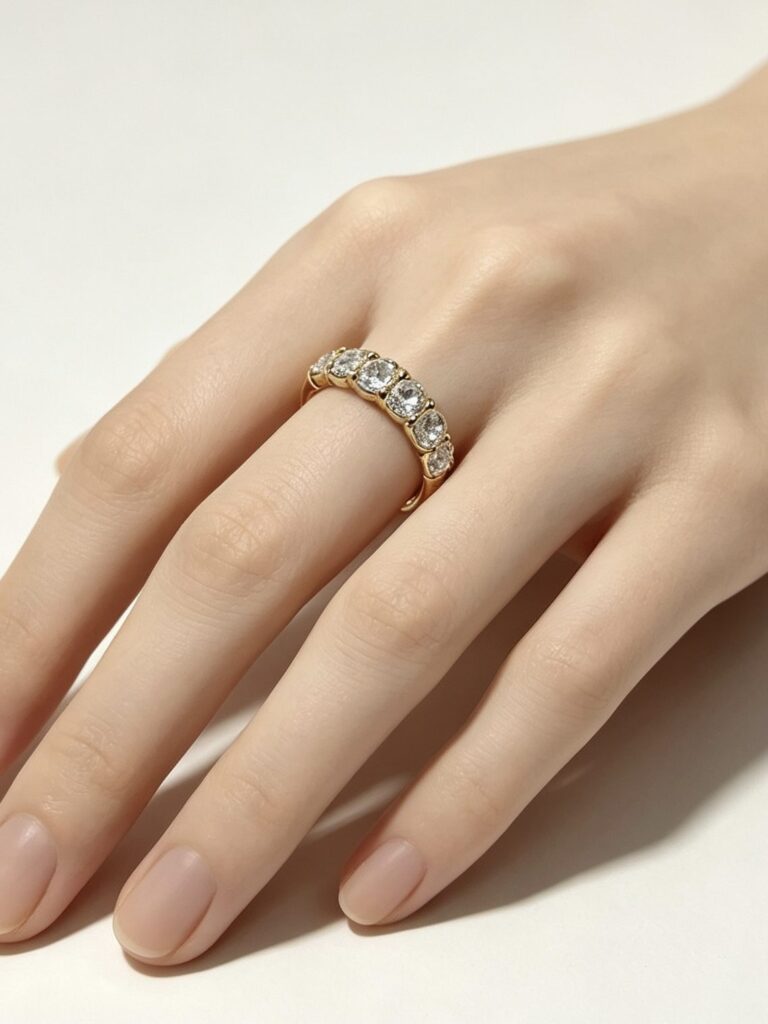
Talk · Selection & sizing
A buyer is choosing between a round, an oval and an emerald-cut lab-grown diamond for a daily ring. They want the stone to keep looking clean, and they are worried that small inclusions or knocks will show over time.
 ZKZ Editorial TeamMain answer · Product & gemmology desk
Shapes with many small facets, such as round, oval and cushion cuts, usually hide inclusions and surface wear better. Step cuts, such as emerald and asscher, have large open facets that act like a window, so they show inclusions more clearly and ask for a cleaner stone.
Why facet style matters
Fact GIA's shape guide says brilliant cuts, with many small facets, can conceal small flaws, while step cuts such as emerald and asscher have larger open facets that may reveal inclusions and colour more easily. For an emerald cut it suggests VS2 clarity and G colour or better as a starting point.
Uncertain GIA's guide is written for mined diamonds and its grade suggestions are for them. The optical effect of the facets is the same for a laboratory-grown stone, but the exact grade you need is a personal choice.
Our advice If you like step cuts, choose a higher clarity grade than you would for a round, and ask to see the actual stone or a close photograph rather than relying on the grade alone.
What wears and what does not
Fact Diamond has a hardness of 10 on the Mohs scale, as the FTC Jewelry Guides define it (16 CFR 23.12). Everyday contact does not scratch it. A laboratory-grown diamond has essentially the same properties.
Fact GIA notes that the pointed tips of marquise and pear cuts and the sharp corners of a princess cut are more prone to chipping and need protective settings such as V-prongs or a bezel, while the cropped corners of a radiant cut help prevent chipping.
Our advice So what shows up over time is chipping at points and corners, not scratching. A hard diamond can still chip if struck at the wrong angle.
Our advice On a silver ring, the metal is softer than the stone and will pick up fine scratches first, so the ring can look worn while the diamond is untouched. Also, a dull look is usually dirt on the underside rather than a scratch.
A practical order of preference for daily wear
- Easiest to live with: round, oval, cushion and radiant (brilliant facets and no sharp corners).
- Fine with protection: marquise, pear and princess, with V-prongs or a bezel over the points and corners.
- Most demanding on clarity: emerald and asscher, where the grade should be higher and the stone checked by eye.
Uncertain How an inclusion looks depends on its type and position, not only the grade. A small feather near the edge of a stone can be more of a risk than a larger crystal in the middle. Two stones with the same grade can look different, so look at the real stone.
Related reading: Diamond Shapes Compared: Round, Oval, Emerald, Pear and More · How to Choose a Lab Diamond: The 4Cs Without the Jargon
Sources
- GIA 4Cs, Guide to diamond shapes
- 16 CFR 23.12, FTC Jewelry Guides: definition and misuse of the word "diamond"
Fact = stated by the cited source. Our advice = editorial recommendation. Uncertain / it depends = limits of what can be said in general.
Other perspectives from the ZKZ team
If you do not want to think about it, choose round, oval or cushion. If you love the look of an emerald cut, accept that you are buying a stone that needs to be chosen by eye, not by grade alone.
Protective settings help more than most people expect. Bezel or half-bezel edges and V-prongs on pointed shapes cover the most exposed parts of the stone, at the cost of a slightly different look.
Keep the wording simple: shape, then origin. "Laboratory-grown emerald-cut diamond" is accurate. Terms like "flawless" are restricted by the Guides, so a listing should not use them unless the stone really qualifies.
Have a different question? Ask our team, or browse more answers in Talk.
Related products
Related articles & topics
- What Does a Lab-Diamond Grading Report Show, and Is a Seller's Report Enough?Talk
- What does "cultured diamond" mean, and is it the same as lab-grown?Talk
- Should I insure a sterling silver lab-diamond ring, and what value should I declare?Talk
- Will a Lab-Grown Diamond Hold Its Resale Value?Talk
- 0.5 ct vs 1 ct Lab Diamond Studs: Is the Size Difference Noticeable?Talk
- Lab Diamond Hoops and Drop Earrings: Styles and WeightGuide
- Caring for 925 Sterling Silver Jewelry with Lab Grown Diamond SettingsGuide
- Lab Grown Diamond Tennis Necklaces: What to Check Before You BuyGuide
- Wholesale Lab Diamond Jewelry: What Buyers Should VerifyGuide
- Lab Grown Diamond Necklaces: Styles, Sizes and How to ChooseGuide
Recommended
 What is the difference between GIA, IGI and in-house reports for lab-grown diamonds?Talk
 What bracelet size should I order if I have a small, medium or large wrist?Talk
 What are flat-back studs, and who needs them for cartilage or sleeping?TalkWhat jewelry suits an engagement-party or bridal-shower gift?Talk
 Can nickel-free silver jewelry still cause a reaction?Talk
 What are the black spots on my silver jewelry, and are they damage or tarnish?Talk