How long should lab-diamond silver jewelry last before it needs replacing?
925 sterling silver jewellery, set with lab grown diamonds and made in our own Shenzhen workshop.
Talk · Buying & Value
Someone buys a sterling silver ring with lab-grown diamonds and wears it most days. They ask how many years they can expect before it needs replacing, and which part is likely to fail first.
 ZKZ Editorial TeamMain answer · Product & gemmology desk
There is no honest single number. A well-made piece can be worn for many years, but the parts age at different speeds, and how you wear it matters more than the calendar.
What tends to wear first
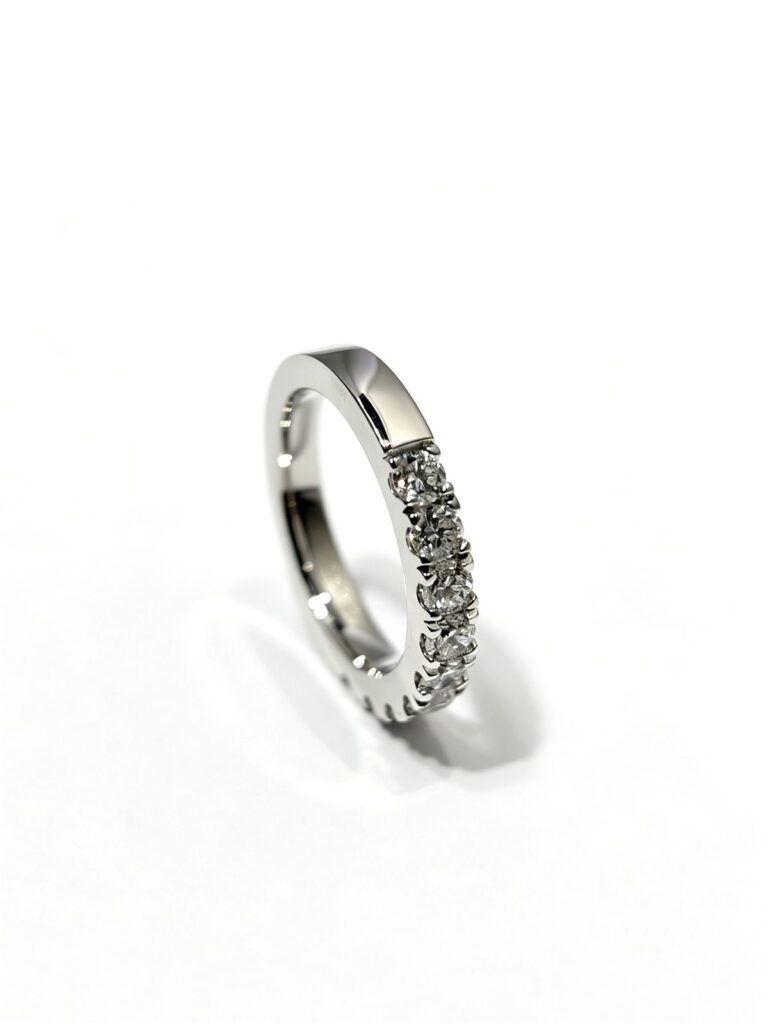
Our advice The metal surface changes before the stones do. Sterling silver tarnishes, scratches and slowly softens at edges. Plating, if present, thins with friction. Prongs and thin parts of the band wear where they touch surfaces and skin.
Fact GIA rates diamond at 10, the top of the Mohs hardness scale.
Our advice So scratching is not the usual issue. GIA also notes that any stone, including a diamond, will break if it is hit hard enough in the right place.
Our advice So the realistic failure points are prongs loosening, a thin shank wearing through and plating fading, not the stone going dull.
What changes the lifespan
- Daily wear versus occasional wear
- Work with hands, gym, gardening or cleaning products
- Exposure to chlorine, perfume, hair products and sweat
- How thin the band and prongs are
- Whether the piece is checked and serviced
How to get more years from it
- Take the ring off for heavy work, swimming and cleaning.
- Clean gently every few weeks and store it dry and separate.
- Have the prongs checked by a jeweller once a year.
- Re-polish or re-plate when the finish is tired, rather than waiting for damage.
- Replace the piece, not the stone, if the band has worn very thin.
It depends Whether a piece is worth repairing or replacing depends on its cost, the damage and your attachment to it. Repairing a good piece is often cheaper than starting again, but a very thin band can be a poor candidate.
Signs it is time to act
- A prong that is flat, thin or visibly lifting from a stone
- A band that feels bent, oval or has a thin patch on the underside
- A stone that rattles or looks loose when you tilt the ring
- Plating worn through at the high points
Our advice Any of these means a jeweller should look before the next wear. Early attention usually decides whether a piece is repaired or lost.
Uncertain We cannot promise a number of years. Wear patterns vary too much, and a quoted lifespan without knowing how you use the piece would be a guess.
Related reading: Can I Shower or Swim in Sterling Silver Lab-Diamond Jewelry? · Rhodium Plating on Silver Jewelry: What It Does and How Long It Lasts
Sources
- 16 CFR 23.12, FTC Jewelry Guides: definition and misuse of the word "diamond"
- GIA, Diamond care and cleaning
Fact = stated by the cited source. Our advice = editorial recommendation. Uncertain / it depends = limits of what can be said in general.
Other perspectives from the ZKZ team
An annual check is the cheapest insurance. Prongs loosen slowly and quietly, and tightening them early costs far less than replacing a lost stone.
Thin shanks are the usual end of a ring's life. If a band is wearing through at the bottom, a jeweller can sometimes rebuild it, but a new band is often more sensible.
If you wear one piece every day, choose a slightly heavier band and sturdy settings. A delicate design is lovely, but it will not age as gracefully with daily use.
Have a different question? Ask our team, or browse more answers in Talk.
Related products
Related articles & topics
- Should I insure a sterling silver lab-diamond ring, and what value should I declare?Talk
- Can I Shower or Swim in Sterling Silver Lab-Diamond Jewelry?Talk
- How do I price lab-diamond silver jewelry for retail from a factory quote?Talk
- How do I choose jewelry for a bride in silver and lab-grown diamond?Talk
- What is lab-grown white sapphire, and how does it compare with a lab diamond in silver?Talk
- Resizing and Maintaining a Lab Diamond RingGuide
- Silver Engagement Rings With Lab Diamonds: Pros and ConsGuide
- How to Choose a Lab Diamond: The 4Cs Without the JargonGuide
- Men’s Lab Grown Diamond Rings and BandsGuide
- Cleaning Lab Diamond Earrings Without Damaging the SettingGuide
Recommended
 What is the difference between GIA, IGI and in-house reports for lab-grown diamonds?Talk
 What bracelet size should I order if I have a small, medium or large wrist?Talk
 What are flat-back studs, and who needs them for cartilage or sleeping?TalkWhat jewelry suits an engagement-party or bridal-shower gift?Talk
 Can nickel-free silver jewelry still cause a reaction?Talk
 What are the black spots on my silver jewelry, and are they damage or tarnish?Talk