How does lost-wax casting work for silver jewelry?
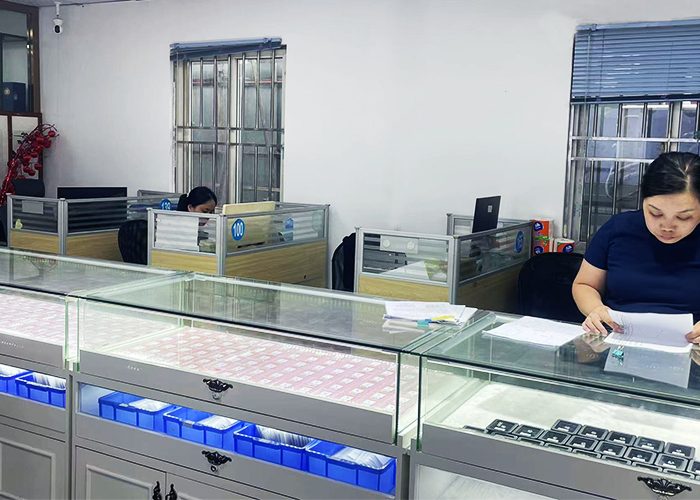
925 sterling silver jewellery, set with lab grown diamonds and made in our own Shenzhen workshop.
Talk · Production, QC & Testing (B2B)
A buyer who is new to manufacturing wants to understand how silver jewelry is cast and what steps affect quality.
 ZKZ Editorial TeamMain answer · Product & gemmology desk
In lost-wax casting, a model is made in wax, surrounded by a heat-resistant mould, the wax is melted out and molten silver fills the space. After cooling, the mould is removed and the piece is cleaned, finished and polished.
The steps
Our advice The process has several stages, and each can affect the final quality.
- Model: a master is carved or 3D printed, from which a mould and wax copies are made.
- Tree: wax copies are attached to a central stem.
- Investment: the tree is placed in a flask and covered with plaster-like material.
- Burnout: the flask is heated so the wax melts and runs out.
- Casting: molten silver is poured or forced into the empty mould.
- Cooling and devesting: the mould is broken away.
- Finishing: pieces are cut from the tree, filed, polished and often plated.
Where quality is decided
- Wax detail, which carries into the metal
- Temperature control during burnout and pouring
- Metal cleanliness and mixture
- Careful finishing that avoids removing detail
It depends Casting is one method among others. Some jewelry is stamped, hand-fabricated or 3D-printed directly, and each has its own strengths.
Typical issues
Our advice Small pits, shrinkage and rough surfaces can appear and are removed or reduced in finishing. Thin parts can be harder to fill.
What to ask
- How do you control burnout and casting temperature?
- How do you inspect cast pieces before finishing?
Why this matters to a buyer
Our advice Knowing the process helps you ask better questions. If a piece shows pits, the cause may be burnout or metal temperature. If detail is soft, the wax or the finishing may be at fault. Buyers who understand the steps can discuss problems with factories more precisely and judge whether the explanation they are given is believable.
Our advice Ask your factory which finishing steps follow casting, such as filing, polishing and plating, because finishing decides how smooth the surface looks and how consistent pieces are from batch to batch.
Uncertain We cannot describe any specific factory's process. Ask them to explain theirs.
Related reading: Casting or stamping: which suits small runs of silver jewelry? · What Does 925 Mean on Silver Jewelry?
Sources
No external standard governs this question, so this answer is editorial advice from the ZKZ team and is labelled that way.
Fact = stated by the cited source. Our advice = editorial recommendation. Uncertain / it depends = limits of what can be said in general.
Other perspectives from the ZKZ team
Detail starts in the wax. A clean model and careful burnout give cleaner castings with less rework.
Ask what silver alloy goes into the casting, and whether the fineness mark is checked on the finished piece.
Ask how the factory inspects castings before polishing. It shows how much control they have.
Have a different question? Ask our team, or browse more answers in Talk.
Related products
Related articles & topics
- Casting or stamping: which suits small runs of silver jewelry?Talk
- How do I mix silver jewelry with gold pieces so the look works?Talk
- How long should lab-diamond silver jewelry last before it needs replacing?Talk
- How should I store silver diamond jewelry when travelling?Talk
- What are the black spots on my silver jewelry, and are they damage or tarnish?Talk
- Ear Stacking With Sterling Silver: A Practical GuideGuide
- How to Stop Silver Earrings From Irritating Your EarsGuide
- Silver Pendant Chains: Matching Weight to Pendant SizeGuide
- 2026 Lab-Grown Diamond Industry Outlook: Prices, Supply and Jewelry DemandGuide
- Custom Lab Grown Diamond Jewelry: A Step-by-Step GuideGuide
Recommended
 What is the difference between GIA, IGI and in-house reports for lab-grown diamonds?Talk
 What bracelet size should I order if I have a small, medium or large wrist?Talk
 What are flat-back studs, and who needs them for cartilage or sleeping?TalkWhat jewelry suits an engagement-party or bridal-shower gift?Talk
 Can nickel-free silver jewelry still cause a reaction?Talk
 What are the black spots on my silver jewelry, and are they damage or tarnish?Talk