Which necklace clasp suits a chain I put on and take off every day?
925 sterling silver jewellery, set with lab grown diamonds and made in our own Shenzhen workshop.
Talk · Selection & sizing
A wearer puts on and takes off a fine silver chain with a diamond pendant every day, and struggles with the tiny spring ring clasp. They want a clasp that is easier to use but still safe.
 ZKZ Editorial TeamMain answer · Product & gemmology desk
For daily use choose a clasp you can open and close with one hand, and that stays closed when it is knocked. A lobster clasp is a secure and common choice. A larger lobster is easier on small fingers, while a spring ring is smaller but harder to use. Magnetic and toggle clasps are easy, but each has trade-offs for security. The clasp matters as much as the chain.
Common clasp types
- Spring ring. A small round clasp with a pin that you pull open. Neat on fine chains, but fiddly, and the spring can weaken.
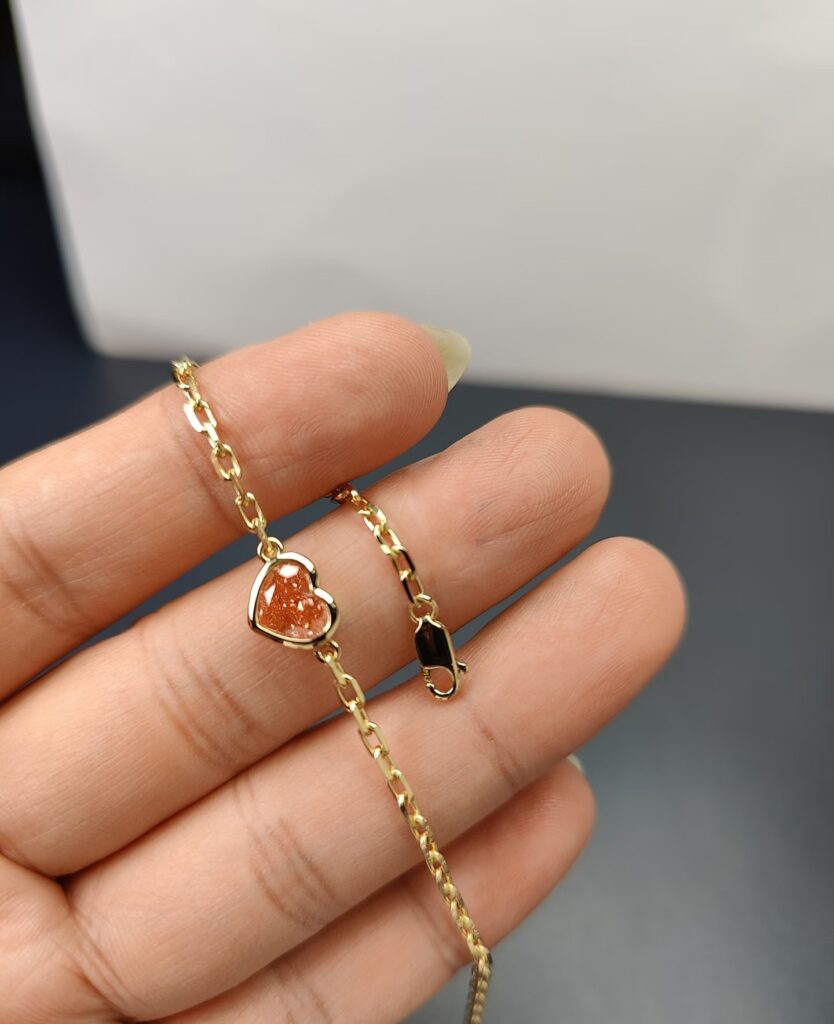
- Lobster clasp. A claw that opens when you press a small lever. Easier than a spring ring, and usually secure.
- Box clasp. A tab that clicks into a box, often with a safety catch. Secure on heavier chains, and it needs two hands.
- Magnetic clasp. Easy to put on and take off, but may open if pulled or knocked, so it suits light pieces more than valuable ones.
- Toggle. A bar through a ring, decorative and simple to use. It can slip if the bar is small or the chain is light.
- Extension chain. A short chain with a clasp lets you adjust the length, but it adds a second weak point.
Choosing for daily use
- Consider your hands. If dexterity or nail length is a problem, a larger lobster or a magnetic clasp can be easier.
- Match the clasp to the chain. A big clasp on a fine chain looks heavy, and a tiny clasp on a heavy chain may not hold.
- Think about value. A pendant with a diamond is worth protecting. A secure clasp matters more than convenience.
- Look at the build. Soldered rings and closed joints are stronger than open ones.
- Check it often. A clasp that no longer closes firmly needs repair.
Making it easier
- Fasten the necklace in front, then turn it round.
- Use a mirror and a flat surface.
- Ask a jeweler to fit a larger clasp or an easy-open one if you have trouble.
- Use a clasp aid, if you wish.
Care
Our advice Clasps wear faster than the chain with daily use. Look for a weak spring, a bent catch or a gap, and have it replaced before it fails.
It depends Convenience and security pull in opposite directions, and the right balance depends on the chain, the pendant and the person.
Uncertain We have no tested figures for how long each clasp type lasts, so our comparison is based on common jewellery practice.
Related reading: Bracelet Clasps Explained: Box, Lobster, Toggle and Safety · Silver Necklace Chains Compared: Box, Cable, Rolo, Snake and Figaro
Sources
No external standard governs this question, so this answer is editorial advice from the ZKZ team and is labelled that way.
Fact = stated by the cited source. Our advice = editorial recommendation. Uncertain / it depends = limits of what can be said in general.
Other perspectives from the ZKZ team
Pick the clasp for the way you put the necklace on. If you are always in a hurry, an easy lobster is better than a small clasp you will leave half closed.
A clasp can be changed on most chains. A jeweler can fit a larger one, or add a safety chain, for a modest charge.
Test the clasp by giving the chain a gentle tug before you wear it. A weak spring often shows up as a clasp that opens slightly under pull.
Have a different question? Ask our team, or browse more answers in Talk.
Related products
Related articles & topics
- Which pendant bail suits a thick chain and which suits a thin one?Talk
- Should I take my ring off for hand sanitiser, perfume and sunscreen?Talk
- What stone size suits a small hand or slim finger?Talk
- Why does my silver chain keep kinking or twisting?Talk
- How do I add my logo to a clasp, tag or inner band?Talk
- Lab Grown Diamond Necklaces: Styles, Sizes and How to ChooseGuide
- Lab Grown Diamond Stud Earrings: Sizes, Settings and PriceGuide
- Lab Grown Diamond Engagement Rings: A Buyer’s GuideGuide
- Lab Grown Diamond Wedding Bands and Eternity RingsGuide
- How to Choose a Lab Diamond: The 4Cs Without the JargonGuide
Recommended
 What is the difference between GIA, IGI and in-house reports for lab-grown diamonds?Talk
 What bracelet size should I order if I have a small, medium or large wrist?Talk
 What are flat-back studs, and who needs them for cartilage or sleeping?TalkWhat jewelry suits an engagement-party or bridal-shower gift?Talk
 Can nickel-free silver jewelry still cause a reaction?Talk
 What are the black spots on my silver jewelry, and are they damage or tarnish?Talk