What country-of-origin and marking information should jewelry carry when sold abroad?
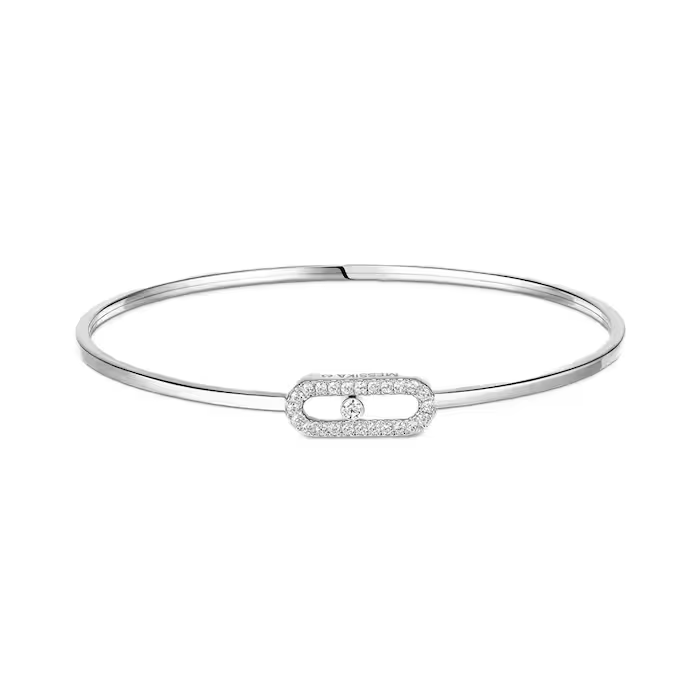
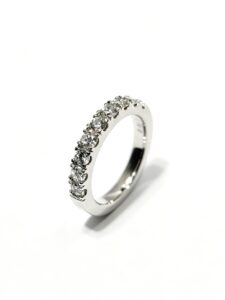
925 sterling silver jewellery, set with lab grown diamonds and made in our own Shenzhen workshop.
Talk · Compliance & disclosure
A small brand plans to export silver diamond jewelry from one country to buyers in the US and the UK. They want to know what information must be on the jewelry or the packaging, and whether one set of marks works everywhere.
 ZKZ Editorial TeamMain answer · Product & gemmology desk
No single set of marks works everywhere. The US has rules on country-of-origin marking for imports and on how quality marks are used. The UK has a legal hallmarking regime for silver above a weight. Other markets have their own. A seller should check each destination's rules, with a customs broker or a trade adviser, before shipping.
United States
Fact US customs regulations require imported articles to be marked with their country of origin, in English, in a conspicuous place and in a way that remains legible, unless an exception applies (19 CFR Part 134). The mark is about where the item was made, and the rules include some exceptions and different ways of marking small items.
Fact The FTC Jewelry Guides say a quality mark such as "925" or "sterling" must not mislead, and, under the National Stamping Act, a manufacturer or dealer who applies a quality mark to a silver or gold article must also apply their trademark or name (16 CFR 23.10). The Guides say the stamp should be legible and placed where buyers can see it.
Uncertain These are the requirements we could verify. Other US rules, such as for textile and consumer product labelling, are outside the scope of this answer, and exceptions apply, so check with the customs authority or a broker for your specific product.
United Kingdom
Fact UK law requires articles described as silver to be hallmarked by an assay office if they weigh 7.78 grams or more, with three compulsory marks: the sponsor's mark, the fineness mark and the assay office mark. Lighter articles are exempt from compulsory hallmarking. The hallmark has to be applied by an assay office, not by the maker.
Other markets
Uncertain Other countries have their own marking, hallmarking and labelling rules. In the EU, for example, there are separate rules on chemicals in jewelry, such as nickel release limits. We cannot give a complete list, so check each market you sell into.
Practical steps
- List your markets and the rules for each, with the help of a customs broker.
- Mark the product and the packaging according to the strictest market you sell into, where it is possible.
- State fineness and the maker's mark clearly in your tech pack, so the factory stamps them correctly.
- Keep records of where each piece was made, and the documents that support your claims.
- Review each market when you enter it, and when rules change.
Our advice A plain, accurate mark is better than a decorative one. Whatever the market, the stamp should be true.
It depends Which rules apply depends on the destination, the product and the weight, so there is no single answer.
Related reading: Jewelry Hallmarks and Stamps Explained · Wholesale Lab Diamond Jewelry: What Buyers Should Verify
Sources
- 19 CFR Part 134, U.S. Customs country-of-origin marking
- 16 CFR 23.10, FTC Jewelry Guides: additional guidance for the use of quality marks
- UK Hallmarking Act 1973
- UK government, Hallmarking guidance notes
- ECHA, REACH restriction on nickel in articles intended to come into direct and prolonged contact with the skin (entry 27)
Fact = stated by the cited source. Our advice = editorial recommendation. Uncertain / it depends = limits of what can be said in general.
Other perspectives from the ZKZ team
Sell into one new market at a time, and ask the local authority or a broker for the current marking rules. Rules change, and what was right last year may need updating.
Tell the factory which markets the order is for before production starts. Marks added after the piece is made are costly or impossible.
Stamps need space. A very small or thin piece may not have room for a fineness mark, a maker mark and an origin mark, so plan their position in the design.
Have a different question? Ask our team, or browse more answers in Talk.
Related products
Related articles & topics
- What should I know before ordering diamond jewelry from overseas?Talk
- Is a silver polishing cloth safe on rhodium-plated jewelry?Talk
- How do I read a jewelry listing to tell what is lab-grown, what is silver and what is plated?Talk
- Is silver diamond jewelry a good 25th (silver) anniversary gift?Talk
- What belongs in a tech pack for a jewelry factory?Talk
- How to Compare Jewelry Manufacturer QuotationsGuide
- Custom Jewelry MOQ and What Changes the CostGuide
- Jewelry Hallmarks and Stamps ExplainedGuide
- Jewelry Sample Approval Checklist Before ProductionGuide
- How to Prepare a Jewelry Design BriefGuide
Recommended
 What is the difference between GIA, IGI and in-house reports for lab-grown diamonds?Talk
 What bracelet size should I order if I have a small, medium or large wrist?Talk
 What are flat-back studs, and who needs them for cartilage or sleeping?TalkWhat jewelry suits an engagement-party or bridal-shower gift?Talk
 Can nickel-free silver jewelry still cause a reaction?Talk
 What are the black spots on my silver jewelry, and are they damage or tarnish?Talk