How do I plan a seasonal collection calendar with a jewelry manufacturer?
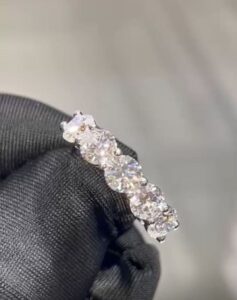
925 sterling silver jewellery, set with lab grown diamonds and made in our own Shenzhen workshop.

Talk · B2B / custom / OEM
A small brand wants to launch a silver collection for the holiday season and is talking to a manufacturer. They are unsure how to build a calendar that allows for samples, changes, production and shipping.
 ZKZ Editorial TeamMain answer · Product & gemmology desk
Start from the date the jewelry must be in your hands and work backwards through shipping, production, sample approval, design and sourcing, adding a buffer at each step. Ask the manufacturer for its own lead times in writing, and plan for at least one round of sample changes. Fixed dates agreed at the start are better than estimates.
Steps to schedule
- Launch date. The date you need to sell.
- Stock arrival date. Earlier than launch, to allow for checks, photos and listing.
- Shipping. Choose the transport and allow for customs and delays.
- Production. Ask the factory for the lead time for your quantity, and when it starts.
- Pre-production sample approval. The date you must approve the final sample for production to begin.
- Samples and changes. One or more rounds of samples and revisions.
- Design and specification. Drawings, CAD, stone choice, finish, packaging.
- Materials. Stones, metal and packaging, with lead times.
Add buffers
Our advice Include time for a delay in materials, a failed inspection, a rework, a holiday closure and a shipping delay. A buffer at each step is more realistic than a single buffer at the end.
Things to agree in writing
- The date by which the factory needs your approvals.
- The effect of late approvals on the delivery date.
- Factory holidays and closures.
- What happens if the delivery is late.
- Dates for payments linked to milestones.
Tips
- Stagger styles. Give complex styles an earlier start in the calendar than simple ones.
- Reuse existing designs and components to save time.
- Limit the number of new styles in a first season.
- Keep a spare date for photography and listing.
Uncertain Lead times vary by factory, style, season and quantity, and we have no standard figure. Ask your manufacturer for its own schedule and for how it changed in busy seasons last year.
It depends A shorter schedule is possible with rush charges or fewer styles, but it raises risk. Which you choose depends on the importance of the launch date.
Related reading: Jewelry Manufacturing Lead Time and Approval Stages · How to Request a Jewelry Prototype
Sources
No external standard governs this question, so this answer is editorial advice from the ZKZ team and is labelled that way.
Fact = stated by the cited source. Our advice = editorial recommendation. Uncertain / it depends = limits of what can be said in general.
Other perspectives from the ZKZ team
Ask the factory to confirm the calendar in writing and to flag any step that is at risk. A shared calendar that both sides update is more reliable than emails.
The sample stage is where most delays arise. Make your feedback specific, in one message, and avoid sending changes piecemeal.
Choose a small number of styles you can finish well. A tight collection that arrives on time is better than a large one that is late.
Have a different question? Ask our team, or browse more answers in Talk.
Related products
Related articles & topics
- Can I wear sterling silver diamond jewelry at the gym?Talk
- Can I Shower or Swim in Sterling Silver Lab-Diamond Jewelry?Talk
- How do I price lab-diamond silver jewelry for retail from a factory quote?Talk
- How do I send jewelry as a surprise gift so it arrives gift-ready?Talk
- How should I store silver diamond jewelry when travelling?Talk
- What Is the Best Metal for Jewelry? Silver, Gold, Platinum ComparedGuide
- Rhodium Plating on Silver Jewelry: What It Does and How Long It LastsGuide
- CAD vs Render vs Physical Jewelry SampleGuide
- Caring for 925 Sterling Silver Jewelry with Lab Grown Diamond SettingsGuide
- Jewelry Quality Control Checklist for Production OrdersGuide
Recommended
 What is the difference between GIA, IGI and in-house reports for lab-grown diamonds?Talk
 What bracelet size should I order if I have a small, medium or large wrist?Talk
 What are flat-back studs, and who needs them for cartilage or sleeping?TalkWhat jewelry suits an engagement-party or bridal-shower gift?Talk
 Can nickel-free silver jewelry still cause a reaction?Talk
 What are the black spots on my silver jewelry, and are they damage or tarnish?Talk