Ring Size Chart: US, UK and EU Conversion
925 sterling silver jewellery, set with lab grown diamonds and made in our own Shenzhen workshop.
Three sizing systems are in common use and they do not line up neatly. A US 7, a UK N and an EU 54 describe approximately the same circumference, and the word approximately is doing real work: the systems round differently, and a chart that converts them exactly is more confident than the underlying standards allow. The second complication is that the number describes a diameter while the ring’s comfort depends on band width and profile, so the same finger can take two different sizes depending on the design.
How do ring sizing systems convert?
All three measure circumference in different units and rounding conventions.
US sizes run in a numeric scale with quarter and half steps. UK and Australian sizes use letters, with half letters available. European sizes are usually the internal circumference in millimetres, which makes them the easiest to match to a physical measurement. Because each system rounds to its own increment, a conversion is always approximate: two charts can differ by half a size on the same finger and neither is wrong.
The practical consequence is that a buyer should measure in millimetres first and convert second, rather than converting from a size they believe they wear.
The conversion chart
Internal diameter and circumference, with the corresponding sizes in each system.
| Internal diameter | Circumference | US | UK / AU | EU |
|---|---|---|---|---|
| 14.9 mm | 46.8 mm | 4 | H | 47 |
| 15.3 mm | 48.0 mm | 4.5 | I | 48 |
| 15.7 mm | 49.3 mm | 5 | J | 49 |
| 16.1 mm | 50.6 mm | 5.5 | K | 50 |
| 16.5 mm | 51.9 mm | 6 | L | 52 |
| 16.9 mm | 53.1 mm | 6.5 | M | 53 |
| 17.3 mm | 54.4 mm | 7 | N | 54 |
| 17.7 mm | 55.7 mm | 7.5 | O | 55 |
| 18.1 mm | 57.0 mm | 8 | P | 57 |
| 18.5 mm | 58.3 mm | 8.5 | Q | 58 |
| 19.0 mm | 59.5 mm | 9 | R | 59 |
| 19.4 mm | 60.8 mm | 9.5 | S | 61 |
Charts vary by half a size between sources, which is a rounding difference rather than an error. Where a finger measures between two rows, the choice depends on the fit preference described below.
Measuring a finger at home
Four steps, and one condition that changes the answer.
One: measure at the end of the day, when fingers are largest; a measurement taken first thing in the morning can read half a size smaller. Two: wrap a strip of paper or a tape around the base of the finger, snug but not tight, and mark where it overlaps. Three: measure the marked length in millimetres to get the circumference, then convert. Four: measure the knuckle as well, because a ring has to pass over it, and if the knuckle is wider than the base, size for the knuckle.
Cold changes the answer more than most people expect. Measuring after being outside in winter, or immediately after washing hands in cold water, can read up to a full size small. The methods for measuring at home cover the alternatives, including measuring an existing ring.
Why the measurement is not the size
Three design factors change which size a finger should order.
Band width is the largest: a wide band covers more of the finger and feels tighter, so a 6 mm band usually needs to be half a size larger than a 2 mm band for the same finger. Interior profile matters next, since a comfort-fit interior has less contact area and can be worn slightly tighter. And setting height matters on rings worn next to others, because a tall setting pushes against the neighbouring finger when the hand closes.
That is why a jeweller asks for the intended band width before confirming a size, and why a sizing set of a different width gives a misleading answer.
Sizing for a gift
Four approaches, in order of reliability.
Borrow a ring the person wears on the intended finger and measure its internal diameter. If that is not possible, measure a ring they wear on another finger and adjust by a known difference, though this is less reliable. Where neither is available, choose a design that can be resized, and confirm the resizing limit before ordering. The least reliable approach is asking someone to guess their size, because most people report a size they wore years ago.
The safest gift strategy for an engagement ring is to choose a design and hold the final sizing until the ring can be fitted, which is why engagement ring etiquette treats a temporary fit as normal.
Resizing limits
What can be adjusted, and what cannot.
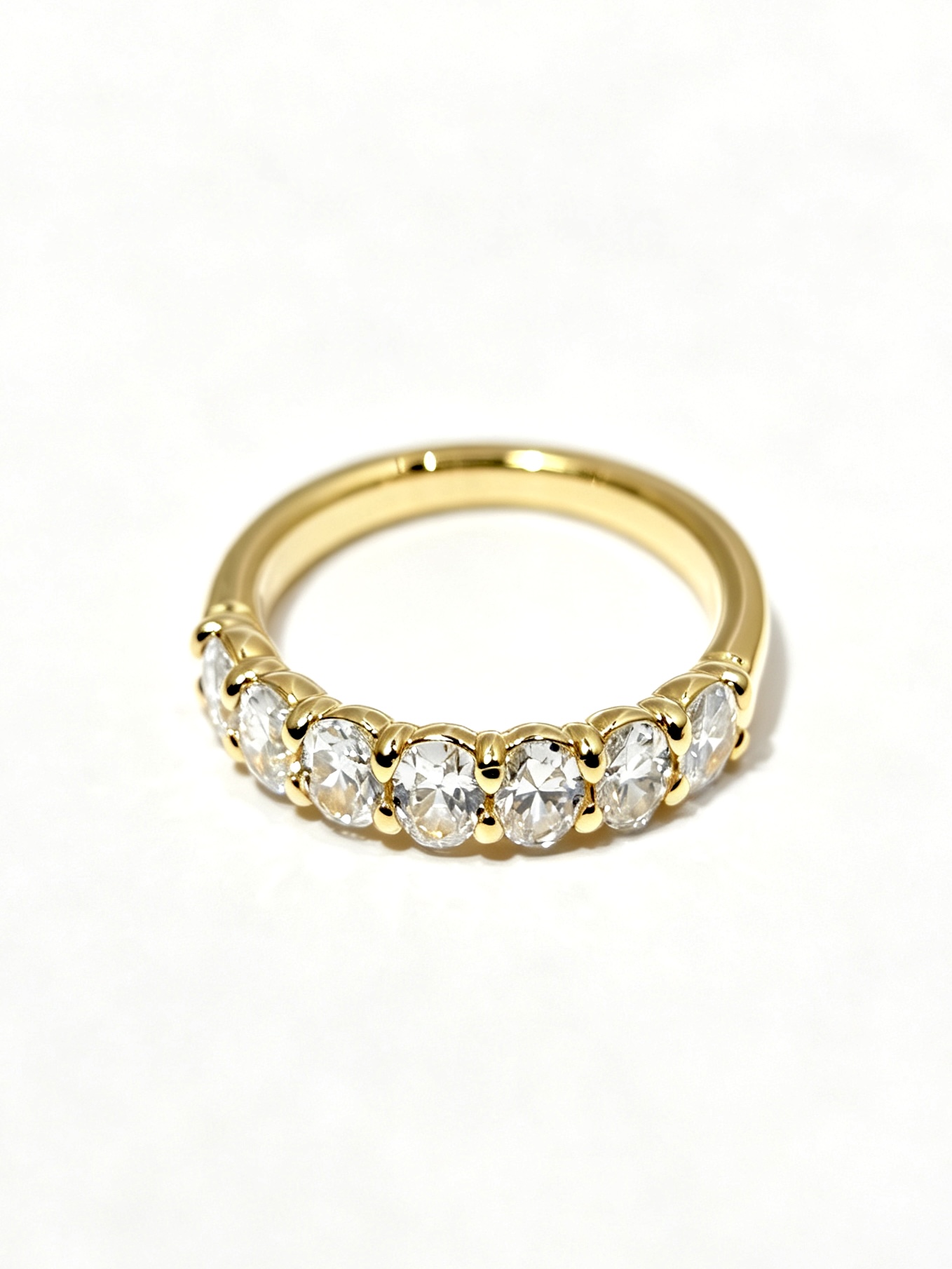
A plain band can normally be adjusted by one or two sizes. A half eternity band usually can, because the plain underside provides a working area. A full eternity band generally cannot, because stones run the whole way round and resizing means rebuilding. A band with pavé or channel settings through the lower section is difficult for the same reason. Two sizes is the practical limit for most rings, beyond which the proportions change and the setting can shift out of alignment.
Our notes on resizing and maintaining a diamond ring cover the construction types and their limits in detail.
Common sizing mistakes
Five, all avoidable.
Measuring in the morning or in the cold. Measuring with a sizing set of a different band width. Sizing for the base of the finger when the knuckle is wider. Choosing a full eternity band before the size is stable. And converting from a foreign size using a chart that rounds differently from the maker’s own, rather than measuring in millimetres.
Each of the five leads to the same outcome: a ring that is technically the size ordered and uncomfortable in wear.
FAQ
What is my ring size in EU?
European sizes are usually the internal circumference in millimetres, which makes them straightforward once you have measured. Measure the circumference of the finger at the end of the day, then read the corresponding EU size from the chart. Where the measurement falls between two rows, the band width decides which to take.
US to UK ring size conversion: how exact is it?
Approximate. Each system rounds to its own increment, so charts from different sources can differ by half a size on the same finger. Measure in millimetres first and convert second, rather than converting from a size you believe you wear.
How do I measure my ring size at home?
Wrap a strip of paper around the base of the finger at the end of the day, mark where it overlaps, and measure the length in millimetres. Also measure the knuckle, and size for the wider of the two. Cold hands read up to a full size smaller than warm ones.
Does band width change the ring size I need?
Yes. A wide band covers more of the finger and feels tighter at the same internal diameter, so a 6 mm band often needs half a size larger than a 2 mm band for the same finger. Measure with a sizing set that matches the finished band width.
Sources and further reading
- Assay Office — precious metal standards and sizing conventions
- The Silver Institute — silver alloy behaviour in bands
- GIA 4Cs — stone dimensions relevant to setting width
- CIBJO Blue Books — jewellery terminology
- International Gem Society — ring construction reference
- International Gemological Institute — stone specification for set rings
Next step: Send the internal diameter of a ring that fits, or the finger circumference in millimetres, along with the band width you are considering, and we will confirm the size to order and whether the design can be adjusted later. Ready-stock rings and OEM programmes are both available. Contact vinico@zkzdiamonds.com or WhatsApp +86 135 3037 8229.
{“@context”:”https://schema.org”,”@type”:”FAQPage”,”mainEntity”:[{“@type”:”Question”,”name”:”What is my ring size in EU?”,”acceptedAnswer”:{“@type”:”Answer”,”text”:”European sizes are usually the internal circumference in millimetres, which makes them straightforward once you have measured. Measure the circumference of the finger at the end of the day, then read the corresponding EU size from the chart. Where the measurement falls between two rows, the band width decides which to take.”}},{“@type”:”Question”,”name”:”US to UK ring size conversion: how exact is it?”,”acceptedAnswer”:{“@type”:”Answer”,”text”:”Approximate. Each system rounds to its own increment, so charts from different sources can differ by half a size on the same finger. Measure in millimetres first and convert second, rather than converting from a size you believe you wear.”}},{“@type”:”Question”,”name”:”How do I measure my ring size at home?”,”acceptedAnswer”:{“@type”:”Answer”,”text”:”Wrap a strip of paper around the base of the finger at the end of the day, mark where it overlaps, and measure the length in millimetres. Also measure the knuckle, and size for the wider of the two. Cold hands read up to a full size smaller than warm ones.”}},{“@type”:”Question”,”name”:”Does band width change the ring size I need?”,”acceptedAnswer”:{“@type”:”Answer”,”text”:”Yes. A wide band covers more of the finger and feels tighter at the same internal diameter, so a 6 mm band often needs half a size larger than a 2 mm band for the same finger. Measure with a sizing set that matches the finished band width.”}}]}
Continue with the 925 silver jewelry guide for related answers and deeper context.
Recommended
 What is a good gift for a self-purchase to celebrate a milestone?Jewelry Guides & Sizing
 Jewelry Care Myths: What Actually Damages Silver and DiamondsCare & Cleaning
 Is Lab Grown Diamond Jewelry a Good Investment?Buying Guides
 What jewelry makes a good Sweet 16 or teen birthday gift?Jewelry Guides & Sizing
 What is the best jewelry gift for a 10th, 25th or 30th anniversary?Jewelry Guides & Sizing
 Engagement Ring Etiquette: Budgets, Sizes and SurprisesGifting & Occasions