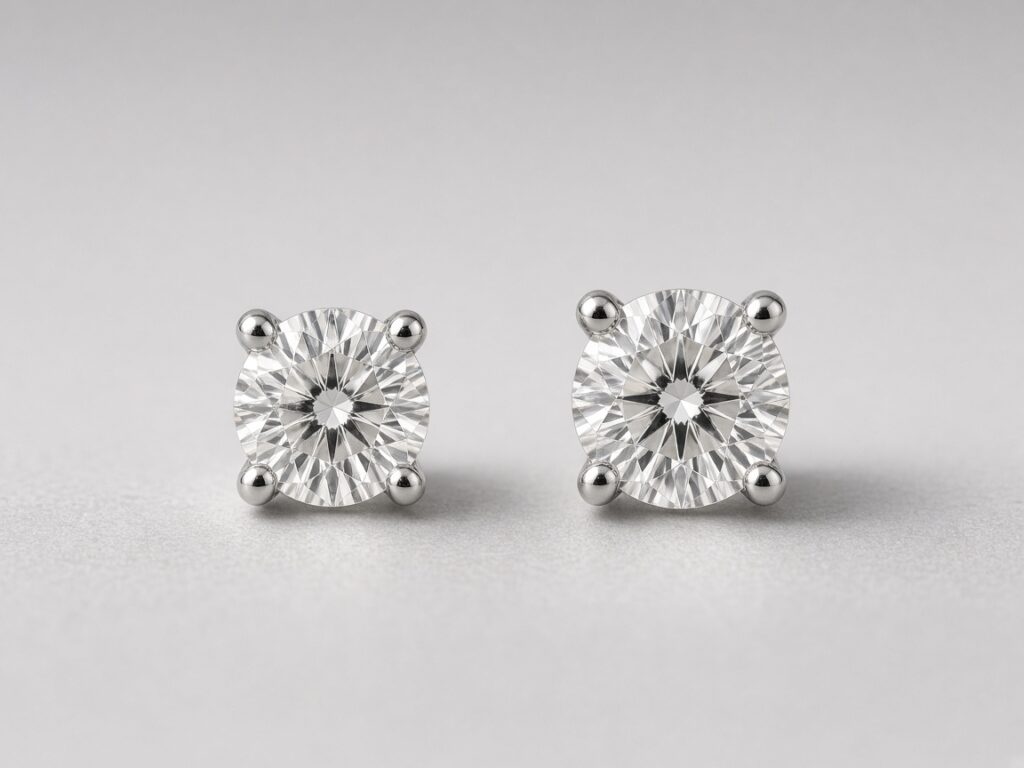
0.5 ct vs 1 ct Lab Diamond Studs: Is the Size Difference Noticeable?
925 sterling silver jewellery, set with lab grown diamonds and made in our own Shenzhen workshop.
Talk · Selection & sizing
A shopper is comparing two listings for lab-grown diamond studs: one says "1 ct", the other "0.5 ct each". Prices differ a lot and they cannot see both in person. They want to know how different the sizes really look.
 ZKZ Editorial TeamMain answer · Product & gemmology desk
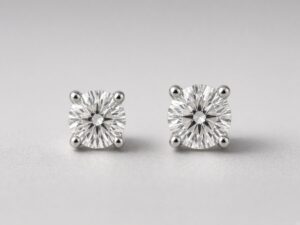
Yes, the difference is visible, but it is much smaller than “double” suggests. Carat is weight, not width. A well-cut 1 ct round brilliant is typically about 6.5 mm across, and a 0.5 ct about 5.2 mm, so the larger stone is roughly 25% wider face-up. First, check whether “1 ct” means each stone or the pair.
Why weight and width differ
Fact A carat is 0.2 g. Because a diamond is three-dimensional, doubling the weight spreads material across width and depth, so diameter grows far more slowly. Reports record the actual millimetre measurements of the stone (GIA), which are a better comparison than carat alone.
Fact Under the FTC Jewelry Guides, a weight stated as a fraction can represent a range: “1/2 carat” may be 0.45 to 0.54 ct, and the seller should disclose that the weight is not exact. Listings often use “ctw” (total weight) for a pair, so “1 ctw” usually means two stones of about 0.5 ct.
How they read when worn
- 0.5 ct each: visible but understated; comfortable for daily wear and second piercings.
- 1 ct each: clearly a statement; on small earlobes it can cover a lot of the lobe and needs secure backs.
How to decide without seeing them
- Confirm per-stone weight and ask for millimetre measurements.
- Cut two paper circles, 5.2 mm and 6.5 mm, and hold them to your ear in a mirror at arm’s length.
- Compare cut and setting, not just weight. A halo or bezel adds visual width; a deep-cut stone can look smaller than its weight.
- Consider 0.75 ct each as a middle option.
Price follows weight more steeply than size. Larger stones usually cost more per carat, so a pair of 1 ct studs can cost well over twice as much as 0.5 ct studs of similar quality, even though the face-up difference is about a quarter in width. Lab-grown pricing narrows the gap compared with mined stones, but the per-carat step still applies.
Where the limits are
Approximate The 6.5 mm and 5.2 mm figures are typical reference sizes for well-cut rounds, not guarantees. Individual stones vary with proportions. Fancy shapes such as ovals measure differently and often look larger per carat.
Sources
- GIA 4Cs: Understanding carat weight on GIA reports
- FTC: In the Loupe, advertising diamonds, gemstones and pearls
Fact = stated by the cited source. Our advice = editorial recommendation. Uncertain / it depends = limits of what can be said in general.
Other perspectives from the ZKZ team
When comparing quotes, line up per-stone weight, millimetre size, cut description and setting metal side by side. Two "1 ct" listings can differ by a factor of two in actual stone size if one is quoting total weight.
Heavier studs tend to tilt forward on standard friction backs. Screw backs or larger-disc backs keep 1 ct stones upright and reduce the risk of losing one; check the posts and backs every few months.
Matching matters more as size increases. With 1 ct studs, a small difference in colour or diameter between the two stones is easier to notice, so ask whether the pair was matched and by what measurements.
Have a different question? Ask our team, or browse more answers in Talk.
Related products

Related articles & topics
- Can I Shower or Swim in Sterling Silver Lab-Diamond Jewelry?Talk
- Do Lab-Grown Diamonds Get Cloudy or Lose Their Sparkle Over Time?Talk
- What Does a Lab-Diamond Grading Report Show, and Is a Seller's Report Enough?Talk
- Can a Lab-Grown Diamond Pass a Diamond Tester?Talk
- Is a Lab-Grown Diamond on Sterling Silver a Good Engagement Ring for Daily Wear?Talk
- Resizing a Sterling Silver Ring: What Is PossibleGuide
- How to Find Your Ring Size at Home (Free Printable Method)Guide
- Silver Necklaces for Sensitive Skin: What to Look ForGuide
- How to Choose the Right Necklace Length (16 to 24 Inches)Guide
- How to Choose 925 Sterling Silver Jewelry for a Lab Grown Diamond LineGuide
Recommended
 What is the difference between GIA, IGI and in-house reports for lab-grown diamonds?Talk
 What bracelet size should I order if I have a small, medium or large wrist?Talk
 What are flat-back studs, and who needs them for cartilage or sleeping?TalkWhat jewelry suits an engagement-party or bridal-shower gift?Talk
 Can nickel-free silver jewelry still cause a reaction?Talk
 What are the black spots on my silver jewelry, and are they damage or tarnish?Talk