Rhodium Plating on Silver Jewelry: What It Does and How Long It Lasts
925 sterling silver jewellery, set with lab grown diamonds and made in our own Shenzhen workshop.
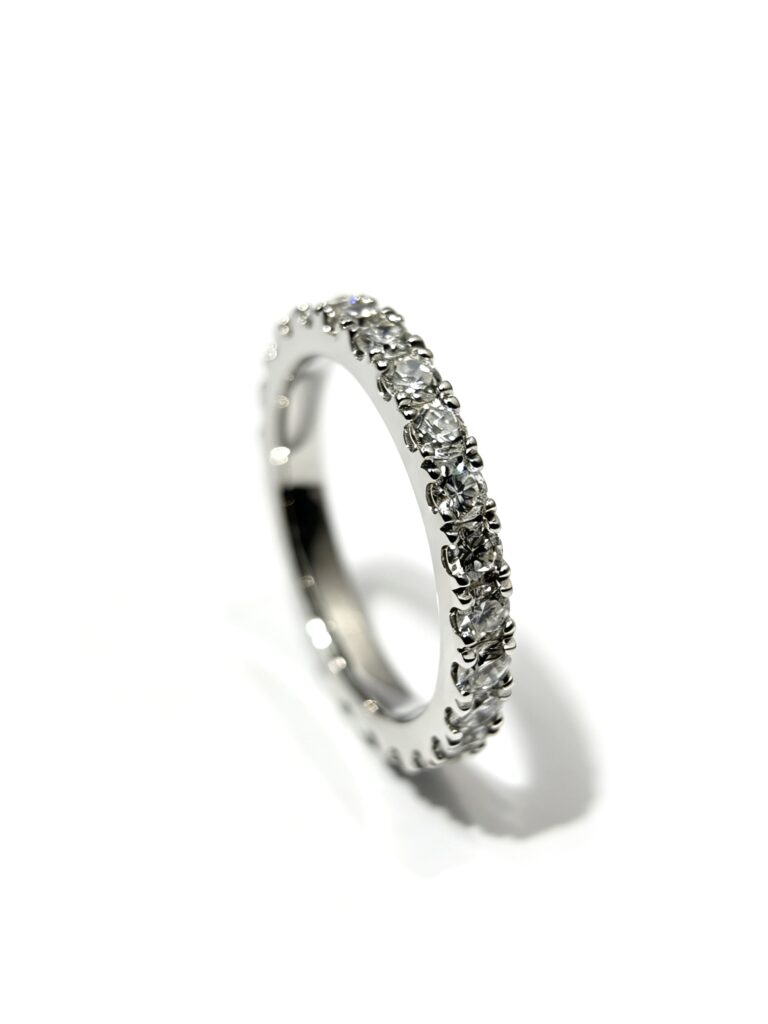
Two silver rings can look identical in a photograph and behave completely differently after a year, because one is bare 925 silver and the other carries a rhodium layer a fraction of a micron thick. That layer changes the colour, the tarnish rate and sometimes the skin reaction, and it also creates a maintenance item that buyers rarely plan for.
What does rhodium plating do?
It gives silver a bright white, scratch-resistant surface and slows tarnish.
Rhodium is a platinum-group metal with a hard, reflective finish. Plating a sterling piece with a thin layer covers the copper-bearing alloy, so airborne sulphur reaches the plating rather than the silver, and the surface resists light scratching better than bare metal.
It also changes appearance: bare silver has a slightly warm white tone, while rhodium is cooler and brighter, which is why plated pieces often photograph whiter and match white gold settings more closely.
How long does rhodium plating last?
It depends on wear: months on a daily ring, years on a pendant or earring.
Rings take the most contact, so a daily-wear ring may need re-plating within 6 to 18 months, and a wedding band worn constantly can wear sooner at the edges. A pendant, necklace or earring usually holds its plating for several years because it touches skin and clothing less.
Chlorine, abrasive polishes and repeated friction speed up wear. Electrodeposited coatings are specified by standards such as ASTM B700, and the quoted thickness in microns is the best predictor of how the layer will age.
| Piece type | Typical plating life | Main wear factor |
|---|---|---|
| Daily-wear ring | 6–18 months | Friction on the palm side and edges |
| Occasional ring | 2–4 years | Storage and cleaning habits |
| Necklace or pendant | 3–5 years | Contact with skin and clothing |
| Earrings | 2–5 years | Post friction and cleaning |

Does rhodium plating help sensitive skin?
It can, because it separates the alloy from the skin.
If a reaction comes from nickel or copper in the base alloy, a sound plating layer reduces contact and therefore reduces the response. The protection depends on the coating staying intact, so worn edges and earring posts are the first places where sensitivity returns.
Plating is not a substitute for a nickel-free alloy when the allergy is confirmed; it is a barrier that works while it lasts, and it should be described that way rather than as a permanent solution.
How should plated silver be cleaned?
Use a soft cloth and mild soap; avoid abrasive polishes and silver dips.
Polishing cloths remove light tarnish from both the plating and any exposed silver. Abrasive pastes, brushes and chemical dips attack the thin rhodium layer and can strip it from edges within a few cleanings. Ultrasonic cleaning is generally acceptable for plain plated pieces but should be avoided with stones that are glued or fragile.
Dry the piece completely after cleaning, and store it in an airtight bag to limit tarnish where the plating has thinned.
How can you tell if a piece is plated?
Look at the colour, the edges and the listing wording.
Plated silver is usually described as “rhodium plated”, “white rhodium finish” or “platinum plated”; bare silver is described simply as 925 or sterling. On the piece, examine high-contact edges for a warmer yellow-white tone showing through, which indicates the plating has worn.
A stamp tells you the alloy beneath, not the finish. A piece can be genuinely 925 sterling and still be plated, and both facts belong in the product description.
What does re-plating involve?
A jeweller cleans the piece, re-plates it and polishes it, usually within a few days.
Re-plating is routine maintenance rather than repair. The cost depends on the piece and the workshop, and the result restores both the colour and the barrier property. Before re-plating, stones are checked for security and any worn prongs are tightened, since the plating process involves chemicals and handling.
For brands, re-plating is a customer-service policy question: pieces sold as plated should come with a clear explanation of wear and the option to re-plate, and the plating thickness quoted in the specification should match what the customer is told.
Should a silver range be plated or left bare?
It depends on the market, the price point and the care message.
Plated sterling suits markets that expect a bright white finish and lower tarnish, and it photographs well for e-commerce. Bare sterling suits customers who prefer a natural metal finish and are willing to polish. Many ranges carry both, with the plating stated per SKU.
ZKZ Jewelry manufactures 925 silver jewelry with defined finishes and can produce plated or unplated versions of the same design; the material questions are summarised in the silver jewelry guide.
Sources and further reading
The references below support the material, plating and testing points made in this guide: precious-metal fineness and terminology, electroplated silver coatings, silver behaviour in normal use, hallmarking practice, and laboratory testing of gem-set jewelry.
- CIBJO Blue Book — precious metal fineness and terminology
- ASTM B700 — electrodeposited silver coatings
- The Silver Institute — silver behaviour and care references
- The Assay Office — hallmarking precious metal items
- IGI — gemstone and jewelry testing references
FAQ
Is rhodium plated silver real silver?
Yes, if the base is sterling. Rhodium plating is a finish applied over a 925 silver piece, so the underlying metal is real silver; the plating changes the appearance and the tarnish behaviour, not the alloy. Check the stamp for the base metal and the description for the finish.
Does rhodium plating rub off?
It wears gradually at high-contact points rather than flaking off. Friction, chlorine and abrasive cleaning accelerate it. When the plating thins, the warmer tone of the silver underneath becomes visible at the edges, and re-plating restores the finish.
Can I clean rhodium plated silver with a silver dip?
It is better to avoid dips on plated pieces because the chemistry can attack thin coatings and reach the alloy at worn spots. A soft polishing cloth and mild soap are the safe routine; keep abrasive pastes and brushes for unplated metal.
How often should plated silver be re-plated?
Expect 6–18 months for a daily-wear ring and several years for earrings or pendants. The interval depends on plating thickness and wear pattern, so a piece used daily against the palm or a keyboard will need attention sooner than one worn occasionally.
Next step: planning a plated or unplated silver program? Send the finish specification to vinico@zkzdiamonds.com or message +86 135 3037 8229 and ZKZ Jewelry will confirm the plating options for each style.
Recommended
 How to Find Your Ring Size at Home (Free Printable Method)Jewelry Guides & Sizing
 Sterling Silver Eternity Rings: Full, Half and Channel SetSilver Jewelry
 Sterling Silver Rings: How to Choose a Ring That LastsSilver Jewelry
 Silver Earring Backs: Butterfly, Screw, Push and LockingSilver Earrings
 Lab Grown Diamond Earrings in Silver: Buying ChecklistLab Grown Diamond Earrings
 Ear Stacking With Sterling Silver: A Practical GuideSilver Earrings