CAD and 3D Rendering in Custom Jewelry: What You Approve
925 sterling silver jewellery, set with lab grown diamonds and made in our own Shenzhen workshop.
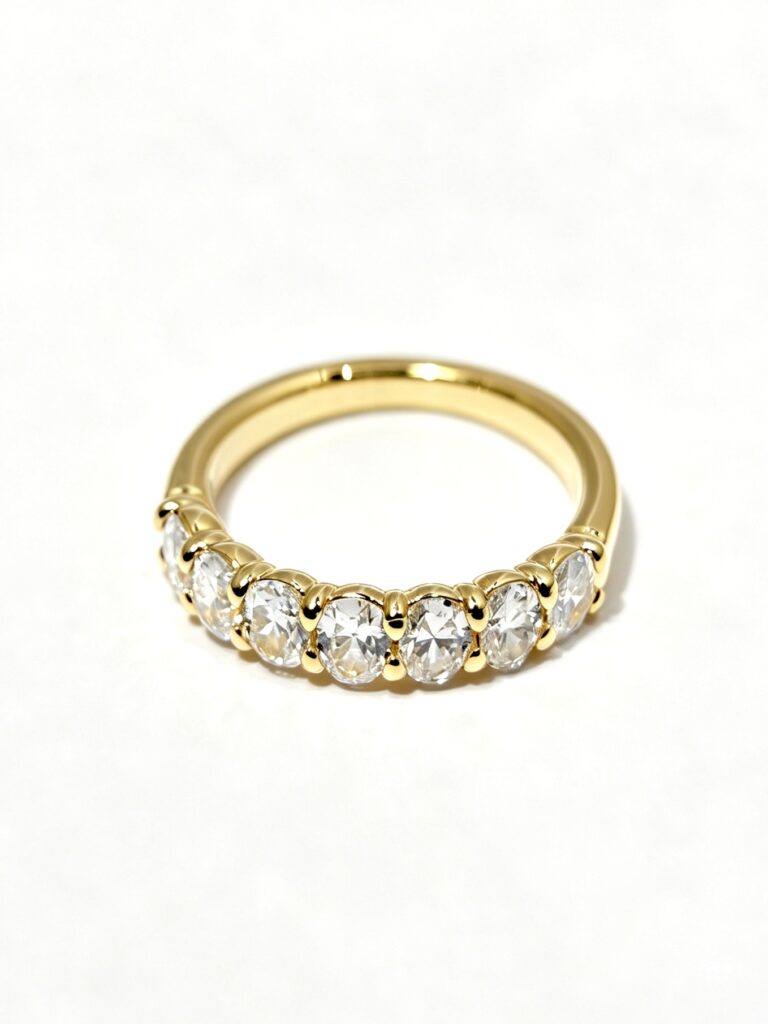
A CAD rendering can be approved in a meeting and disappointed in the hand, because the image carries no information about thickness, weight or height. What is actually being approved is a set of dimensions: wall thicknesses, setting height above the finger, band profile, total metal volume and therefore weight. Beautiful renders hide bad numbers, which is why the useful approval routine is to ask for the measured values and read them rather than to look at the picture again.
What should you actually approve on a CAD model?
The dimensions and the weight, with the rendering as an illustration of them.
Five numbers matter on almost every piece: the overall dimensions, the wall or band thickness at its thinnest point, the setting height, the prong thickness, and the estimated metal weight. Those five determine durability, comfort and cost, and none of them is visible in a rendering. A model that looks correct and has a 0.5 mm wall at the thinnest point will bend in wear; one that looks identical with a 0.9 mm wall will not.
Ask for the numbers in writing alongside the render, and compare them against the wear the piece will receive.
The values to demand
Six measurements, and what each controls.
| Value | What it controls | Watch for |
|---|---|---|
| Overall dimensions | How large the piece reads, and fit | Whether the figure includes the bail or the clasp |
| Minimum wall or band thickness | Structural integrity in wear | Under about 0.8 mm on a daily-worn ring |
| Setting height | Comfort and snag risk | A tall basket on a ring worn with other rings |
| Prong thickness | How well the stone is held | Thin claws designed for appearance |
| Estimated metal weight | Cost and how the piece feels | A design that looks compact and weighs heavily |
| Stone seat depth | Whether the stone sits properly in the metal | A seat too shallow to grip the girdle |
Why a rendering looks better than the finished piece
Four systematic reasons, all of them predictable.
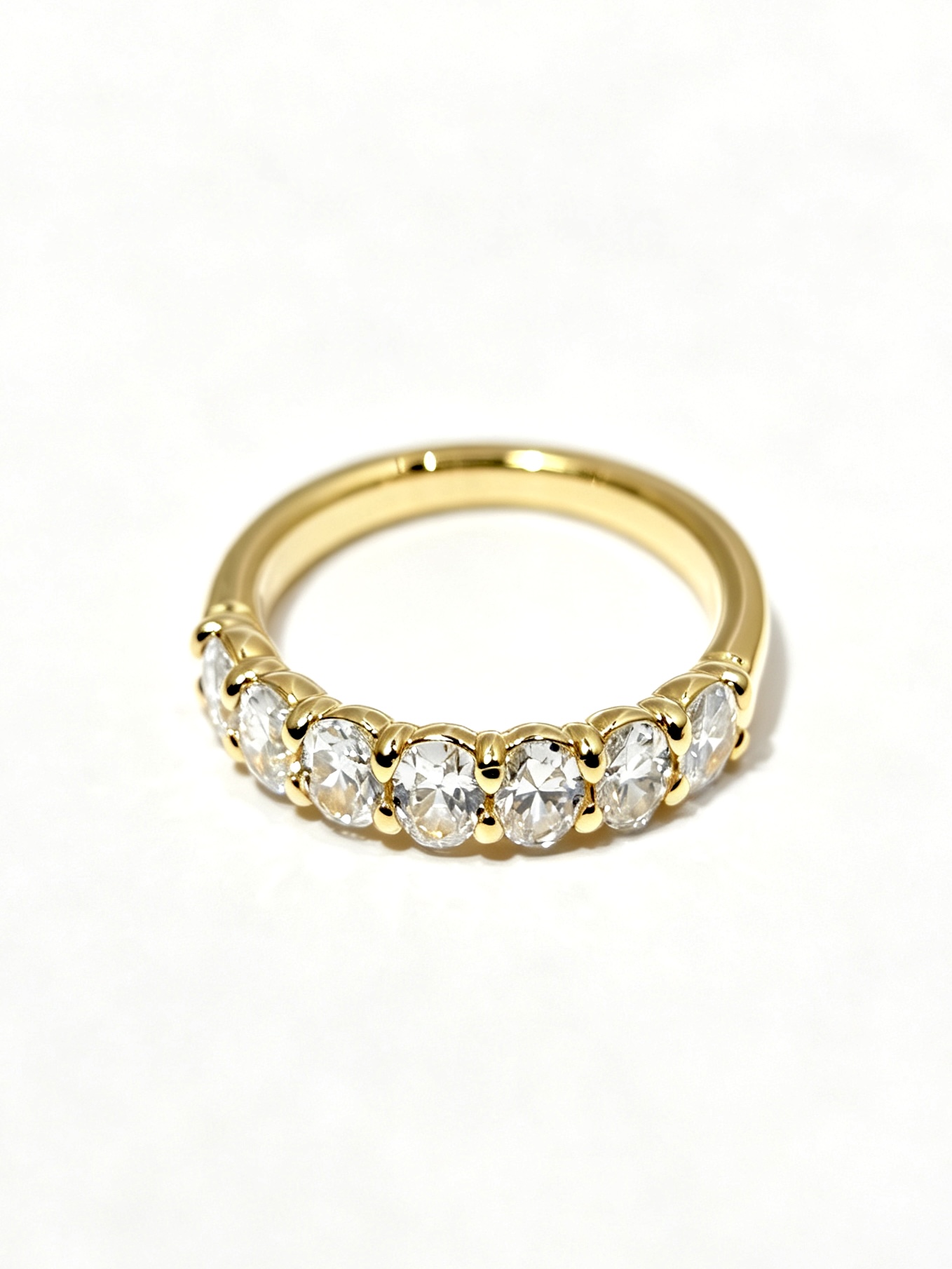
Renderings are lit to flatter, so surfaces read brighter and cleaner than polished metal. Reflections are perfect, which makes a curved surface look smoother than it will be after hand finishing. There is no sense of scale, so a piece can look larger than it is. And there is no weight, which is the property clients notice first when they pick a piece up.
All four are addressed by the same measure: ask for dimensions and weight, and put the render in front of a ruler rather than on a full screen.
What the CAD stage is good for
It is the cheapest place to make every structural change.
Proportion adjustments, band width changes, setting type changes and outline refinements all cost design time at CAD and nothing at the bench. Once a mould exists, the same change requires a new mould. That asymmetry is why revisions belong at this stage and why approving a model quickly — but on the numbers rather than on the picture — is the behaviour that keeps a custom order on schedule and on budget.
Our notes on the custom design process set out how the CAD stage sits between the brief and the sample.
The transition from model to sample
Everything the model cannot show is settled by the sample.
Weight in the hand, how a band sits against the neighbouring fingers, whether a setting catches on fabric, how a finish reads on real metal, and how a piece hangs rather than how it is positioned for a render. The sample is also where fit is confirmed on the wearer, since a CAD model cannot answer whether a ring passes over a knuckle comfortably.
The sample should be produced to the same method as production. A sample that is hand-finished to a higher standard than the order will be sets a standard the order cannot meet, which is a common source of disappointment in custom work.
What a lower-quality CAD process looks like
Five signals worth noticing before approving.
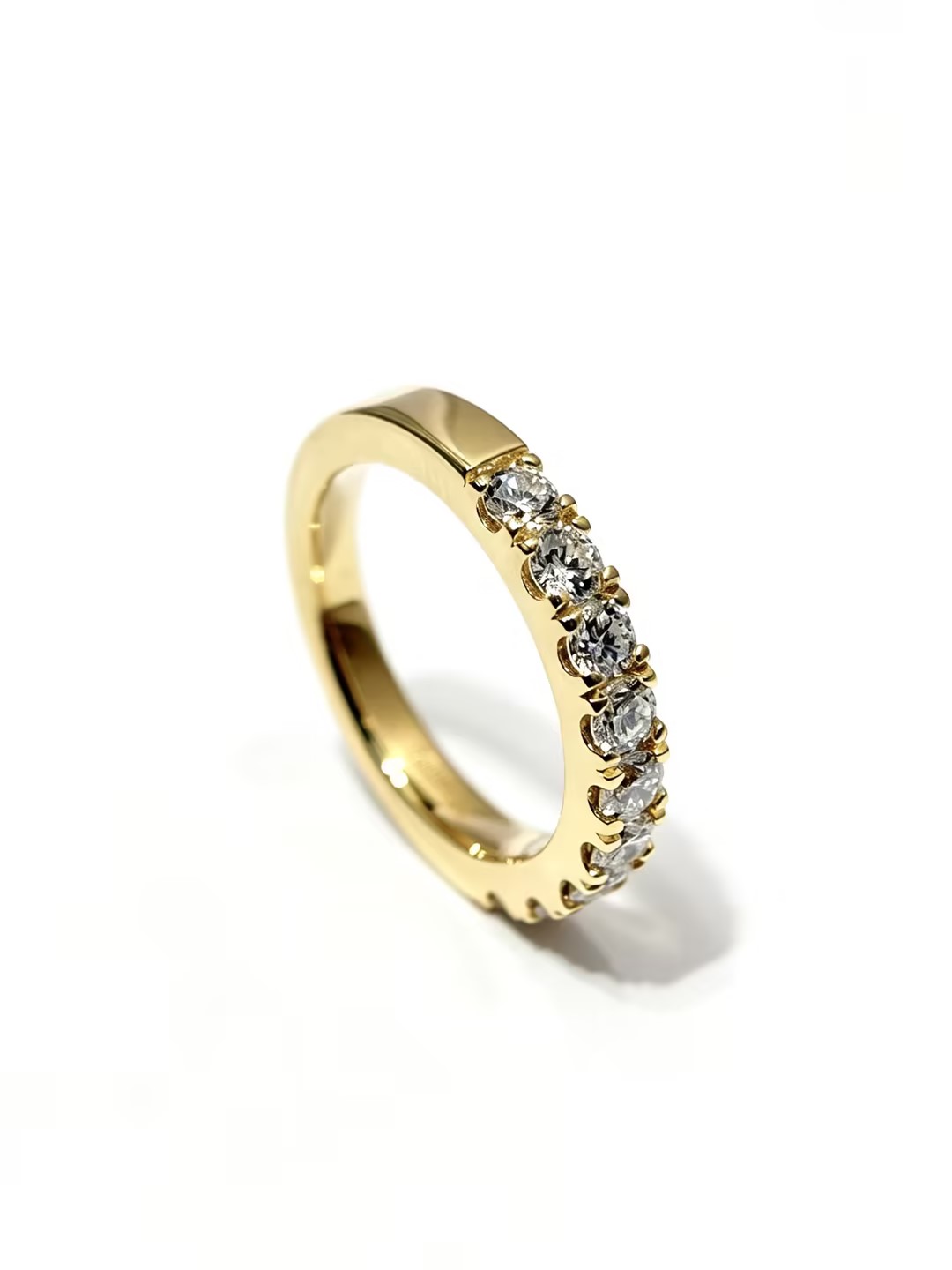
A model supplied only as an image with no dimensions. A single view, when a piece needs front, side and three-quarter views to be judged. No estimated weight. Wall thickness quoted as a range rather than a minimum. And a model revised without the previous version recorded, so the client cannot tell what changed between revisions.
None of these makes the model wrong, and all of them make it unverifiable — which is the condition that produces a piece nobody can check against what they approved.
How to run the approval
Five steps that take ten minutes.
Request the dimensions and weight in writing with the render. Check the minimum thickness against how the piece will be worn. Check setting height against the fingers or the neckline it will sit against. Compare the overall dimensions against something physical of the same size. And record the approved revision number, so the version that goes to production is the version that was signed off.
That last step is the one that prevents the most arguments, because it makes the approved version unambiguous.
FAQ
What is a jewelry CAD file?
A three-dimensional model of the piece, from which dimensions, wall thicknesses, setting geometry and estimated metal weight are drawn. It is produced before the sample and is the cheapest stage at which to change proportion or structure, because nothing has been cast yet.
What should I check on a 3D jewelry rendering?
The values rather than the image: overall dimensions, minimum wall or band thickness, setting height, prong thickness, stone seat depth and estimated weight. A render is lit to flatter and carries no scale or weight, so it cannot be judged on appearance alone.
Why does the finished piece look different from the render?
Because renderings use perfect lighting and reflections, show no scale, and convey no weight. Polished metal under real light is less uniform than a render suggests, and the weight in the hand is the property clients notice first. Asking for dimensions and weight closes most of the gap.
Can I change the design after seeing the CAD?
Yes, and that is the point of the stage. Proportion and structural changes cost design time at CAD and nothing at the bench, whereas the same change after a mould exists requires a new mould. Approving quickly on the numbers keeps the order on schedule.
Sources and further reading
- GIA 4Cs — how stone dimensions feed a design
- Assay Office — hallmarking requirements for finished pieces
- The Silver Institute — metal behaviour and section thickness
- CIBJO Blue Books — terminology and disclosure
- International Gem Society — setting geometry reference
- GIA Report Check — verifying stone documentation
Next step: Send your brief and we will return a CAD model with dimensions, minimum thickness, setting height and estimated weight in writing, plus front, side and three-quarter views, and hold production until the revision is approved. Custom, OEM and private-label programmes are all available. Contact vinico@zkzdiamonds.com or WhatsApp +86 135 3037 8229.
{“@context”:”https://schema.org”,”@type”:”FAQPage”,”mainEntity”:[{“@type”:”Question”,”name”:”What is a jewelry CAD file?”,”acceptedAnswer”:{“@type”:”Answer”,”text”:”A three-dimensional model of the piece, from which dimensions, wall thicknesses, setting geometry and estimated metal weight are drawn. It is produced before the sample and is the cheapest stage at which to change proportion or structure, because nothing has been cast yet.”}},{“@type”:”Question”,”name”:”What should I check on a 3D jewelry rendering?”,”acceptedAnswer”:{“@type”:”Answer”,”text”:”The values rather than the image: overall dimensions, minimum wall or band thickness, setting height, prong thickness, stone seat depth and estimated weight. A render is lit to flatter and carries no scale or weight, so it cannot be judged on appearance alone.”}},{“@type”:”Question”,”name”:”Why does the finished piece look different from the render?”,”acceptedAnswer”:{“@type”:”Answer”,”text”:”Because renderings use perfect lighting and reflections, show no scale, and convey no weight. Polished metal under real light is less uniform than a render suggests, and the weight in the hand is the property clients notice first. Asking for dimensions and weight closes most of the gap.”}},{“@type”:”Question”,”name”:”Can I change the design after seeing the CAD?”,”acceptedAnswer”:{“@type”:”Answer”,”text”:”Yes, and that is the point of the stage. Proportion and structural changes cost design time at CAD and nothing at the bench, whereas the same change after a mould exists requires a new mould. Approving quickly on the numbers keeps the order on schedule.”}}]}
Part of our custom jewelry guide.
Recommended
 How do I design packaging that protects chains and earrings in transit?Custom Jewelry
 How do I vet a jewelry factory before placing a first order?Custom Jewelry
 What should a shipping policy for jewelry say?Custom Jewelry
 How do I choose a brand name and check it is not already used for jewelry?Custom Jewelry
 Should I pay a factory deposit by bank transfer or use an order-protection service?Custom JewelryHow do I photograph jewelry honestly so customers get what they see?Custom Jewelry