Choosing a Custom Jewelry Maker: Questions to Ask
925 sterling silver jewellery, set with lab grown diamonds and made in our own Shenzhen workshop.
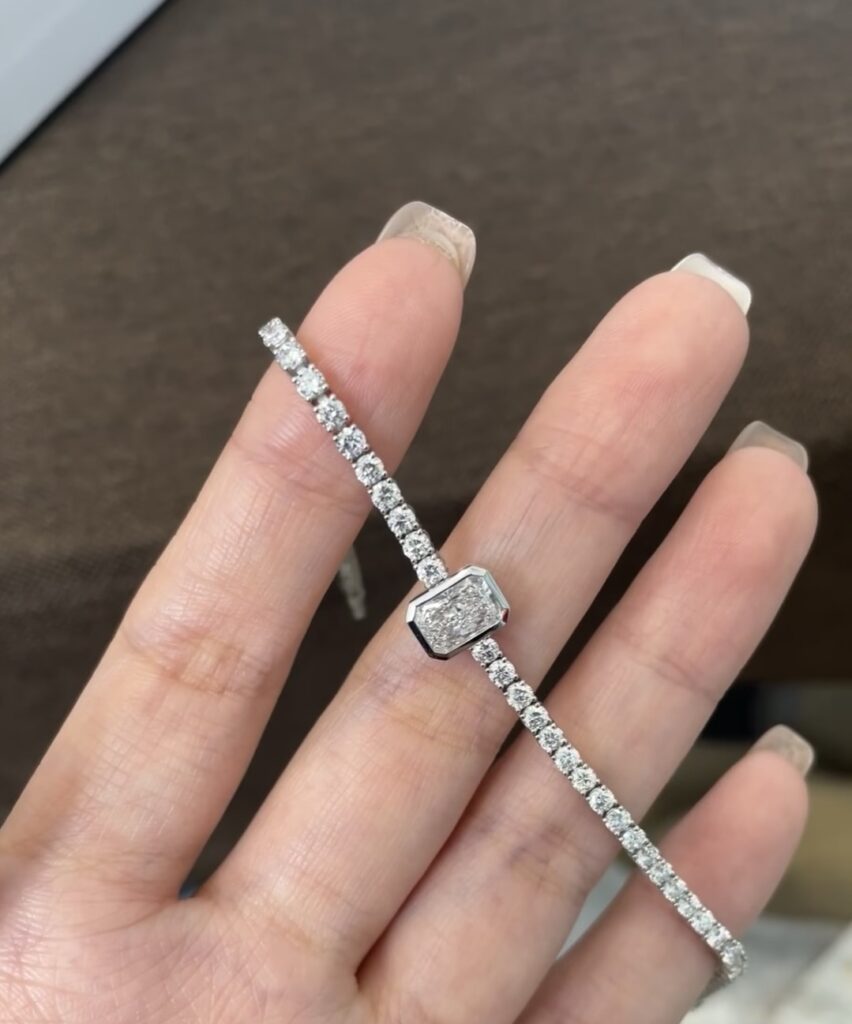
Two makers quote the same design at similar prices and one delivers in three weeks while the other takes ten. Both showed a convincing portfolio, both replied promptly, and neither answer came from the portfolio at all. What separates them is where the work happens: whether the maker casts, sets and finishes in-house or passes the brief to a third party, and how tooling and revisions are handled. Those are answerable with five questions before any money moves.
How do you evaluate a custom jewelry maker?
Ask who does the work, how tooling is handled, and what happens when something is not right.
The answers to those three determine lead time, cost behaviour and what recourse exists if the finished piece is not what was approved. A maker who manufactures controls the schedule and can adjust a design at the bench; one who brokers cannot, and lead time becomes a function of someone else’s queue. Tooling determines whether the second piece of the same design is cheap or expensive. And the remedy for a piece that is not as approved is what a buyer relies on in the one case that matters.
Everything else — style, taste, portfolio — is real but is judged after those three.
The five questions, and what a good answer sounds like
Each question has an answer that is easy to verify and an answer that is not.
| Question | Strong answer | Warning sign |
|---|---|---|
| Who casts, sets and finishes? | Named in-house stages with a location | “We work with partners” without detail |
| How is tooling handled? | Stated as a separate line, owned or quoted | Bundled invisibly into the piece price |
| How many revisions are included? | A stated number and a rate beyond it | “As many as it takes” |
| What documentation travels with the piece? | A named list per shipment | “Standard certificates” |
| What happens if the piece differs from the sample? | A stated remedy and inspection window | “We will sort it out” |
Manufacturer or middleman
Both are legitimate; only one controls the schedule.
A manufacturer quoting factory-direct can adjust a design mid-production, replace a stone from its own stock, and give a date it can hold. A middleman adds a layer between the brief and the bench, which is not dishonest but does mean that changes pass through a second party and that lead time is inherited rather than controlled. The practical consequences appear when something needs to change: the manufacturer changes it, the middleman negotiates it.
The question to ask is not whether the maker has a factory but which stages they perform, because many businesses do some stages and outsource others, which is entirely normal and worth knowing. Our own wholesale guide sets out what that means for a programme rather than a one-off piece.
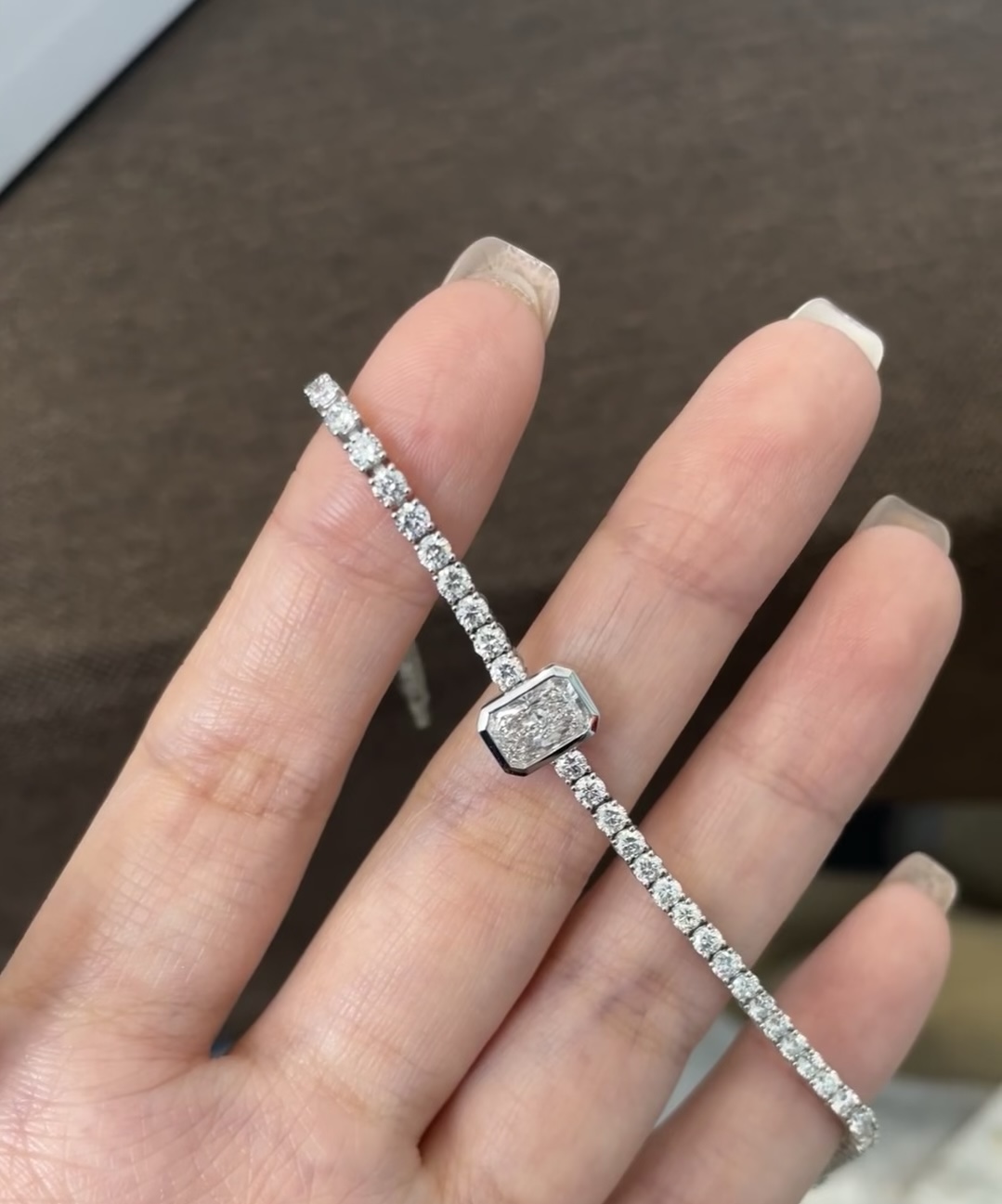
Tooling, revisions and the true cost of a design
Two lines that reveal how a maker is priced.
Tooling is the mould or model a new design requires, and a maker who states it as a separate line is telling the truth about cost: it is a one-off, it is repeatable, and the second piece of the same design does not carry it again. A maker who bundles it silently can look cheaper on the first piece and more expensive on the second. Revisions behave the same way: an allowance with a rate beyond it is a service description, while “as many as it takes” is usually a way of not committing.
The mechanics behind both lines are set out in our breakdown of custom jewellery costs.
What to ask about the sample
Three questions specific to the approval process.
Is the sample produced to the same method as production, or hand-finished specially? Is a physical sample retained by both parties, or does only a photograph exist? And is fit validated on the wearer at the sample stage, or assumed from a measurement? A sample made by a better method than the order is the single most common source of a piece that arrives technically correct and visibly lower in quality than what was approved.
Best practice is simple: a physical sample produced to production standard, retained by both sides, referenced by date.
Documentation and recourse
What a professional maker offers without being asked.
A specification sheet listing stone, metal, weight, dimensions and finish. Stone documentation stating origin and treatment status where a stone is sold individually. The metal specification with its hallmark and plating status. An inspection window during which defects can be raised. And a stated remedy — rework, replacement or credit — rather than an assurance that problems will be resolved.
None of this is unusual, and its absence is informative.
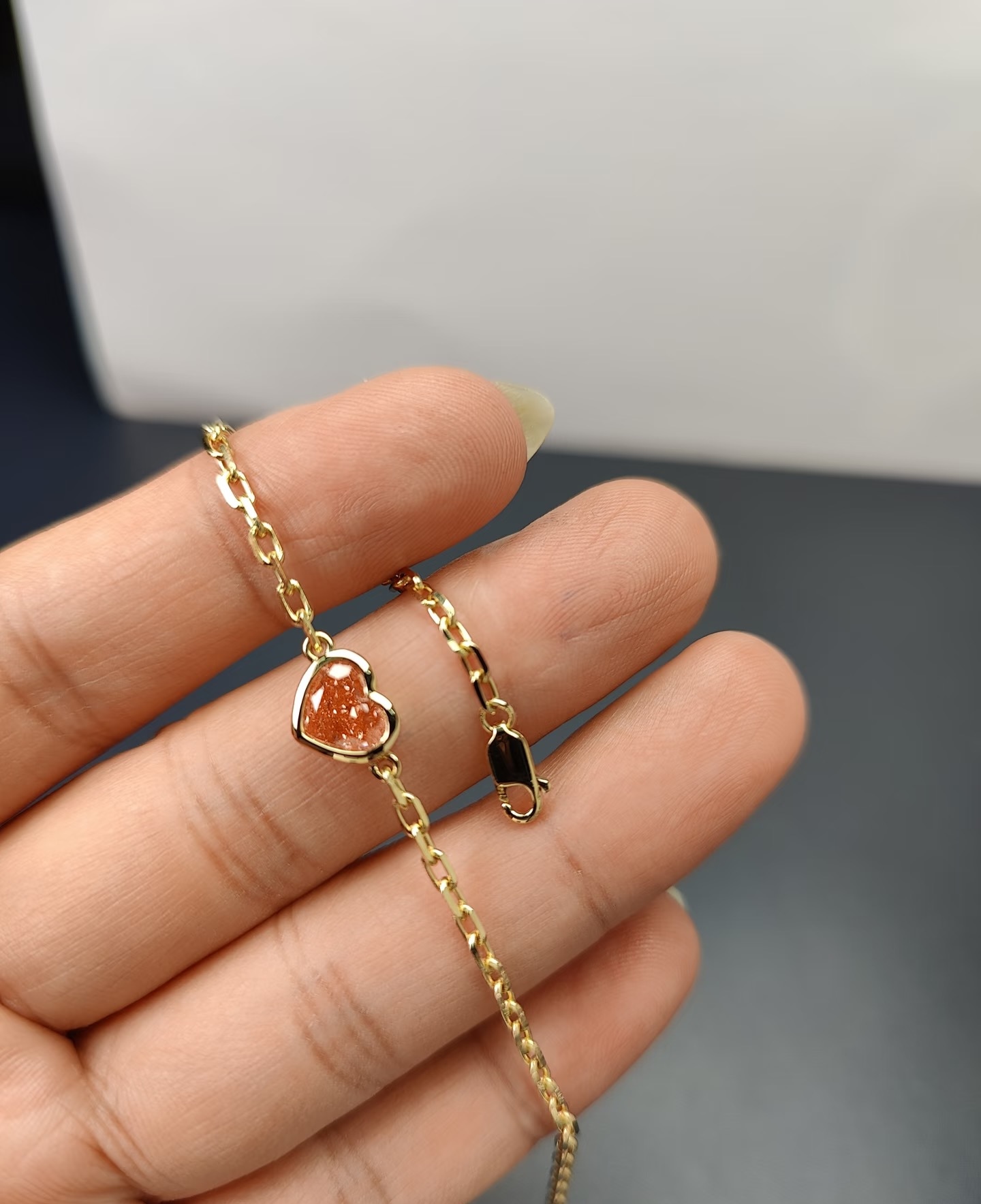
Testing a maker before committing
Four ways to reduce risk on a first order.
Start with a small piece rather than a complex one, so the working relationship is tested at low cost. Ask for a CAD model with dimensions and weight before any casting, which shows whether the maker treats drawings as dimensional documents. Request a production-standard sample and keep it. And ask one specific technical question — about seat depth, minimum wall thickness or matching tolerance — because a maker who manufactures answers it in numbers.
None of the four requires a long relationship in advance, and together they predict most of what the first order will be like.
Questions worth asking about materials
Five that reveal how a maker sources.
Where the stones come from and whether parcels are matched in-house. Whether the metal is bought as alloy or as casting grain. Whether plating is done in-house and to what thickness specification. Whether hallmarking is arranged by the maker for the destination market. And what documentation accompanies a shipment to a business buyer rather than a consumer. A maker who answers these without hesitation is equipped to handle a programme, not just a single piece.
FAQ
How do I choose a custom jeweller?
Ask who casts, sets and finishes the piece, how tooling is handled, how many revisions are included, what documentation travels with the piece, and what the remedy is if the finished piece differs from the approved sample. Those five answers predict lead time, cost behaviour and recourse.
Should I choose a manufacturer or a retailer for custom work?
A manufacturer controls the schedule and can adjust a design at the bench; a retailer or middleman adds a layer between the brief and the work. Both are legitimate, but lead time and flexibility differ. Ask which stages are performed in-house rather than whether a factory exists.
What should I ask a jewelry maker before ordering?
Whether the sample is produced to production standard and retained by both sides, how tooling is priced and whether it repeats, how many revisions are included, the inspection window, and the documentation supplied per piece. A maker who manufactures will answer in numbers.
What are warning signs in a custom jewelry maker?
Tooling bundled invisibly into a single price, “as many revisions as it takes” with no allowance, no physical sample retained, documentation described only as “standard certificates”, and no stated remedy if the piece differs from what was approved.
Sources and further reading
- Assay Office — hallmarking and independent metal testing
- GIA 4Cs — grading factors a maker should be able to discuss
- GIA Report Check — verifying stone documentation independently
- ASTM B700 — electrodeposited silver coating grades
- CIBJO Blue Books — terminology and disclosure standards
- The Silver Institute — metal sourcing and properties
Next step: Send us the piece you are considering and we will answer the five questions in writing — stages performed in-house, tooling, revisions, documentation and remedy — along with a dimensional CAD model and a production-standard sample. Contact vinico@zkzdiamonds.com or WhatsApp +86 135 3037 8229.
{“@context”:”https://schema.org”,”@type”:”FAQPage”,”mainEntity”:[{“@type”:”Question”,”name”:”How do I choose a custom jeweller?”,”acceptedAnswer”:{“@type”:”Answer”,”text”:”Ask who casts, sets and finishes the piece, how tooling is handled, how many revisions are included, what documentation travels with the piece, and what the remedy is if the finished piece differs from the approved sample. Those five answers predict lead time, cost behaviour and recourse.”}},{“@type”:”Question”,”name”:”Should I choose a manufacturer or a retailer for custom work?”,”acceptedAnswer”:{“@type”:”Answer”,”text”:”A manufacturer controls the schedule and can adjust a design at the bench; a retailer or middleman adds a layer between the brief and the work. Both are legitimate, but lead time and flexibility differ. Ask which stages are performed in-house rather than whether a factory exists.”}},{“@type”:”Question”,”name”:”What should I ask a jewelry maker before ordering?”,”acceptedAnswer”:{“@type”:”Answer”,”text”:”Whether the sample is produced to production standard and retained by both sides, how tooling is priced and whether it repeats, how many revisions are included, the inspection window, and the documentation supplied per piece. A maker who manufactures will answer in numbers.”}},{“@type”:”Question”,”name”:”What are warning signs in a custom jewelry maker?”,”acceptedAnswer”:{“@type”:”Answer”,”text”:”Tooling bundled invisibly into a single price, “as many revisions as it takes” with no allowance, no physical sample retained, documentation described only as “standard certificates”, and no stated remedy if the piece differs from what was approved.”}}]}
Part of our custom jewelry guide.
Recommended
 How do I design packaging that protects chains and earrings in transit?Custom Jewelry
 What is a good gift for a self-purchase to celebrate a milestone?Jewelry Guides & Sizing
 Jewelry Care Myths: What Actually Damages Silver and DiamondsCare & Cleaning
 Is Lab Grown Diamond Jewelry a Good Investment?Buying Guides
 How do I vet a jewelry factory before placing a first order?Custom Jewelry
 What should a shipping policy for jewelry say?Custom Jewelry