How Much Does Custom Jewelry Cost? Price Breakdown
925 sterling silver jewellery, set with lab grown diamonds and made in our own Shenzhen workshop.
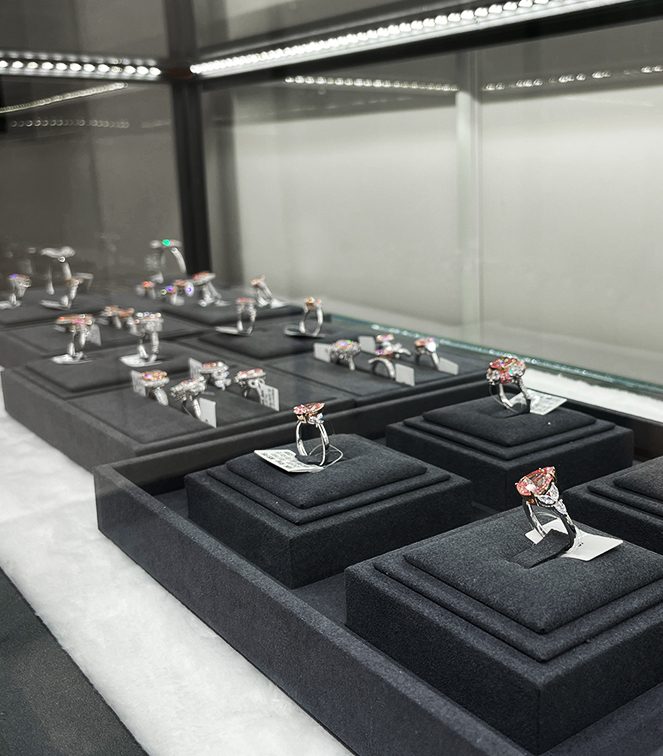
A custom piece costs more than the equivalent stock item, and the reason is usually not the gold or the stone. Four lines make up the price — stone, metal, labour and tooling — and only one of them is unique to custom work. Tooling, together with design and revision time, is what a stock piece has already amortised over hundreds of units. Knowing which line carries the premium is what tells a buyer where to economise and where not to.
What makes up a custom jewelry price?
Four lines: stone, metal, labour and tooling, with revisions as a fifth.
The stone is normally the largest line and the one with the most range. Metal follows, priced by weight and alloy. Labour covers setting, finishing and assembly, and scales with the number of stones and the complexity of the finish rather than with weight. Tooling is the mould required if the design cannot be built from an existing form, and it is carried by the first order alone. Revisions consume design time and sit outside the four.
When a client asks why a custom piece costs more, the honest answer is almost always the last two lines.
The four lines and what moves them
Each responds to a different decision.
| Line | What drives it | How to reduce it safely |
|---|---|---|
| Stone | Size, shape, colour, clarity, count | Trade colour or clarity, keep cut and size |
| Metal | Alloy and total weight of the design | Reduce thickness to the safe minimum, or change alloy |
| Labour | Number of stones set and finish complexity | Fewer, larger stones; simpler finishing |
| Tooling | Whether a new mould is required | Adapt an existing form rather than starting from zero |
| Revisions | Number of design rounds | Complete the brief, then approve promptly |
Why the second identical piece costs less
Because tooling, specification and matching are already solved.
The mould exists, the dimensions are agreed, the tolerance is established and the design time is spent. A repeat order therefore carries only stone, metal and labour, which can make the second piece substantially cheaper than the first at identical specifications. For brands, that is where the margin in a custom style appears, and it argues for developing a small number of styles properly rather than many once.
Our notes on the custom design process set out where the tooling decision is made.
Where custom is cheaper than it looks
Three situations where the premium shrinks or disappears.
First, when the retail alternative would need alteration anyway: a piece resized, re-set or re-finished after purchase carries its own labour. Second, when the stone is bought at trade rather than retail, which is the largest single line and therefore the largest saving. Third, when several pieces share one tooling cost, which turns a one-off premium into a per-unit cost close to stock.
For a brand sourcing at volume, the comparison is not custom against retail, it is custom manufacturing against wholesale, where the tooling line is amortised almost immediately.
Where budgets go wrong
Four patterns that add cost without adding value.
Approving a design before pricing the stone that fits it, which is the most common and the most expensive. Specifying a new mould for a design that could have adapted an existing one. Requesting many revisions on an unfinished design rather than completing the brief first. And upgrading colour or clarity grades that are invisible in the finished piece while leaving the setting under-specified.
Each adds cost without improving what the piece looks like, which is the definition of a wasted line.
Metal and stone: where the split matters
The proportion between the two shifts with the value of the stone, and it drives where to economise.
On an accessible piece, the metal can be the larger line, and changing alloy or reducing weight has a meaningful effect on price. On a high-value piece, the stone dominates and the metal becomes a small percentage, which weakens the argument for saving on it. The practical threshold is the stone’s replacement cost: once replacing it would be a serious expense, spending more on the setting is the rational allocation.
The dynamics behind the stone line are set out in our budget guide by piece.

Getting a comparable quotation
Six items that should appear on any custom quote.
The stone’s specification and whether certification is included. The metal, its weight and its hallmark. The labour, expressed as the piece rather than as an hourly rate. The tooling, stated separately so it is clear whether it is a one-off or repeatable. The revision allowance, and what happens if it is exceeded. And the validity period, which matters for gold content because metal prices move.
Two quotes that list those six can be compared. Two that do not are being compared on the total alone, which is the least informative number on the page.
Making custom work cheaper without weakening it
Five levers, in order of effect.
Buy the stone at the right level rather than at the top of the range. Use an existing form where the design allows. Complete the brief before designing, so revisions are refinements rather than rescues. Choose a simpler finish, since labour scales with finishing complexity. And order more than one piece once the design is proven, which spreads the tooling. None of the five changes the quality of the finished piece.
What none of them should do is reduce the metal below the thickness the piece needs, because that is the one saving that shows up later as a repair.
FAQ
Why is custom jewelry expensive?
Mainly because of tooling and design time rather than materials. A stock piece spreads its mould and design cost across hundreds of units; a one-off carries the whole amount. The stone, metal and labour lines are comparable with stock manufacturing, which is why the second identical piece costs noticeably less.
How much does custom jewelry cost compared with stock?
More for a single piece, because tooling is not shared, and close to stock for a small production run where the mould is amortised across units. Where the retail alternative would need alteration after purchase, the difference narrows further.
Where can I save on a custom piece?
On the stone grade, on adapting an existing form instead of a new mould, on completing the brief before design so revisions are minimal, and on finish complexity. Metal thickness is the one saving to avoid, because it shows up later as a repair rather than as a lower price.
What should a custom jewelry quote include?
The stone specification and whether certification is included, the metal weight and hallmark, the labour as a piece price, the tooling stated separately, the revision allowance, and the validity period for the quotation. Without those six, quotes can only be compared on the total.
Sources and further reading
- GIA 4Cs — grading factors that drive stone cost
- IDEX Online — diamond trade pricing and market news
- Assay Office — hallmarking for finished and custom pieces
- The Silver Institute — metal properties and section thickness
- CIBJO Blue Books — terminology and disclosure
- GIA Report Check — verifying stone documentation
Next step: Send the piece you have in mind and we will quote it with the four lines stated separately — stone, metal, labour and tooling — plus the revision allowance, so you can see exactly where a design change would land. Custom, OEM and private-label programmes are all available. Contact vinico@zkzdiamonds.com or WhatsApp +86 135 3037 8229.
{“@context”:”https://schema.org”,”@type”:”FAQPage”,”mainEntity”:[{“@type”:”Question”,”name”:”Why is custom jewelry expensive?”,”acceptedAnswer”:{“@type”:”Answer”,”text”:”Mainly because of tooling and design time rather than materials. A stock piece spreads its mould and design cost across hundreds of units; a one-off carries the whole amount. The stone, metal and labour lines are comparable with stock manufacturing, which is why the second identical piece costs noticeably less.”}},{“@type”:”Question”,”name”:”How much does custom jewelry cost compared with stock?”,”acceptedAnswer”:{“@type”:”Answer”,”text”:”More for a single piece, because tooling is not shared, and close to stock for a small production run where the mould is amortised across units. Where the retail alternative would need alteration after purchase, the difference narrows further.”}},{“@type”:”Question”,”name”:”Where can I save on a custom piece?”,”acceptedAnswer”:{“@type”:”Answer”,”text”:”On the stone grade, on adapting an existing form instead of a new mould, on completing the brief before design so revisions are minimal, and on finish complexity. Metal thickness is the one saving to avoid, because it shows up later as a repair rather than as a lower price.”}},{“@type”:”Question”,”name”:”What should a custom jewelry quote include?”,”acceptedAnswer”:{“@type”:”Answer”,”text”:”The stone specification and whether certification is included, the metal weight and hallmark, the labour as a piece price, the tooling stated separately, the revision allowance, and the validity period for the quotation. Without those six, quotes can only be compared on the total.”}}]}
Part of our custom jewelry guide.
Recommended
 What is a good gift for a self-purchase to celebrate a milestone?Jewelry Guides & Sizing
 Jewelry Care Myths: What Actually Damages Silver and DiamondsCare & Cleaning
 Is Lab Grown Diamond Jewelry a Good Investment?Buying Guides
 What jewelry makes a good Sweet 16 or teen birthday gift?Jewelry Guides & Sizing
 What is the best jewelry gift for a 10th, 25th or 30th anniversary?Jewelry Guides & Sizing
 Engagement Ring Etiquette: Budgets, Sizes and SurprisesGifting & Occasions