Custom Jewelry: How to Design Your Own Piece
925 sterling silver jewellery, set with lab grown diamonds and made in our own Shenzhen workshop.
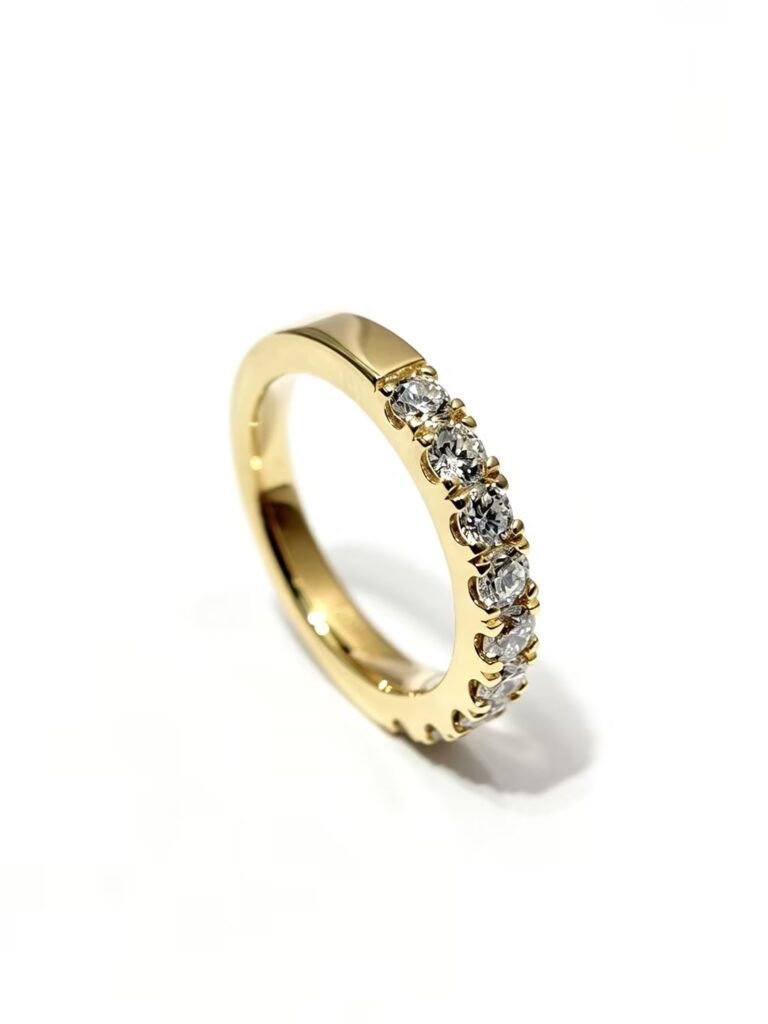
Two clients brief almost the same piece and one approves the result at the sample stage while the other sends it back twice. The drawings were similar and the CAD models looked alike. What differed was the brief: one specified band width and profile, the height the stone would sit at, the finish and the intended fit; the other specified the design and left those to the workshop. A custom piece goes wrong at the brief far more often than at the bench.
How does the custom process work?
Five stages: brief, CAD approval, sample, production, and inspection before dispatch.
Each stage exists to catch a different class of error. The brief settles what the piece is. CAD settles proportion and how it will look from every angle. The sample settles fit, weight and finish — the three things a rendering cannot show. Production executes the approved design. Inspection checks the finished piece against the specification and the sample. Skipping or rushing any one of the first three moves the problem later, where it is more expensive.
Stage 1: the brief
The brief is a specification, not a mood board, and it has to include the invisible things.
| Brief item | Why it matters | How to state it |
|---|---|---|
| Piece type and use | Determines construction and durability | Daily wear or occasional |
| Stone: size, shape, type | Drives proportion and setting | Millimetres and carat, plus shape |
| Metal and finish | Affects colour, wear and maintenance | Alloy plus polished, matte or plated |
| Band or profile width | Changes how the piece feels and reads | Millimetres |
| Setting type and height | Snag risk and apparent stone size | Name the setting and the height |
| Size and fit | The most common source of returns | Measured size plus the fit preference |
| References | Communicates proportion faster than words | Images, marked up with what to keep and change |
Stage 2: CAD and 3D approval
What to look at in a rendering, beyond whether you like it.
A CAD model is a dimensional document, and the useful checks are proportion, height and the view from the side. Look for the relationship between the stone and the band rather than at the stone alone. Check the setting height, because a model that hides the height is hiding the decision that affects comfort and snag risk most. And ask for the overall weight at this stage: a design can look compact in a rendering and weigh considerably more once the metal volume is calculated.
Rendering is also where changes are cheap. A revision at CAD costs far less than the same change after a sample, and orders of magnitude less than after production. The setting families are compared in our guide to engagement ring settings, which is useful when a revision involves changing the setting type.
Stage 3: sampling and fit validation
The stage that catches everything the drawing cannot show.
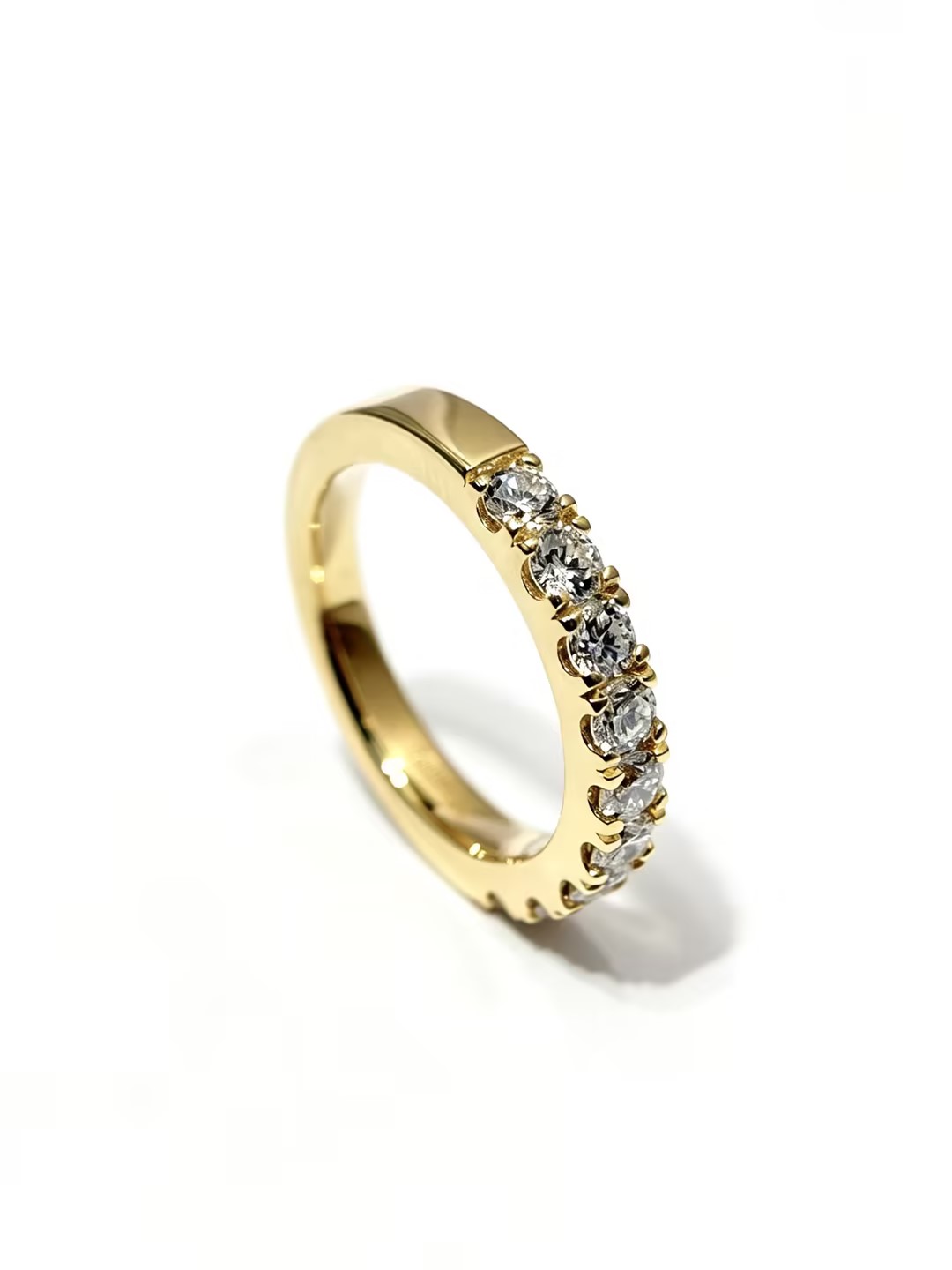
A sample reveals weight in the hand, how a band sits against the neighbouring fingers, whether a setting catches on fabric, and how a finish reads on the actual metal rather than in a render. It is also the point at which size is validated: a ring measured at one temperature and worn in another will feel different, and a wide band feels tighter than a narrow one at the same internal diameter.
The sample should be produced to the intended production method rather than hand-finished specially, because a sample that is better than production sets a standard the order cannot meet. Where a piece will be worn against something else — a wedding band against an engagement ring, for example — the sample is where the clearance is confirmed.
Stage 4: production, setting and finishing
Where the approved decisions are executed and where substitutions must be visible.
Casting or fabrication comes first, then setting, then finishing. The setting stage is where most of the risk sits, because prongs need to hold the stone securely without being visible as claws. Finishing follows: polishing, any engraving, and plating if the design calls for it, since plating over an unfinished surface simply conceals the finish and wears through sooner.
If any specification has to change during production — a stone size becomes unavailable, for example — the change should be raised for approval rather than resolved at the bench. A silent substitution is the single most damaging thing that can happen in a custom order.
Stage 5: inspection and delivery
Checked against the specification, not against memory.
Final inspection covers stone security, setting alignment, finish consistency, hallmark presence, dimensions against the specification and, for a piece with a closure, full engagement of the clasp. Documentation is assembled at the same time: the stone documentation, the metal specification and the dimensions.
At our end the finished piece is compared against the approved sample and the specification sheet rather than assessed on its own merits, because the question is not whether it is a good piece but whether it is the piece that was ordered. The stone side of that specification is set out in the guide to choosing a lab diamond.
Lead time, honestly
Where the time goes, and which stage is the bottleneck.
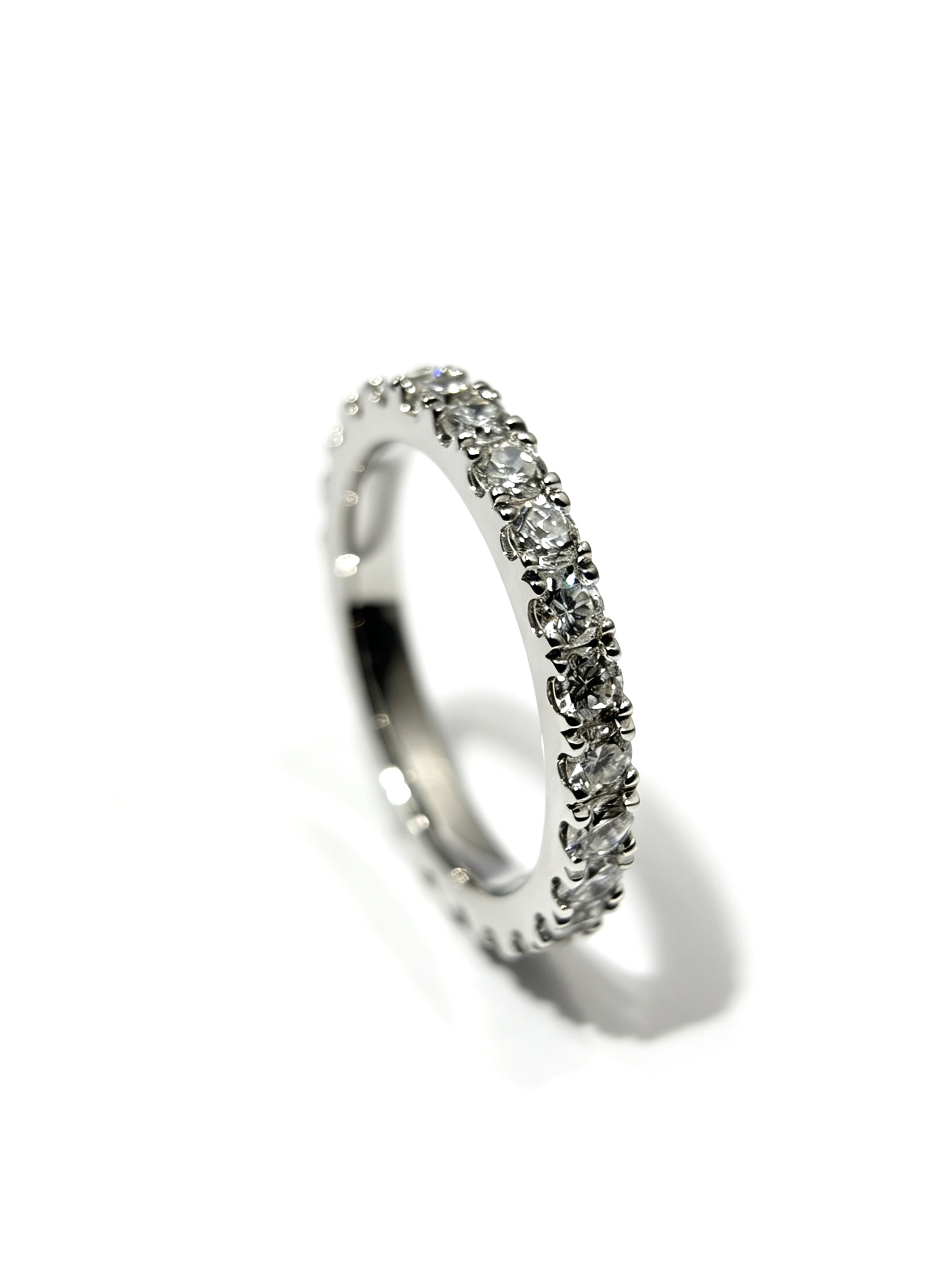
The brief and CAD stage takes days. Sampling adds a week or more depending on whether the stone has to be sourced. Production itself depends on whether the piece is cast from a standard mould or requires a new one, and on how many stones are set individually. A piece built around a stock stone and a stock chain moves quickly; a fully new design with a sourced centre stone and a continuous set line does not.
The most useful thing a client can do is approve the CAD promptly, because the sample and the production run both wait on it.
Cost, and what drives it
Five inputs, in rough order of influence.
The stone, which usually dominates. Tooling, if the design requires a new mould. Labour, which scales with the number of stones set and the complexity of the finish. Metal, which moves with market prices. And the number of revisions, since each one consumes design time. For a single piece the tooling and revision costs are proportionally larger than in a repeat order, which is why the second identical piece always costs less than the first.
FAQ
How do I design my own jewelry?
Write a brief that includes the invisible decisions: metal alloy, finish, band or profile width in millimetres, setting type and height, and size with the fit you want. Approve a CAD model on proportion and height, then approve a production-standard sample for fit and finish. Most problems trace back to the brief rather than the bench.
How long does custom jewelry take?
It depends on what has to be created. A design using a stock stone and existing moulds moves in days once the CAD is approved. A new design with a sourced centre stone and a continuously set line takes longer. The CAD approval is the point where clients most often add delay.
What should I check on a CAD model?
Proportion between the stone and the band, the setting height, the view from the side, and the estimated weight. A rendering that shows only the face leaves the height decision unseen, and height is what determines comfort and snag risk in wear.
What if a stone becomes unavailable during production?
The supplier should raise it for approval rather than substitute silently. A change to the stone changes proportion, value and often the setting. Any substitution should be presented with photographs and measurements against the original specification before the piece is completed.
Sources and further reading
- Assay Office — hallmarking for custom and one-off pieces
- GIA 4Cs — grading factors that a specifications sheet refers to
- GIA Report Check — verifying stone documentation
- The Silver Institute — metal properties relevant to design choices
- CIBJO Blue Books — terminology and disclosure
- International Gem Society — setting and construction reference
Next step: Send the brief — piece, stone, metal, width, setting type, size and references — and we will return a CAD model with dimensions and estimated weight, then a production-standard sample for approval before the order runs. Custom, OEM and private-label programmes are all available. Contact vinico@zkzdiamonds.com or WhatsApp +86 135 3037 8229.
{“@context”:”https://schema.org”,”@type”:”FAQPage”,”mainEntity”:[{“@type”:”Question”,”name”:”How do I design my own jewelry?”,”acceptedAnswer”:{“@type”:”Answer”,”text”:”Write a brief that includes the invisible decisions: metal alloy, finish, band or profile width in millimetres, setting type and height, and size with the fit you want. Approve a CAD model on proportion and height, then approve a production-standard sample for fit and finish. Most problems trace back to the brief rather than the bench.”}},{“@type”:”Question”,”name”:”How long does custom jewelry take?”,”acceptedAnswer”:{“@type”:”Answer”,”text”:”It depends on what has to be created. A design using a stock stone and existing moulds moves in days once the CAD is approved. A new design with a sourced centre stone and a continuously set line takes longer. The CAD approval is the point where clients most often add delay.”}},{“@type”:”Question”,”name”:”What should I check on a CAD model?”,”acceptedAnswer”:{“@type”:”Answer”,”text”:”Proportion between the stone and the band, the setting height, the view from the side, and the estimated weight. A rendering that shows only the face leaves the height decision unseen, and height is what determines comfort and snag risk in wear.”}},{“@type”:”Question”,”name”:”What if a stone becomes unavailable during production?”,”acceptedAnswer”:{“@type”:”Answer”,”text”:”The supplier should raise it for approval rather than substitute silently. A change to the stone changes proportion, value and often the setting. Any substitution should be presented with photographs and measurements against the original specification before the piece is completed.”}}]}
Recommended
 How do I design packaging that protects chains and earrings in transit?Custom Jewelry
 What is a good gift for a self-purchase to celebrate a milestone?Jewelry Guides & Sizing
 Jewelry Care Myths: What Actually Damages Silver and DiamondsCare & Cleaning
 Is Lab Grown Diamond Jewelry a Good Investment?Buying Guides
 How do I vet a jewelry factory before placing a first order?Custom Jewelry
 What should a shipping policy for jewelry say?Custom Jewelry