How Much Should You Spend on Jewelry? Budget Guide by Piece
925 sterling silver jewellery, set with lab grown diamonds and made in our own Shenzhen workshop.
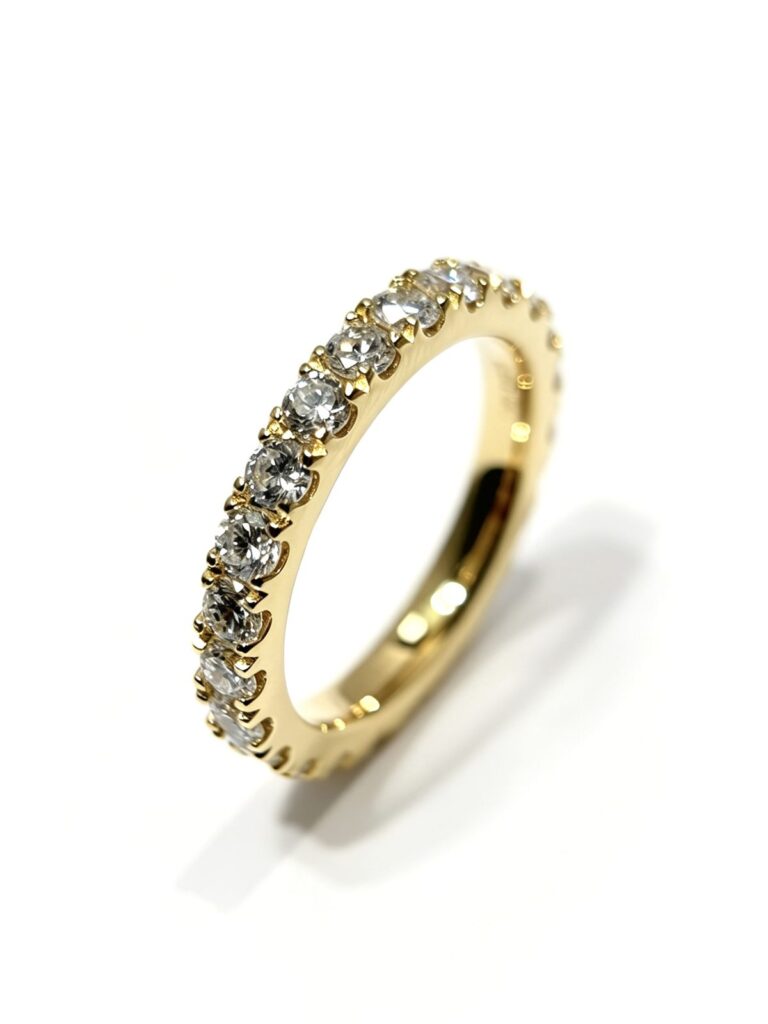
Buying advice on jewellery budgets usually arrives as a multiple of income, and that number has no relationship to where a piece’s value actually sits. A budget is really a question of allocation: how much goes to the metal, how much to the stone, and how much to the setting and finishing. Those three lines move independently, and shifting money between them changes what the piece looks like far more than changing the total does. Working through the allocation is more useful than deciding a headline figure.
How should you budget for jewelry?
Start from how the piece will be worn, then allocate between metal, stone and workmanship.
A ring worn every day justifies spending on the setting and the metal, because those determine whether it survives. A pendant worn occasionally can carry a lower metal specification and put more into the stone, because nothing rubs against it. A piece with many small stones spends most of its budget on matching and setting labour rather than on any single stone. And a first piece in a category is usually better bought at a moderate level than at the top of the range, because the wearer’s preferences are still being established.
Answering how often and how hard the piece will be worn narrows the allocation before any price is discussed.
Where the money goes in each piece
Four categories, four different splits.
| Piece | Largest cost | Second | Where money is wasted |
|---|---|---|---|
| Solitaire ring with one stone | The centre stone | Metal and setting | Colour and clarity steps that are invisible when set |
| Line necklace or tennis bracelet | Stone count and matching | Setting labour | Upgrading one or two stones in a continuous run |
| Pendant | The centre stone | Chain and bail | An over-heavy chain that competes with the stone |
| Band or eternity ring | Stone size and count | Metal | Excessive width that reduces comfort for little visual gain |
How metal and stone split a price
The proportion shifts with the value of the stone, and that shift drives the whole decision.
On an accessible piece, the metal can be the larger line item. On a high-value piece, the stone dwarfs everything else. This is why saving on the metal makes sense on one and not the other: on a modest piece the saving is a meaningful share of the total, while on a valuable piece it is a small percentage in exchange for a real reduction in setting security. The practical threshold is the stone’s replacement cost — once replacing it would be a serious expense, spending more on the setting is the rational allocation.
The mechanics behind the stone line are set out in the breakdown of lab grown diamond pricing.
What lab grown stones change about a budget
They move the allocation rather than simply lowering the total.
A lab grown stone makes a larger centre stone or a longer line reachable at the same total spend. The question then is where the freed budget goes: into size, into cut quality, into the setting, or out of the budget entirely. The allocation that produces the best-looking piece is usually cut quality first, then size, then setting, with colour and clarity absorbing whatever remains.
Because the price of lab grown material for a given specification moves over time, published averages age quickly and a current quotation is more useful than any historical figure.
Building a budget across several pieces
Most buyers are not purchasing one piece but assembling a small collection.
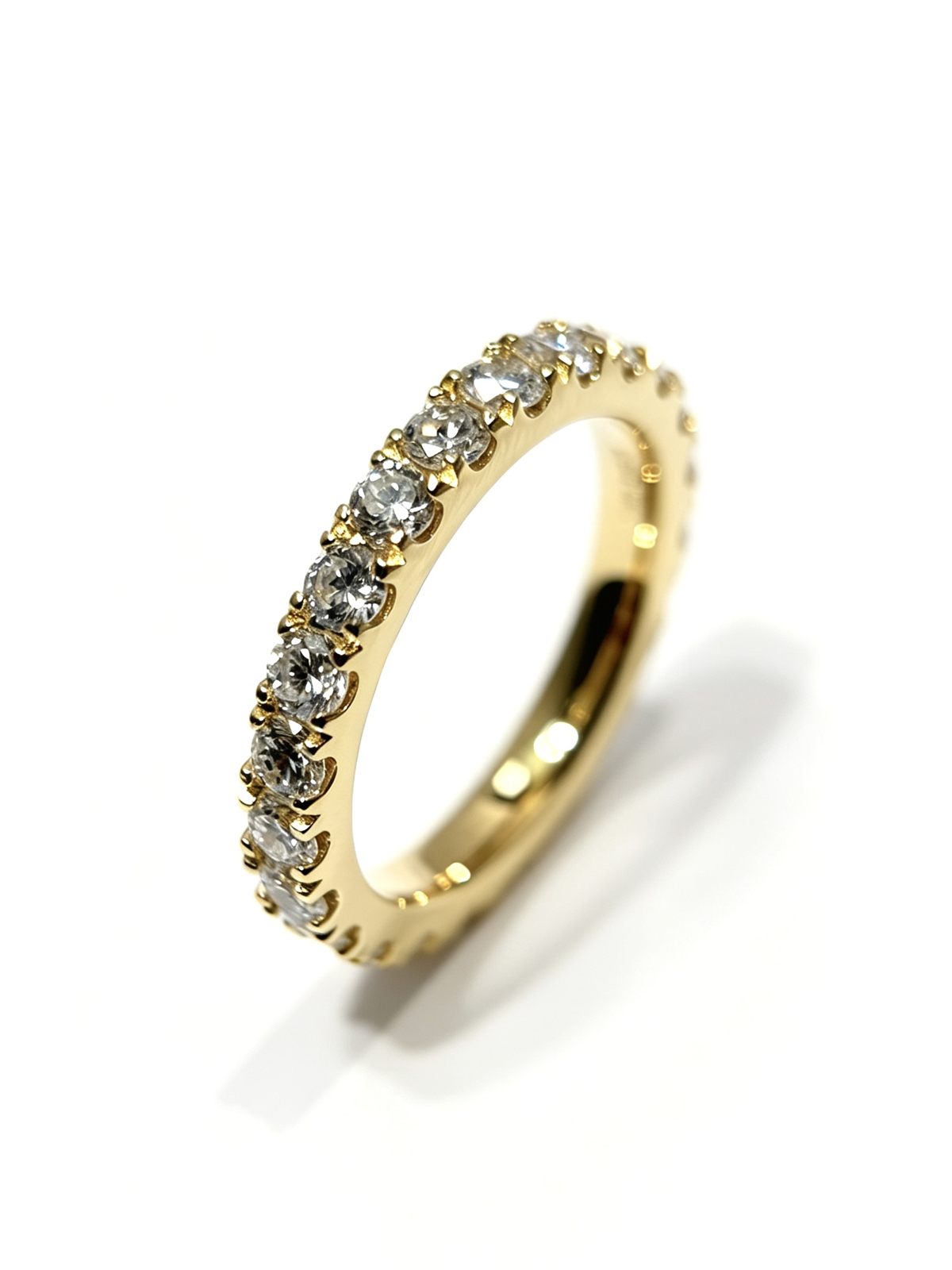
A useful structure is to decide which pieces will be worn most often and allocate to those first. In most wardrobes that is one ring, one pair of earrings and one necklace; a bracelet and a second pendant follow. Spending the largest share on the most-worn piece produces the highest return in use, which is a more rational basis than spreading the budget evenly across categories.
The second principle is to avoid buying twice. A piece bought at the very bottom of a range to test a preference frequently gets replaced, which costs more than having bought the middle of the range once.
What to spend on an engagement ring
The allocation matters more than the total, and the metal is not where to save.
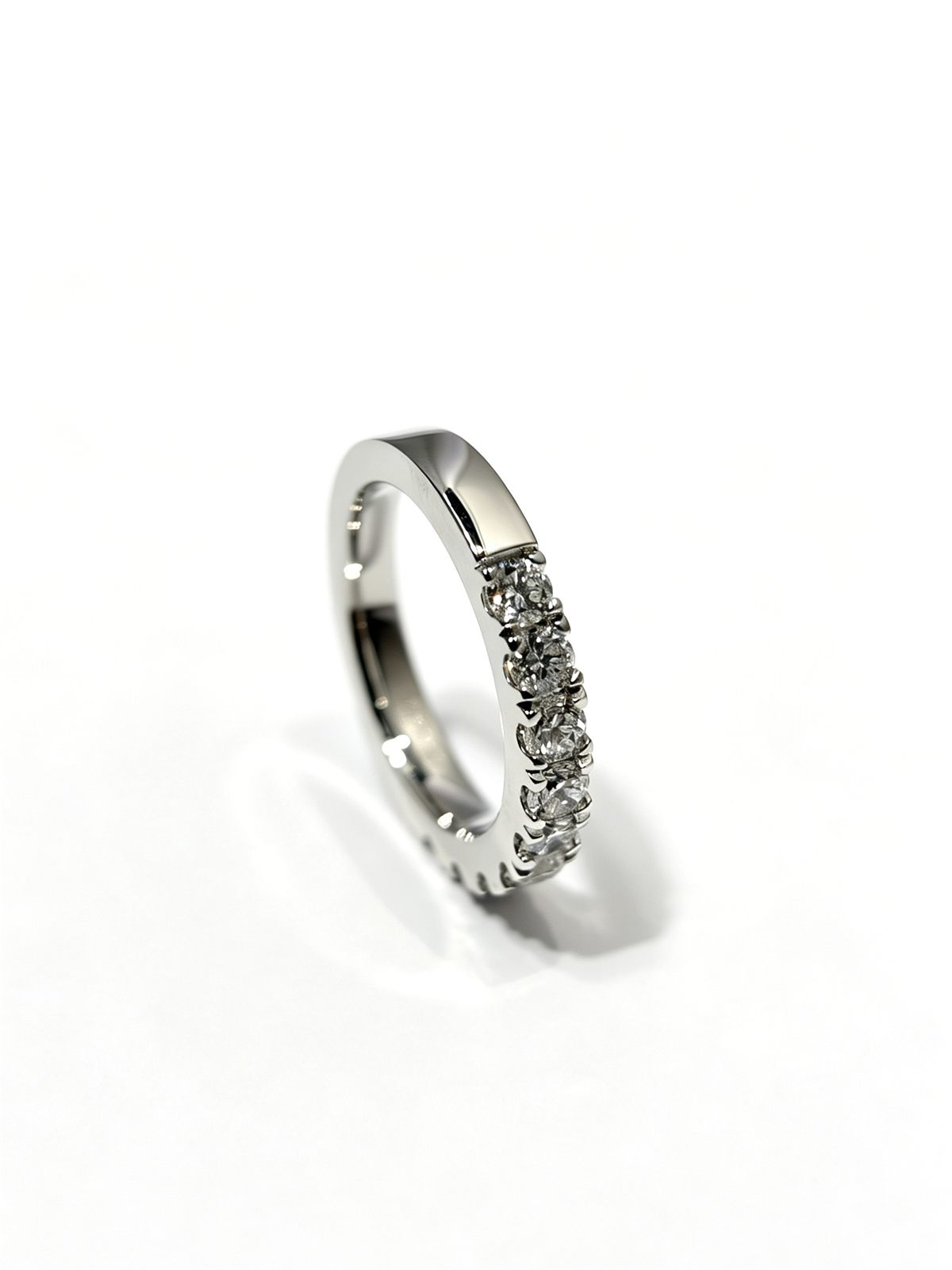
An engagement ring is worn daily for decades, which makes setting security and metal hardness the two things that cannot be economised without consequences. The centre stone can be chosen inside a range; the setting, the prong thickness and the band should be specified properly. On a band or an eternity ring, the equivalent advice is about count and width — a narrower band with well-matched stones usually looks better than a wide one with uneven stones, as our notes on eternity band carat weight explain.
Where budgets go wrong
Four patterns that produce regret.
Spending on grades that cannot be seen in the finished piece. Saving on the metal on a daily-worn ring. Buying to a headline figure rather than an allocation, which usually means an oversized stone in an underspecified setting. And buying at the top of the range for a first piece in a category before knowing whether the wearer likes the format.
Each is a shift of a few per cent between line items rather than a change in the total, which is why allocation is the useful way to think about a jewellery budget.
FAQ
How much should I spend on an engagement ring?
There is no meaningful multiple of income, but there is a sound allocation: specify the setting, prong thickness and metal properly, because the ring is worn daily for decades, and choose the centre stone inside the range the setting can hold safely. Saving on the setting to spend on the stone is the most common expensive mistake.
What is a reasonable budget for a piece of jewelry?
It depends on how often the piece will be worn. Daily-worn pieces justify spending on metal hardness and setting security; occasionally worn pieces can carry a lighter metal specification and put more of the budget into the stone. Frequency of wear is the best single guide.
Do lab grown diamonds make jewelry cheaper?
They make a given specification cheaper, which frees budget rather than simply lowering it. Where that money goes — into a larger stone, a better cut, a stronger setting, or out of the budget — matters more than the saving itself. Cut quality first, then size, is usually the allocation that looks best.
Where is money wasted on jewelry?
On grade steps that are invisible once a stone is set, on upgrading individual stones inside a continuous line where matching matters more than any single stone, and on metal weight that adds cost without adding durability. The visible return comes from cut, size and the quality of the setting.
Sources and further reading
- GIA 4Cs — which grading factors affect appearance
- IDEX Online — diamond trade pricing and market news
- GIA Report Check — verifying stone documentation
- The Silver Institute — metal properties relevant to budget choices
- Assay Office — precious metal standards and hallmarking
- CIBJO Blue Books — jewellery terminology and disclosure
Next step: Tell us which pieces you are budgeting for and how often each will be worn, and we will propose an allocation across stone, metal and setting with the trade-offs made explicit, then quote against it. Ready-stock pieces and OEM programmes are both available. Contact vinico@zkzdiamonds.com or WhatsApp +86 135 3037 8229.
{“@context”:”https://schema.org”,”@type”:”FAQPage”,”mainEntity”:[{“@type”:”Question”,”name”:”How much should I spend on an engagement ring?”,”acceptedAnswer”:{“@type”:”Answer”,”text”:”There is no meaningful multiple of income, but there is a sound allocation: specify the setting, prong thickness and metal properly, because the ring is worn daily for decades, and choose the centre stone inside the range the setting can hold safely. Saving on the setting to spend on the stone is the most common expensive mistake.”}},{“@type”:”Question”,”name”:”What is a reasonable budget for a piece of jewelry?”,”acceptedAnswer”:{“@type”:”Answer”,”text”:”It depends on how often the piece will be worn. Daily-worn pieces justify spending on metal hardness and setting security; occasionally worn pieces can carry a lighter metal specification and put more of the budget into the stone. Frequency of wear is the best single guide.”}},{“@type”:”Question”,”name”:”Do lab grown diamonds make jewelry cheaper?”,”acceptedAnswer”:{“@type”:”Answer”,”text”:”They make a given specification cheaper, which frees budget rather than simply lowering it. Where that money goes — into a larger stone, a better cut, a stronger setting, or out of the budget — matters more than the saving itself. Cut quality first, then size, is usually the allocation that looks best.”}},{“@type”:”Question”,”name”:”Where is money wasted on jewelry?”,”acceptedAnswer”:{“@type”:”Answer”,”text”:”On grade steps that are invisible once a stone is set, on upgrading individual stones inside a continuous line where matching matters more than any single stone, and on metal weight that adds cost without adding durability. The visible return comes from cut, size and the quality of the setting.”}}]}
Part of our 925 sterling silver jewelry guide.
Recommended
 What is a good gift for a self-purchase to celebrate a milestone?Jewelry Guides & Sizing
 Jewelry Care Myths: What Actually Damages Silver and DiamondsCare & Cleaning
 Is Lab Grown Diamond Jewelry a Good Investment?Buying Guides
 What jewelry makes a good Sweet 16 or teen birthday gift?Jewelry Guides & Sizing
 What is the best jewelry gift for a 10th, 25th or 30th anniversary?Jewelry Guides & Sizing
 Engagement Ring Etiquette: Budgets, Sizes and SurprisesGifting & Occasions