Lab Diamond vs Moissanite: Differences and Which to Buy
925 sterling silver jewellery, set with lab grown diamonds and made in our own Shenzhen workshop.
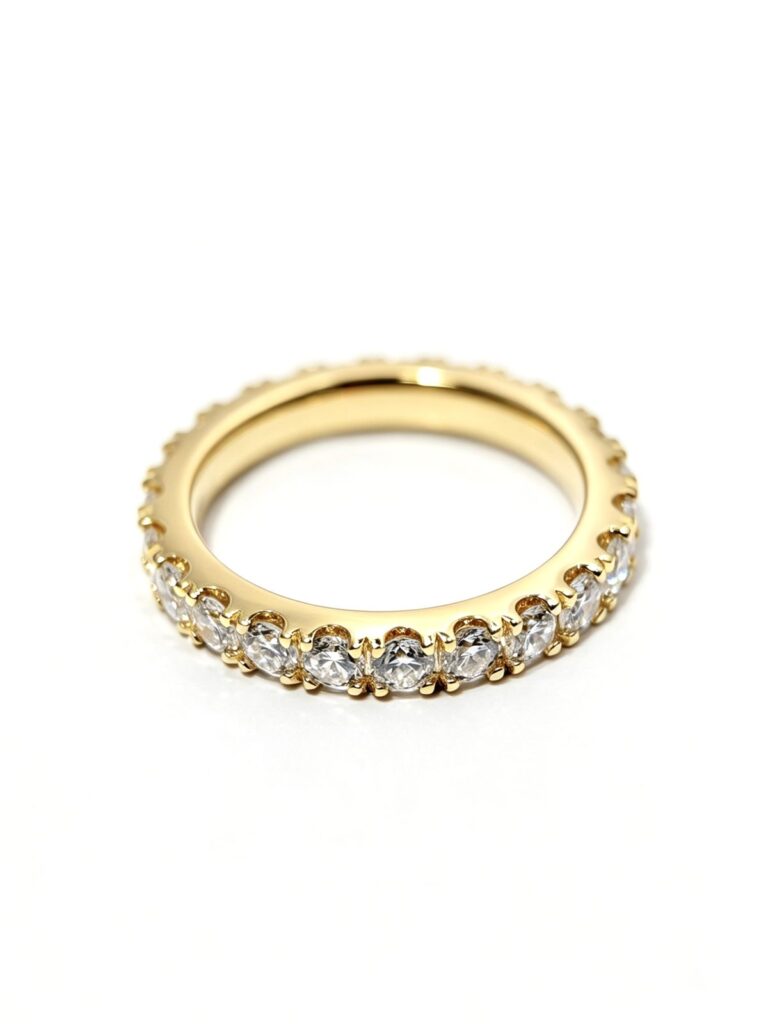
Two stones are handed over in the same box, both bright and both colourless, and one is a lab grown diamond while the other is a moissanite. They cost very different amounts, and they are not variations of the same thing: a lab diamond is carbon crystallised in the diamond structure, and a moissanite is silicon carbide. Both are legitimate jewellery materials, both look excellent in a setting, and they wear differently, grade differently and are documented differently.
Last updated:
Is moissanite as good as a lab diamond?
It is a different material with different properties, so the question is really which suits the purchase.
Moissanite is harder than most gemstones and well suited to daily wear, and it is far less expensive. It is not, however, a diamond: it has a different refractive index, different dispersion and different optical behaviour, and it is not graded on the diamond colour and clarity scales. A lab diamond is diamond in every physical respect except origin, and it is graded on the same scales as a mined diamond.
For buyers whose priority is appearance at the lowest cost, moissanite is a reasonable choice. For buyers who want a diamond that is documented as one — for insurance, resale or because the material itself matters — the lab diamond is the relevant product.
The two materials side by side
Composition, hardness and how each behaves in wear.
| Property | Lab grown diamond | Moissanite |
|---|---|---|
| Composition | Carbon, diamond crystal structure | Silicon carbide |
| Hardness | 10 on the Mohs scale | Roughly 9.25 |
| Optical character | High refractive index, moderate dispersion | Higher dispersion; more intense fire |
| Grading | Graded on diamond colour and clarity scales | Not graded on diamond scales |
| Documentation | Grading report stating origin | Manufacturer specification, not a diamond report |
| Price | Below natural diamond | Below lab grown diamond |
| Built to be sold as | Diamond | A separate gemstone |
Hardness and wear
Both are hard enough for daily wear; the difference shows up in the setting over years.
Diamond is the hardest material used in jewellery, so a diamond’s edges stay crisp indefinitely under normal wear. Moissanite is slightly softer and, more importantly, it is tougher in some directions than others, which matters mainly in a setting that grips the stone at thin points. In practice both materials serve well in a well-made setting, and the component that wears first is the metal, not the stone.
The practical difference is that a diamond can be re-polished if it ever becomes dulled by long wear, while moissanite refinishing is more limited. That is relevant over decades rather than years.
The optical difference buyers notice
Moissanite has more fire; diamond has more even brilliance.
Dispersion is what splits light into spectral colours, and moissanite has more of it, so in strong light it shows more coloured flashes — sometimes described as rainbow-like. Diamond has a higher refractive index but lower dispersion, so it returns more white light and fewer coloured flashes. Under ordinary indoor lighting the two can look similar; under spotlights or direct sun, the difference is visible, particularly in larger stones.
Neither is a defect. It is a characteristic, and buyers who prefer a quieter brilliance usually prefer diamond, while those who enjoy the coloured flashes often prefer moissanite.
How the two are told apart
Not by eye at a counter, and not by a standard diamond tester in every case.
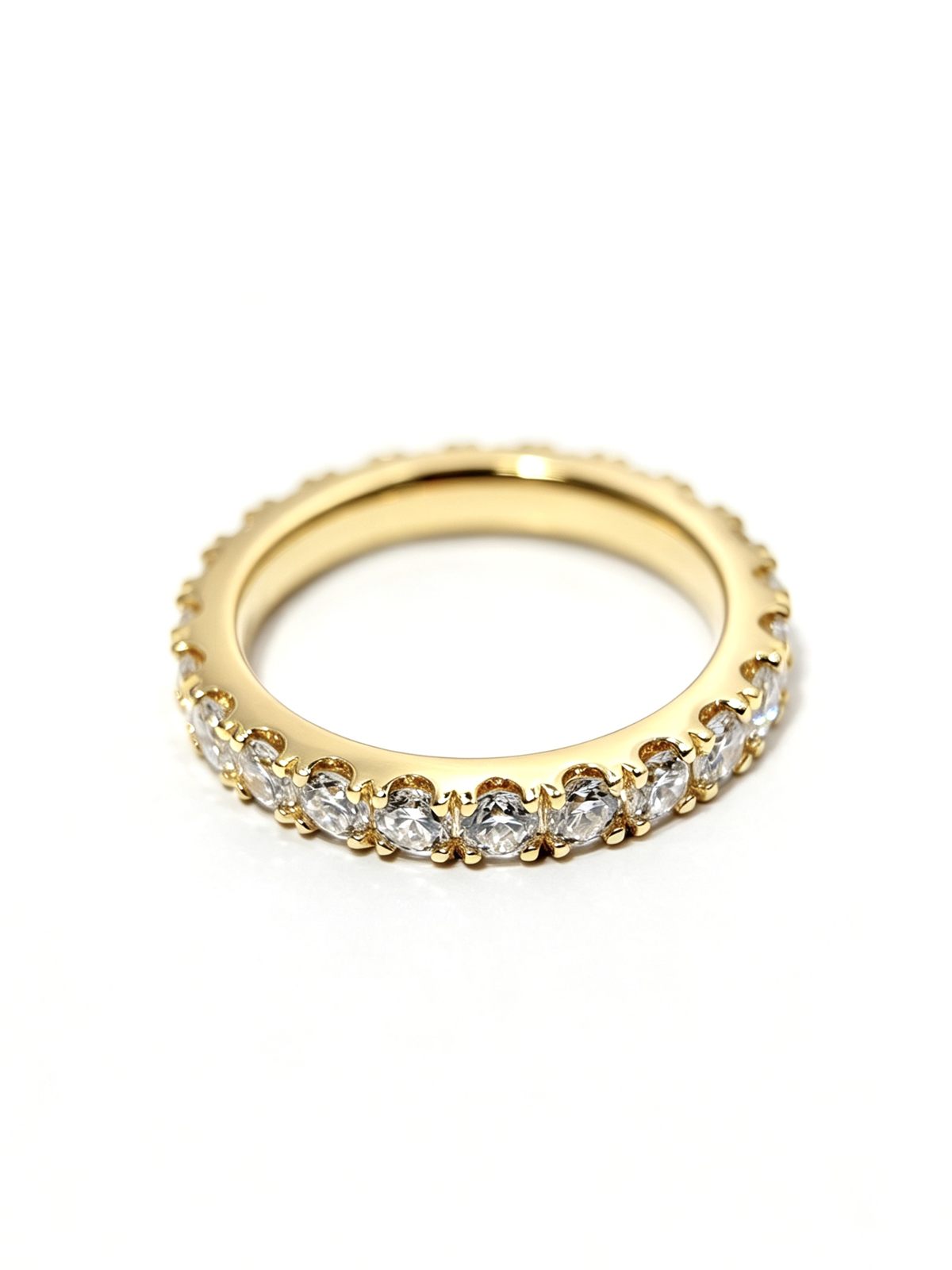
The clearest indicator is the doubling of facet edges visible under magnification in moissanite, caused by its birefringence — diamond does not do this. Diamond testers that measure thermal conductivity separate moissanite reliably in most designs, while electrical conductivity testers are used specifically to distinguish diamond from moissanite because both conduct heat similarly. In practice, the fastest and most reliable answer is documentation: a diamond comes with a grading report stating origin, and moissanite does not carry a diamond report at all.
That is why the disclosure line on the product page matters more than any instrument a buyer might use.
Price and what drives it
Both are produced rather than mined, but they are produced differently and priced accordingly.
Moissanite is grown in large volumes at low cost, which is why the price gap to a lab diamond is significant even at similar visual sizes. Lab diamonds are produced under diamond growth conditions with lower yield and higher equipment cost, and they are then graded individually, which adds a cost per stone that moissanite does not carry. The result is that the two sit in different price bands by design rather than because one is performing worse.
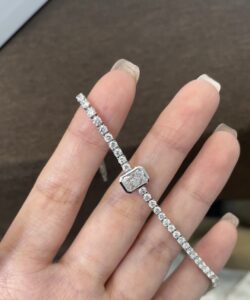
Where the difference matters most is in a piece with many stones: a bracelet or a line of earrings in moissanite can be built for a fraction of the diamond equivalent. The breakdown of lab grown diamond pricing sets out which factors move the diamond price.
Which to buy
Four situations and the material that makes sense in each.
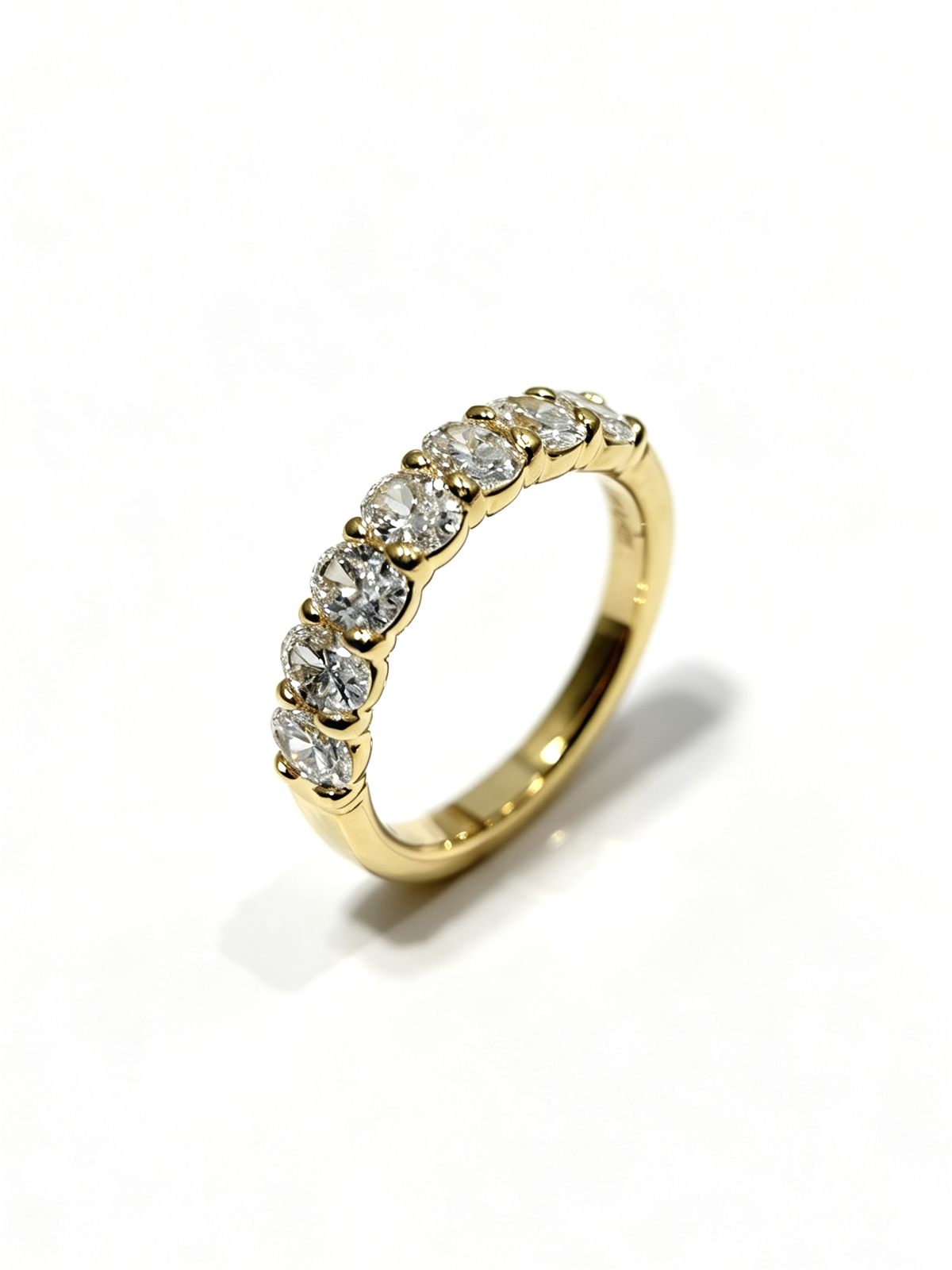
A piece where the material has to be diamond — for an engagement ring, an heirloom or an insurance schedule: lab grown diamond. A large piece for occasional wear where budget is the constraint: moissanite will deliver the visual effect for far less. A piece with many small stones: moissanite is often the sensible choice, and a diamond line becomes a deliberate premium. And any purchase where the buyer expects to resell: diamond, with the caveat that lab grown resale is weaker than natural, as covered in our notes on certification.
What matters most is disclosure. A piece should be described by its actual material on the product page, the invoice and the packaging, because the failure case here is not choosing moissanite — it is receiving it when a diamond was paid for.
FAQ
Is moissanite as good as a lab diamond?
Both are durable, attractive materials, and neither is a lesser version of the other. They differ in composition, hardness, optical behaviour and grading: a lab diamond is graded on diamond scales and documented as diamond, while moissanite is not. Which is better depends on whether the purchase requires diamond.
How can you tell moissanite from diamond?
Under magnification, moissanite shows doubled facet edges because of its birefringence, which diamond does not. In practice the reliable answer is documentation: a diamond carries a grading report that states laboratory-grown origin, and moissanite does not carry a diamond report at all.
Does moissanite scratch or go cloudy?
Moissanite is hard enough for daily wear and does not cloud with age. Surface film from skin oils and cosmetics dulls any stone, and cleaning restores it. Diamond is harder, so its facet edges stay sharper over decades, and diamond can be re-polished if it ever needs refinishing.
Is moissanite worth buying?
For a large piece worn occasionally, or a design with many small stones, it delivers the visual effect at a much lower price. It is not the right choice where the material itself has to be diamond, such as an engagement ring that will be insured or appraised as a diamond.
Sources and further reading
- GIA Gem Encyclopedia — diamond and gem material properties
- Gems & Gemology — research on diamond and its lookalikes
- International Gemological Institute — grading and reports
- GIA 4Cs — how diamond grades are defined
- CIBJO Blue Books — nomenclature and disclosure standards
- International Gem Society — gemstone identification reference
Next step: Tell us what the piece is for and whether the material has to be diamond, and we will quote both options against the same specification so the comparison is clear. Lab grown diamond and alternative-material programmes are both supplied. Contact vinico@zkzdiamonds.com or WhatsApp +86 135 3037 8229.
Part of our lab grown diamonds guide.
Recommended
 What is a good gift for a self-purchase to celebrate a milestone?Jewelry Guides & Sizing
 Jewelry Care Myths: What Actually Damages Silver and DiamondsCare & Cleaning
 Is Lab Grown Diamond Jewelry a Good Investment?Buying Guides
 What jewelry makes a good Sweet 16 or teen birthday gift?Jewelry Guides & Sizing
 What is the best jewelry gift for a 10th, 25th or 30th anniversary?Jewelry Guides & Sizing
 Engagement Ring Etiquette: Budgets, Sizes and SurprisesGifting & Occasions