How Much Do Lab Grown Diamonds Cost? Price Factors Explained
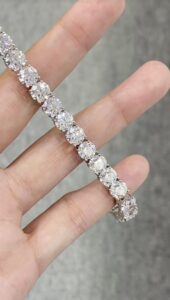
925 sterling silver jewellery, set with lab grown diamonds and made in our own Shenzhen workshop.
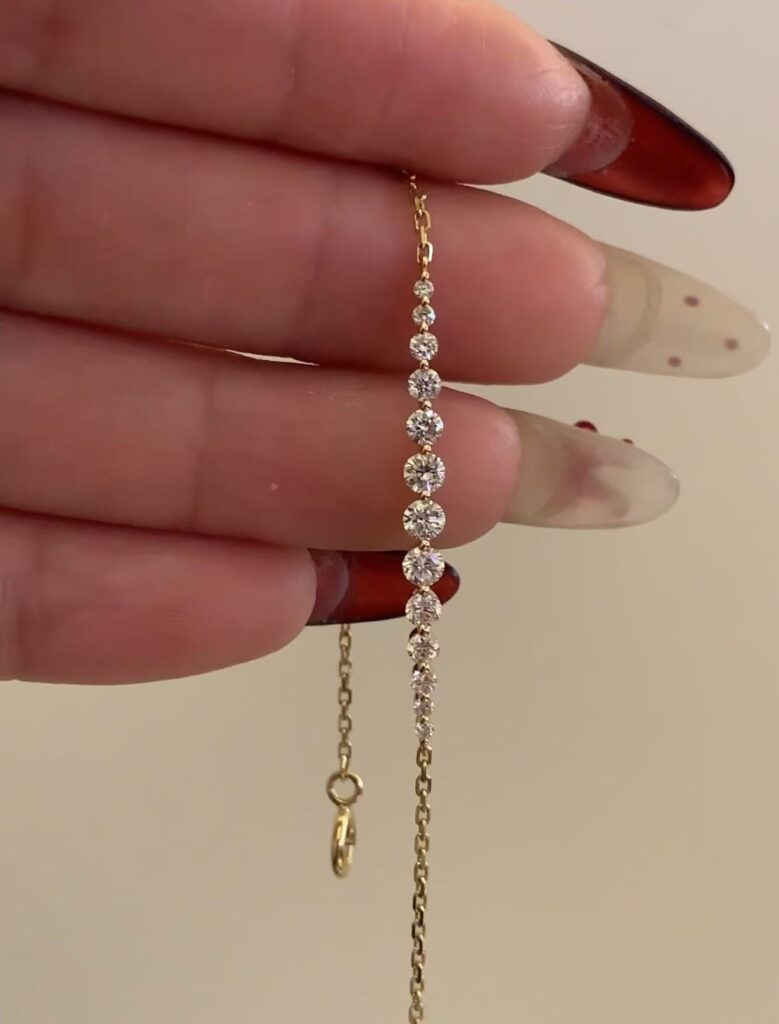
A lab grown diamond quote contains four familiar numbers — carat, colour, clarity and cut — and buyers usually treat those as the explanation of the price. They are only part of it. Two quotes for stones carrying identical grades can sit far apart because of carat banding, shape demand, the report that accompanies the stone, and how tightly the stones are matched. Understanding which lever moves the price is what makes a quote comparable, and it is also what tells a buyer where they can reasonably negotiate and where they cannot.
Last updated:
What actually drives a lab grown diamond price?
Production cost per finished carat, filtered through demand for a specific specification.
Lab grown production cost falls as capacity and efficiency improve, and the price of any given specification reflects the cost of producing it plus what the market will pay. Because supply is not fixed, the price of a specification can move over a shorter period than mined diamond pricing. Two specifications of identical grade can also cost different amounts to produce, if one requires more growth time or loses more weight in cutting.
For buyers, that means historical price lists age quickly, and current supplier quotes are more useful than any published average.
The price ladder: which carat bands step up
Price per carat does not rise smoothly, it steps at the weights buyers ask for most.
Demand concentrates at round numbers, so a stone just above a popular weight often carries a higher per-carat price than a slightly smaller stone of the same grade. The effect is a series of steps rather than a straight line. A buyer with flexibility on the last decimal place can often save meaningfully by choosing a weight just below the step, which is a real trade rather than a compromise on quality.
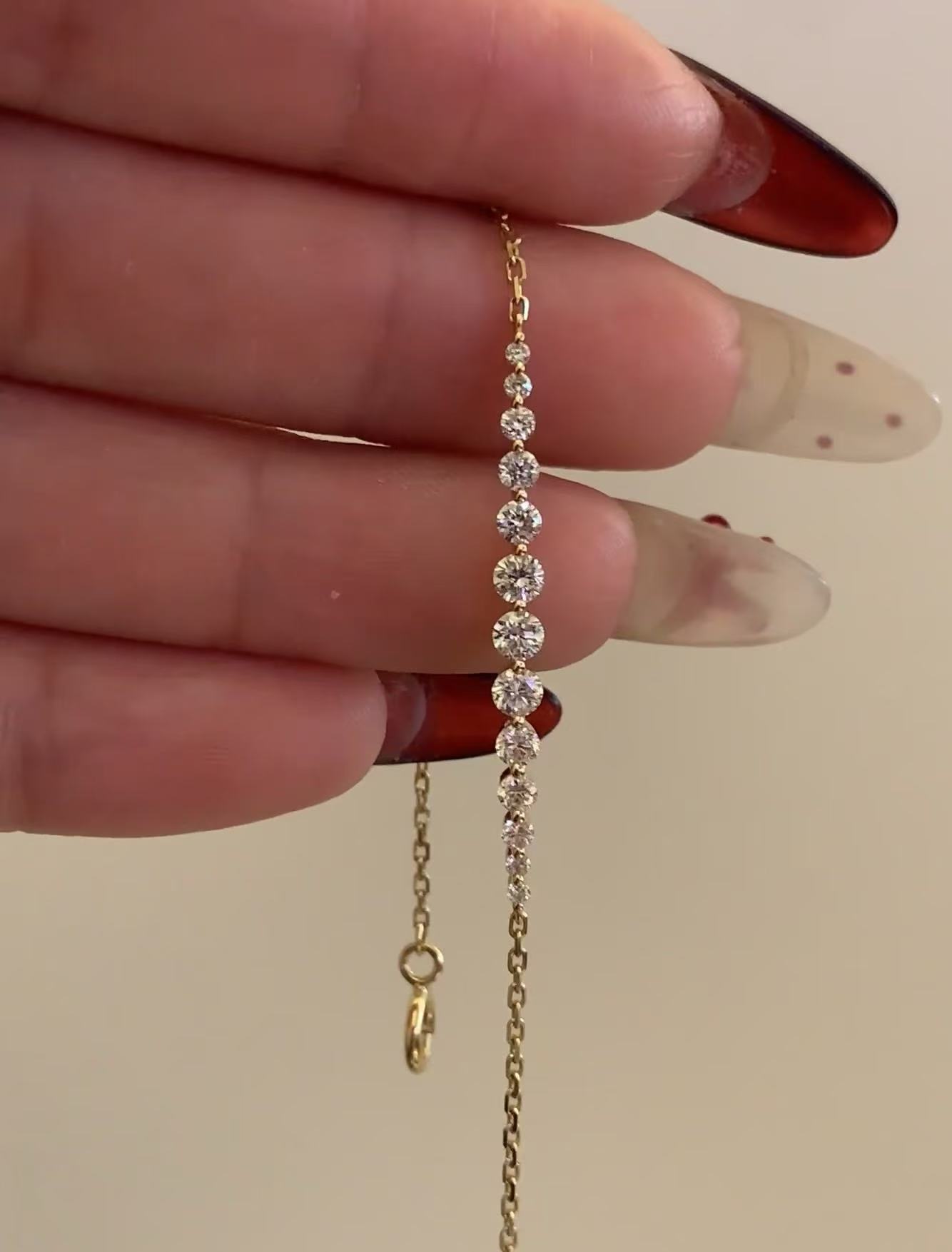
The same logic applies within a set: a bracelet or necklace can be built to a target total weight using many small stones or fewer larger ones, and those two routes are priced differently.
Cut: the factor that costs nothing to get right
Cut determines how the stone looks, and improving it rarely raises the price the way a grade step does.
Proportion and symmetry control how much light returns to the eye, so a well-cut stone of a modest colour grade can look better than a poorly cut stone of a higher one. In lab grown supply, cut quality is broadly available, which means buyers are not usually paying a rarity premium for it — they are simply avoiding a bad choice. That makes cut the first thing to fix in a specification.
Practically, the check is proportion rather than the word on the report: a stone described as excellent but with an unfavourable spread may look smaller than its weight suggests.
Colour and clarity: where money is actually saved
In the near-colourless range rather than at the top of the scale.
The price difference between the highest colourless grades and the near-colourless grades below them is significant, while the visual difference in a set stone is often negligible. The same is true of clarity: the step from flawless to very slightly included is large in price and small in appearance once the stone is set and the inclusions are not positioned under the table.
Buyers who understand this spend their budget on cut and size and accept a small step down in colour or clarity, which usually produces the better-looking piece at the same cost.
Shape premium and the shapes that cost less
Round stones carry the highest demand, fancy shapes can cost less for the same weight.
Round brilliant is the benchmark against which most pricing is quoted, which keeps demand — and often price — highest for that shape. Oval, emerald, pear, radiant and cushion cuts can offer a larger visual footprint per carat and often price more favourably. The trade-off is matching: fancy shapes have to be matched for outline as well as colour, which is harder and can reduce the usable proportion of a parcel.
Where a design allows a fancy shape, the buyer frequently gets more visible stone for the same spend.
Certificate cost and why some stones ship without one
Certification is a real cost, and its absence is a real reduction in information.
A full grading report involves laboratory time, which is charged per stone, and on small stones the report can cost more than the stone. That is why melee is normally graded at parcel level rather than individually, and why a supplier may offer a single stone with or without a report at different prices. The buyer’s decision is whether the documentation is worth the premium for the use case.
For a stone sold individually to a consumer, the report is part of the product. For melee going into a finished piece, parcel-level grading plus documented parcel specifications is the practical standard.
Melee versus single stones: two pricing worlds
They are bought, priced and specified differently.
Melee is sold by the parcel, priced per carat at a level tied to size range, colour band and consistency, and specified with tolerances rather than individual grades. Single stones are priced individually against their own report. Comparing a per-carat melee price with a per-carat single-stone price is a category error that frequently appears in supplier discussions.
Because melee pricing depends on consistency, the specification that matters most is the matching tolerance across the parcel, not the reported grade of any one stone.
Setting, metal and labour: the part that is not the stone
On smaller goods, the metal and the labour can exceed the stone cost.
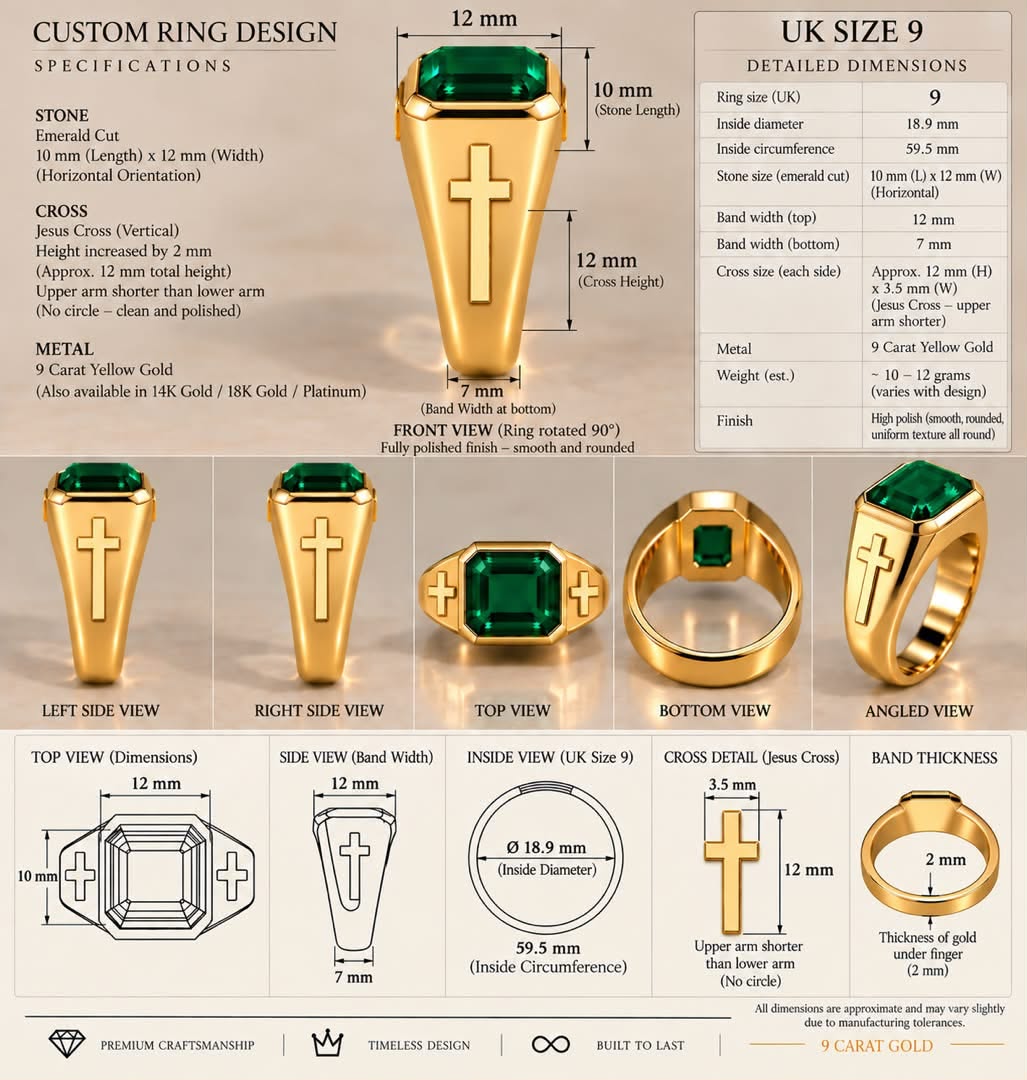
A finished piece includes setting, polishing, finishing, metal and often plating or rhodium, and those costs vary with the complexity of the design rather than the size of the stone. A bezel setting is cheaper to execute consistently than a four-prong setting with visible claws; a micro-pavé line costs more in labour than a channel. When comparing finished pieces, the stone is only one line in the bill.
This is also why two suppliers can quote the same stone at the same price and still produce different finished prices.
Reading a quote line by line
Six checks that make two quotes comparable.
One: is the carat weight per stone or total, and is it measured in points for melee. Two: which report accompanies the goods, if any. Three: are treatments disclosed. Four: what matching tolerance applies across the parcel. Five: what is included in the price — certification, setting, metal, packaging, freight. Six: what the measurement tolerance is on size, because a 1.5 mm tolerance on melee changes the usable yield.
Two quotes that pass all six checks can be compared on price. Two that do not cannot.
Where a buyer can negotiate, and where they cannot
Volume, specification flexibility and scheduling are negotiable; production cost is not.
Suppliers can move on price when the order lets them use stock they already hold, when the specification can shift within a band, or when delivery timing is flexible enough to batch production. They cannot move below the cost of producing the specification, and pushing there usually shows up as a specification change rather than a discount.
The most reliable lever for a buyer is consistency: a repeat programme with a stable specification is easier to price than a series of one-off orders. Where a programme is built on silver rather than gold, the silver set lab grown diamond checklist covers the stone-and-metal checks that apply.
FAQ
Why are lab diamonds cheaper than natural ones?
Because supply follows production capacity rather than geological scarcity. Lab grown stones can be produced in increasing quantities as equipment and efficiency improve, so the cost of a new stone falls over time, while mined supply cannot be expanded on demand. The material is the same; the supply curve is not.
What is a lab grown diamond price per carat based on?
On the cost of producing that specification plus what the market will pay for it. Carat band, shape demand, colour and clarity band, cut quality, report type and matching tolerance all feed in, and because supply is flexible the price of a given specification can move faster than mined diamond pricing.
Is it cheaper to buy many small stones than one large one?
Usually yes for the same total weight, because per-carat prices fall as stone size decreases and melee is sold by the parcel rather than with individual reports. The trade-off is labour: setting many small stones costs more in manufacturing time than setting one large one, which can offset the stone saving.
Does certification add much to the cost?
It adds a fixed cost per stone, which is negligible on larger goods and significant on small ones — on very small melee the report can cost more than the stone. That is why melee is normally graded at parcel level, while stones sold individually to consumers are expected to carry their own documentation.
Sources and further reading
- GIA — diamond grading and what the grades mean
- GIA 4Cs — cut, colour, clarity and carat explained
- IDEX Online — diamond trade pricing and market news
- Gems & Gemology — research on laboratory-grown diamond supply
- International Gemological Institute — grading services and report types
- CIBJO Blue Books — terminology used in diamond and jewellery trade documentation
Next step: Send the specification you are pricing — shape, size band, colour and clarity range, report requirement and volume — and we will return a quote broken out by stone, certificate, setting and metal so you can compare it line by line. Loose parcels and finished OEM/ODM programmes are both available. Contact vinico@zkzdiamonds.com or WhatsApp +86 135 3037 8229.
Part of our lab grown diamond jewelry guide.
Recommended
 Does a lab-grown diamond need Kimberley Process paperwork when shipped?Lab Grown Diamond Guide
 Is it better to buy a loose lab-grown diamond and set it, or buy finished jewelry?Lab Grown Diamond Guide
 Is Lab Grown Diamond Jewelry a Good Investment?Buying Guides
 What is a “hearts and arrows” cut, and is it available in lab-grown stones?Lab Grown DiamondsDoes a lab-grown diamond need an appraisal, and what does one include?Lab Grown Diamonds
 Custom Lab Grown Diamond Jewelry: A Step-by-Step GuideCustom Jewelry