Can You Shower or Swim With Jewelry? Metal-by-Metal Guide
925 sterling silver jewellery, set with lab grown diamonds and made in our own Shenzhen workshop.
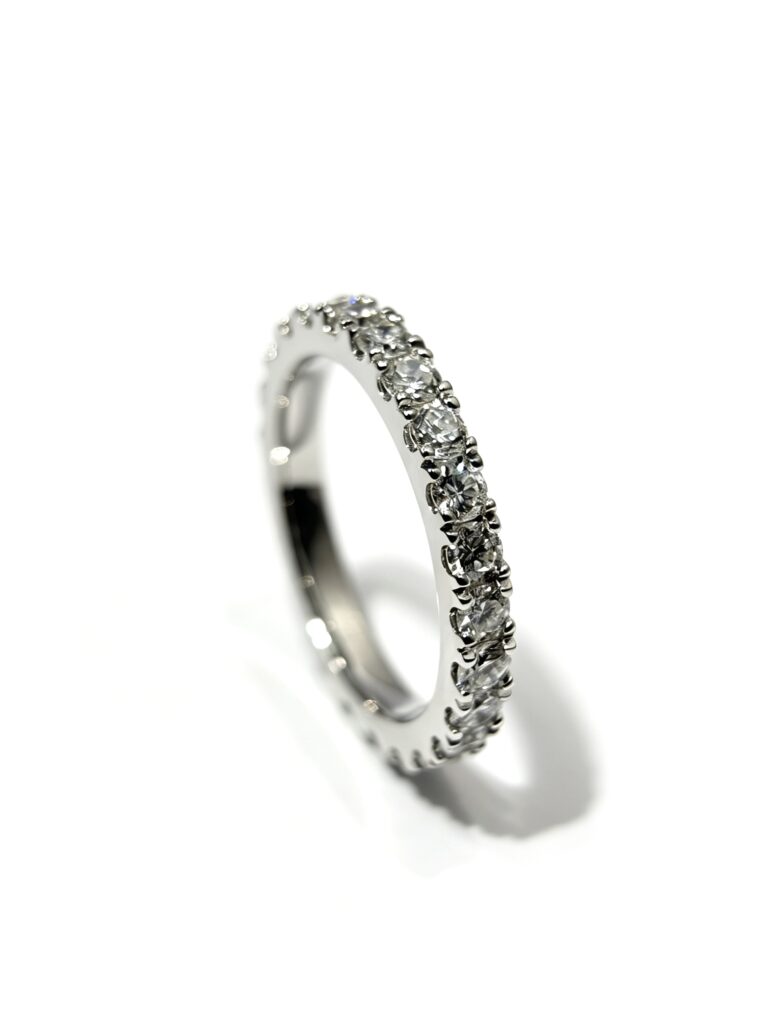
A plated ring comes back after two summers with the plating gone along the base of the band, and the owner cannot remember doing anything unusual. Chlorinated water did the work, at the two or three pools a year the piece was worn into. Showering and swimming are the two most common exposures jewellery gets, and the risk is not the water itself: it is chlorine, salt, soap residue and the friction of a towel, each of which attacks something different.
Can you shower with jewelry?
Solid gold, platinum and sterling silver survive it; plated pieces and stones in glued settings do not do well.
Soap and shampoo leave a residue that collects behind settings and in chain links, which dulls stones and accelerates tarnish on silver. Hot water expands metal slightly and softens some adhesives. And a towel used briskly over the piece applies friction at exactly the points where plating is thinnest. For a solid gold or platinum band, the effect is negligible. For a plated piece, a glued setting or a strand of pearls, it is cumulative and visible.
The practical rule: solid metal is fine, coatings and adhesives are not, and anything with a soft or treated stone should come off.
Metal by metal
What each material tolerates, and what it does not.
| Metal | Showering | Swimming and hot tubs | Notes |
|---|---|---|---|
| Sterling silver | Tolerated, but soap residue speeds tarnish | Chlorine attacks the alloy and darkens it | Rinse and dry after exposure |
| Yellow and rose gold | None | Chlorine does not attack gold itself | Soldered joints and settings are still worth checking |
| White gold (plated) | Plating wears faster with soap and friction | Chlorine accelerates plating wear | Remove before both |
| Platinum | None | Chlorine does not attack platinum | The most tolerant of the four |
| Plated base metal or silver | Plating wears | Plating wears quickly | Remove before both; the coating is the whole finish |
What actually damages a piece in water
Four mechanisms, and only one of them is the water.
Chlorine attacks silver alloys and accelerates the wear of plated coatings. Salt water is less chemically aggressive but abrasive when it dries, leaving crystals that rub between links. Soap and shampoo leave a film that collects in settings and behind stones, dulling them over time. And physical loss is the most common outcome of all: a clasp that opens in a pool is far more frequent than any chemical damage.
For most pieces, the risk is not ruin but gradual dulling and faster coating wear, which is why the answer differs by whether the piece is solid or coated.
Stones: which ones should never go in water
The setting matters as much as the stone.
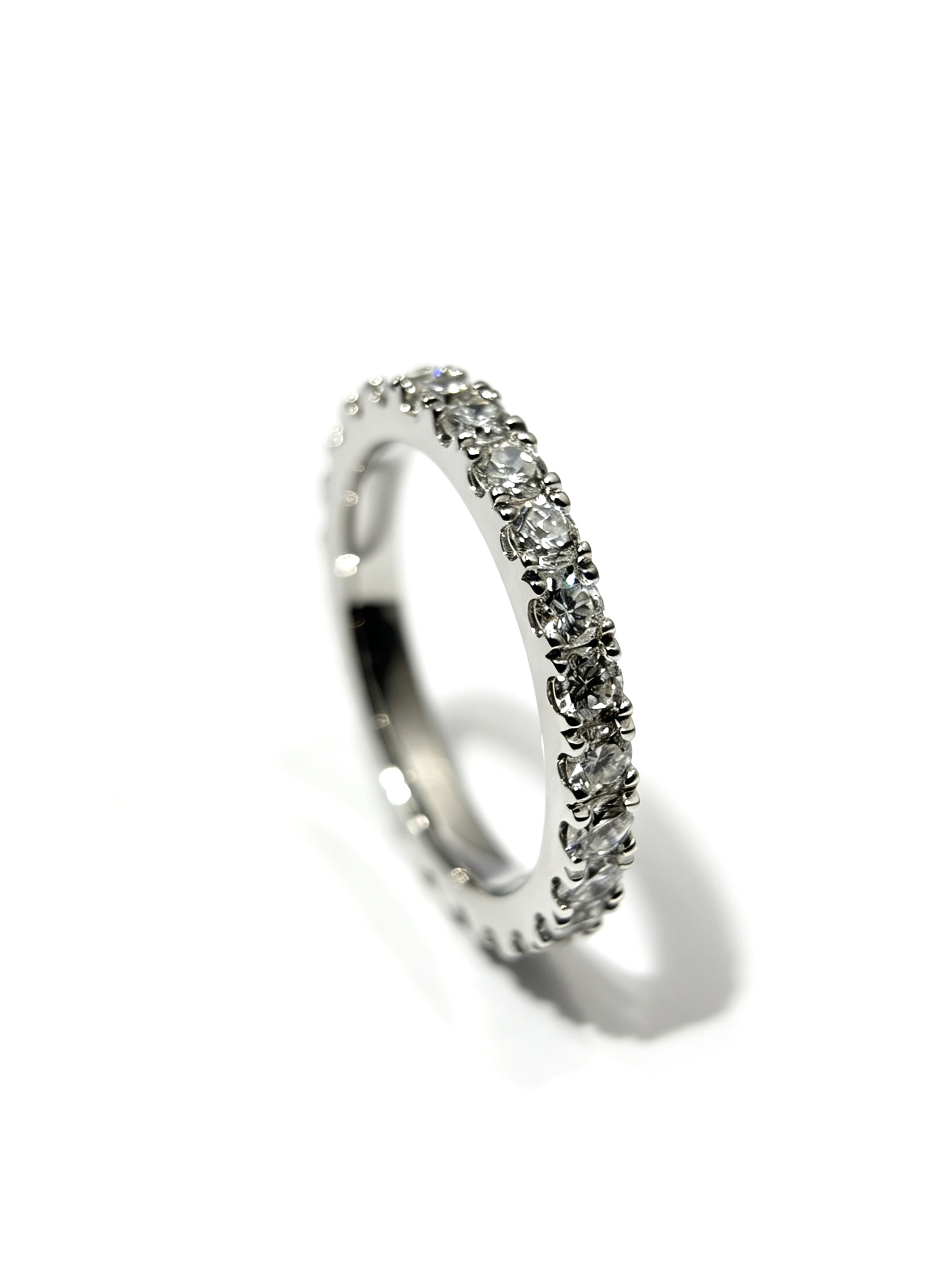
Diamond, sapphire and ruby tolerate water and chlorine well, though a hot tub is a different environment because of the temperature and chemicals. Softer or treated stones are more exposed: opal, pearl, turquoise and emerald are all sensitive, and emerald in particular is often treated in ways that dislike chemicals. Glued settings — common in costume pieces and some semi-fine work — are the real vulnerability, because adhesives soften with heat and eventually release.
A useful rule is that if the setting is pronged or bezelled and set in solid metal, water is a minor issue; if it is glued, in a plated setting, or contains a soft or treated stone, the piece should come off.
Swimming pools, hot tubs and the sea
Three different environments, three different risks.
A chlorinated pool is the most aggressive for silver and plated pieces because chlorine attacks the alloy and the coating, and the exposure is often an hour at a time. A hot tub adds heat and a higher chemical load, which is worse for both adhesives and coatings. Sea water is less chemically damaging but leaves salt that dries into abrasive crystals inside links and behind settings.
The first thing to do after any exposure is to rinse in fresh water and dry, because the residue does more damage sitting on the piece than it did in contact with it.
What to remove first
Five pieces that should always come off.
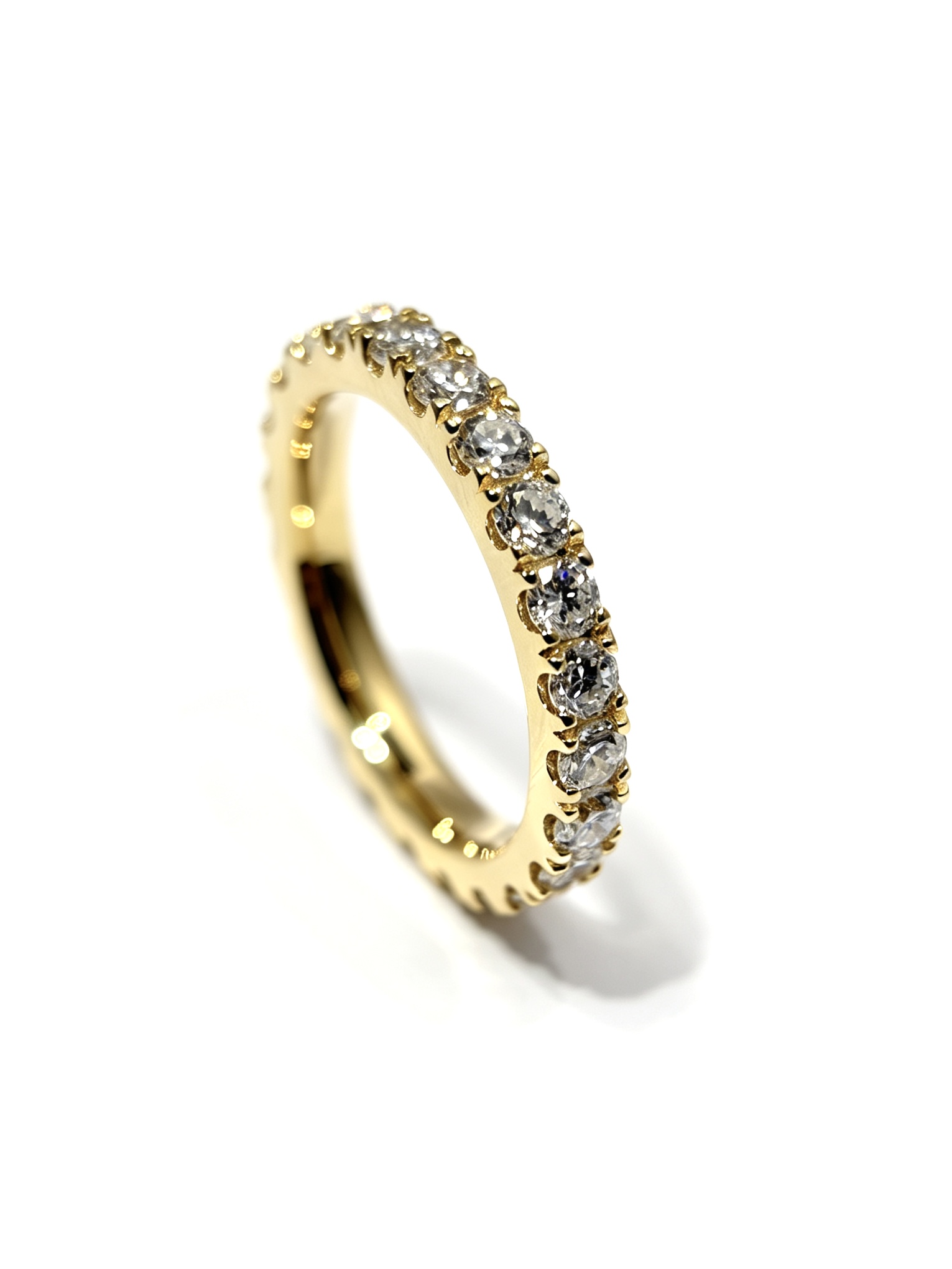
Anything plated. Anything with a glued setting. Rings with a high or wide setting, because a towel catches them. Pieces with treated or soft stones. And anything valuable enough that losing it would matter, because a clasp opening in water is the most common loss event of all.
Where a piece is worn for a shower every day, the pattern is what does the damage: daily exposure to soap, friction and heat accumulates faster than occasional swimming.
If a piece does get exposed
Three steps, in order.
Rinse in fresh water to remove chlorine and salt. Dry with a soft cloth rather than a towel used briskly, which abrades plating. Then check the settings by running a fingertip across each stone. Where a piece has been in a hot tub, check the glued settings specifically, because adhesive failure shows up weeks later as a stone that has begun to move.
Our notes on rhodium plating explain how much coating wear to expect from repeated exposures.
FAQ
Is it OK to shower with silver jewelry?
Solid sterling silver tolerates it, but soap and shampoo residue accelerates tarnish and collects behind settings. Plated silver is a different case, because the coating wears faster with soap and friction. Rinse and dry the piece after a shower either way.
Can you swim with sterling silver?
Chlorine attacks the silver alloy and darkens it, and repeated pool exposure shows. Sea water is less aggressive chemically but leaves salt that dries into abrasive crystals in links. Where a silver piece is worn in water regularly, rinse it in fresh water and dry it afterwards.
Does water damage gold jewelry?
Not the gold itself. Yellow and rose gold are unaffected by showering and by chlorine. White gold is normally rhodium plated, and that plating does wear faster with soap and with chlorinated water, so plated pieces are the ones to remove. Soldered joints and settings should still be checked periodically.
What jewelry should you never wear in water?
Plated pieces, anything with a glued setting, and pieces containing soft or treated stones such as opal, pearl, turquoise or emerald. Rings with high or wide settings should also come off, because a towel catches them, and anything valuable enough that losing it would matter.
Sources and further reading
- The Silver Institute — silver reactions and tarnish
- ASTM B700 — electrodeposited silver coating specification
- Assay Office — precious metal standards and care
- GIA — stone treatments and chemical sensitivity
- CIBJO Blue Books — terminology and disclosure
- International Gem Society — gemstone care reference
Next step: If a piece has been exposed repeatedly and shows worn plating, a darkened surface or a stone that has started to move, send us a photograph and the specification and we will tell you whether it needs re-plating, cleaning or a setting repair. Repairs, ready-stock pieces and OEM programmes are all handled. Contact vinico@zkzdiamonds.com or WhatsApp +86 135 3037 8229.
{“@context”:”https://schema.org”,”@type”:”FAQPage”,”mainEntity”:[{“@type”:”Question”,”name”:”Is it OK to shower with silver jewelry?”,”acceptedAnswer”:{“@type”:”Answer”,”text”:”Solid sterling silver tolerates it, but soap and shampoo residue accelerates tarnish and collects behind settings. Plated silver is a different case, because the coating wears faster with soap and friction. Rinse and dry the piece after a shower either way.”}},{“@type”:”Question”,”name”:”Can you swim with sterling silver?”,”acceptedAnswer”:{“@type”:”Answer”,”text”:”Chlorine attacks the silver alloy and darkens it, and repeated pool exposure shows. Sea water is less aggressive chemically but leaves salt that dries into abrasive crystals in links. Where a silver piece is worn in water regularly, rinse it in fresh water and dry it afterwards.”}},{“@type”:”Question”,”name”:”Does water damage gold jewelry?”,”acceptedAnswer”:{“@type”:”Answer”,”text”:”Not the gold itself. Yellow and rose gold are unaffected by showering and by chlorine. White gold is normally rhodium plated, and that plating does wear faster with soap and with chlorinated water, so plated pieces are the ones to remove. Soldered joints and settings should still be checked periodically.”}},{“@type”:”Question”,”name”:”What jewelry should you never wear in water?”,”acceptedAnswer”:{“@type”:”Answer”,”text”:”Plated pieces, anything with a glued setting, and pieces containing soft or treated stones such as opal, pearl, turquoise or emerald. Rings with high or wide settings should also come off, because a towel catches them, and anything valuable enough that losing it would matter.”}}]}
Part of our 925 sterling silver jewelry guide.
Recommended
 Does a matte, brushed or satin finish on silver wear differently from polish?Care & Cleaning
 How are solder joints on silver jewelry repaired without damaging stones?Care & CleaningWhat is a good gift for a self-purchase to celebrate a milestone?Jewelry Guides & Sizing
 Jewelry Care Myths: What Actually Damages Silver and DiamondsCare & Cleaning
 Is Lab Grown Diamond Jewelry a Good Investment?Buying Guides
 How do I repair a broken bracelet clasp or replace it with a better one?Care & Cleaning