Custom Earrings: Matching a Set to Your Style
925 sterling silver jewellery, set with lab grown diamonds and made in our own Shenzhen workshop.
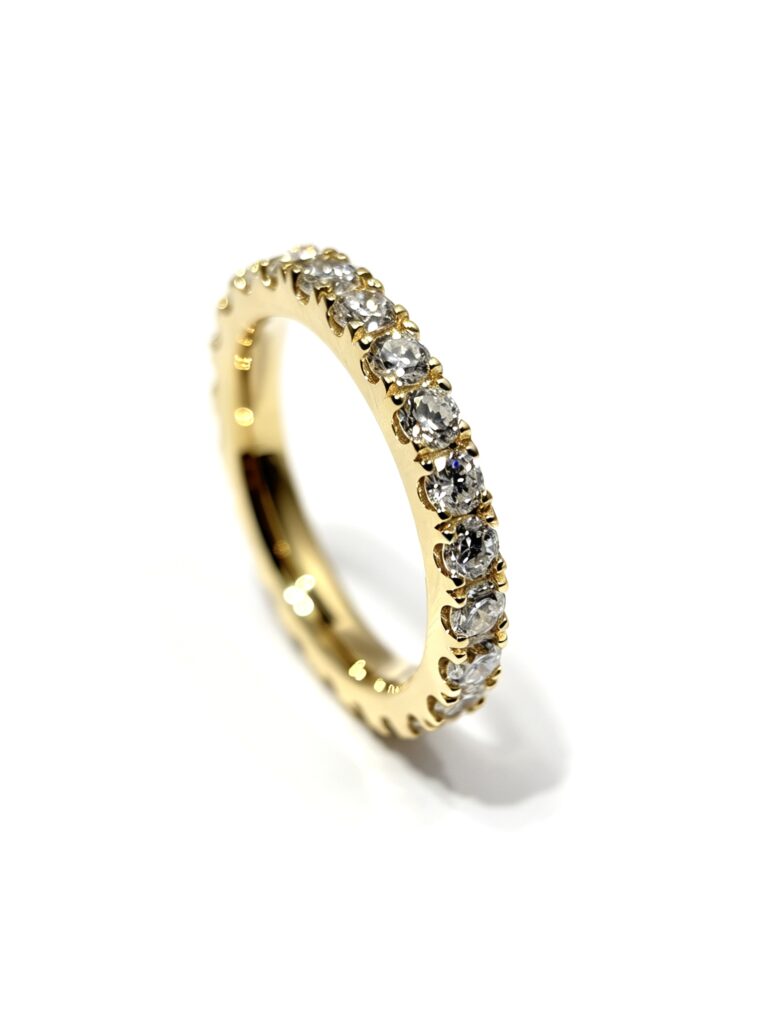
Two earrings can be made from stones of identical weight, identical grade and identical diameter, and still look wrong together on the ear. Earrings are seen side by side at a fixed distance, which removes every excuse a single piece has: any difference in outline, setting height or colour between the pair is visible at a glance. That is why custom earrings are a matching exercise first and a design exercise second.
What matters most on custom earrings?
Matching across the pair or set, then weight and closure.
Matching covers size, colour and, for fancy shapes, outline. Weight determines comfort, and because earrings hang from a single point, the way the mass is distributed matters more than the total. The closure decides whether the earring stays on the ear, and it should be chosen against the value of the stone rather than against the metal of the finding. Design follows those three.
Once matching, weight and closure are settled, the style choices — stud, hoop, drop — are straightforward.
Matching: three tolerances, not one
A pair is matched on more axes than a single stone is graded on.
| Axis | What to state | Why it matters |
|---|---|---|
| Size | Diameter in millimetres, with a tolerance | A visible size difference on a pair is immediately obvious |
| Colour | A band, not a grade | Two stones sit within centimetres of each other in the same light |
| Outline | For fancy shapes, a ratio and a shape-match tolerance | Elongated pairs have to agree in silhouette as well as size |
| Setting height | Measured, not assumed | A pair differing by half a millimetre looks wrong on the ear |
Setting and closure
Two decisions that determine protection and security.
A prong setting shows more of the stone and exposes claws that catch on hair and scarves. A bezel encloses the girdle, sits flatter against the ear and reads slightly larger, which is why it is the practical choice for earrings worn daily. A halo increases apparent size at the cost of many small settings to maintain. The setting should also be identical in height across the pair, because a difference is more visible on the ear than in a photograph.
For the closure, a friction butterfly is adequate for light stones worn occasionally. For a stone worth protecting, a screw or locking back is the difference between a minor inconvenience and a lost stone, because it cannot come off the ear at all. Our notes on lab grown diamond stud earrings cover how the back type interacts with the setting.
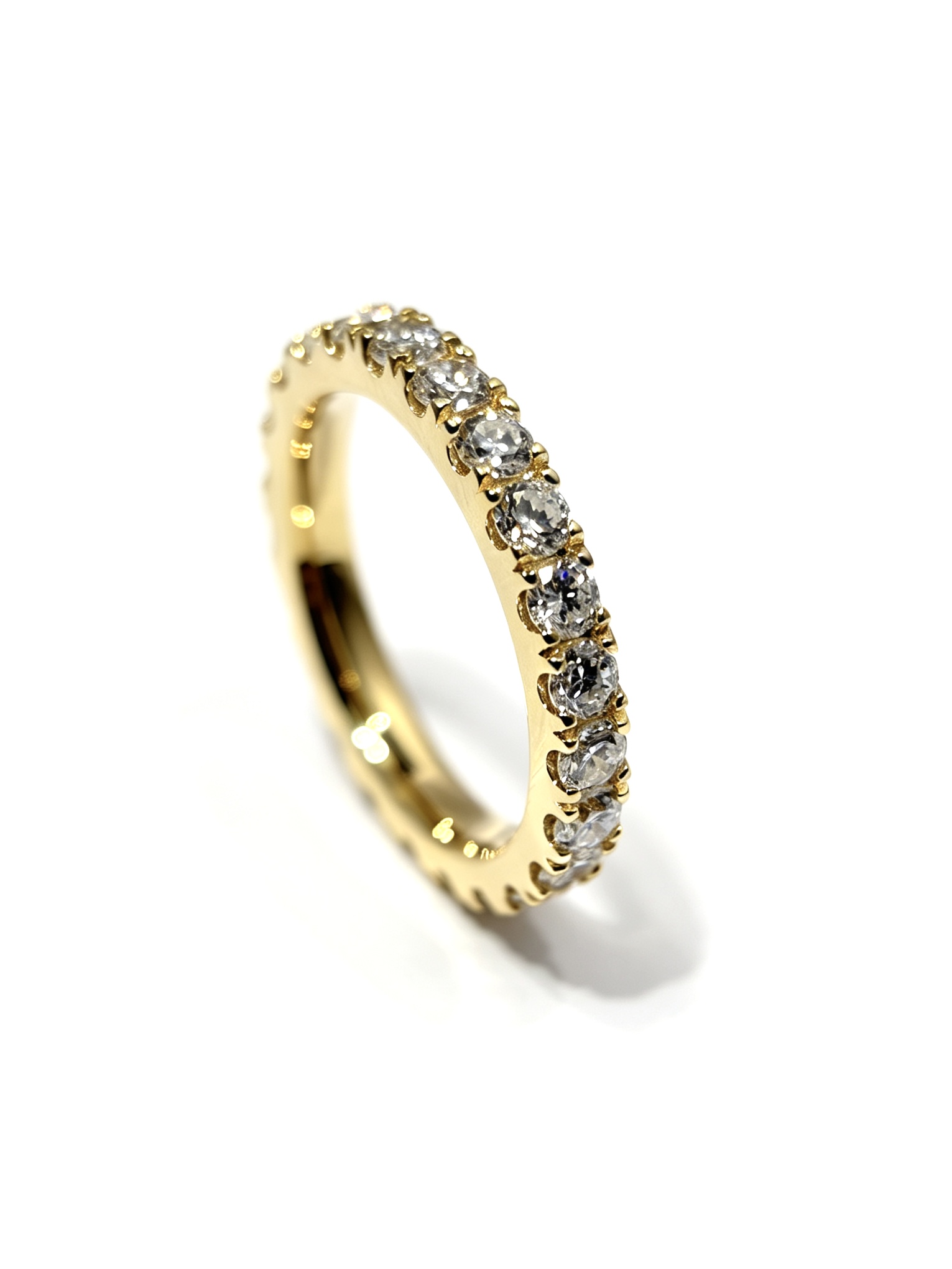
Weight and comfort
Mass distribution matters more than total weight on an earring.
A stud concentrates its mass at the post, directly over the piercing, so it feels light. A hoop distributes mass around a circle that hangs below the piercing and applies leverage instead. A drop concentrates everything at the lowest point, which is where leverage is greatest. The result is that a 3 g hoop can feel heavier than a 4 g stud, and diameter is the variable that moves comfort most, because it determines how far the mass sits from the support.
For daily wear, a lower setting and a moderate diameter do more for comfort than reducing carat weight.
Metal and sensitive ears
The post touches the skin directly, so metal choice matters more here than on any other piece.
Nickel is the usual cause of contact reactions, and it appears in some white gold alloys and in base metals. Yellow gold is naturally nickel-free in most formulations, platinum is inert, and titanium is widely used for sensitive piercings. Sterling silver is generally well tolerated, though its copper content bothers a small number of wearers. A coating over a base metal does not solve it, because the coating wears through exactly where the post contacts the skin.
The specification to request is a nickel-free alloy rather than a karat figure, since a higher karat does not automatically mean nickel-free.
Sets rather than pairs
Where a client wants several piercings populated, the set becomes the unit.
A set — a pair plus a second-hole single, or a stud and a hoop worn together — has to work as a composition rather than as individual pieces. The usual failure is too little variation: three identical stones in a row read as a mistake rather than a set. Deliberate differences in size or setting type, with matching colour, generally look better than matching everything. Where the pieces sit on the same ear, matching the metal is what holds the set together visually.
Our notes on the custom design process cover how a set is briefed as one project rather than as several.
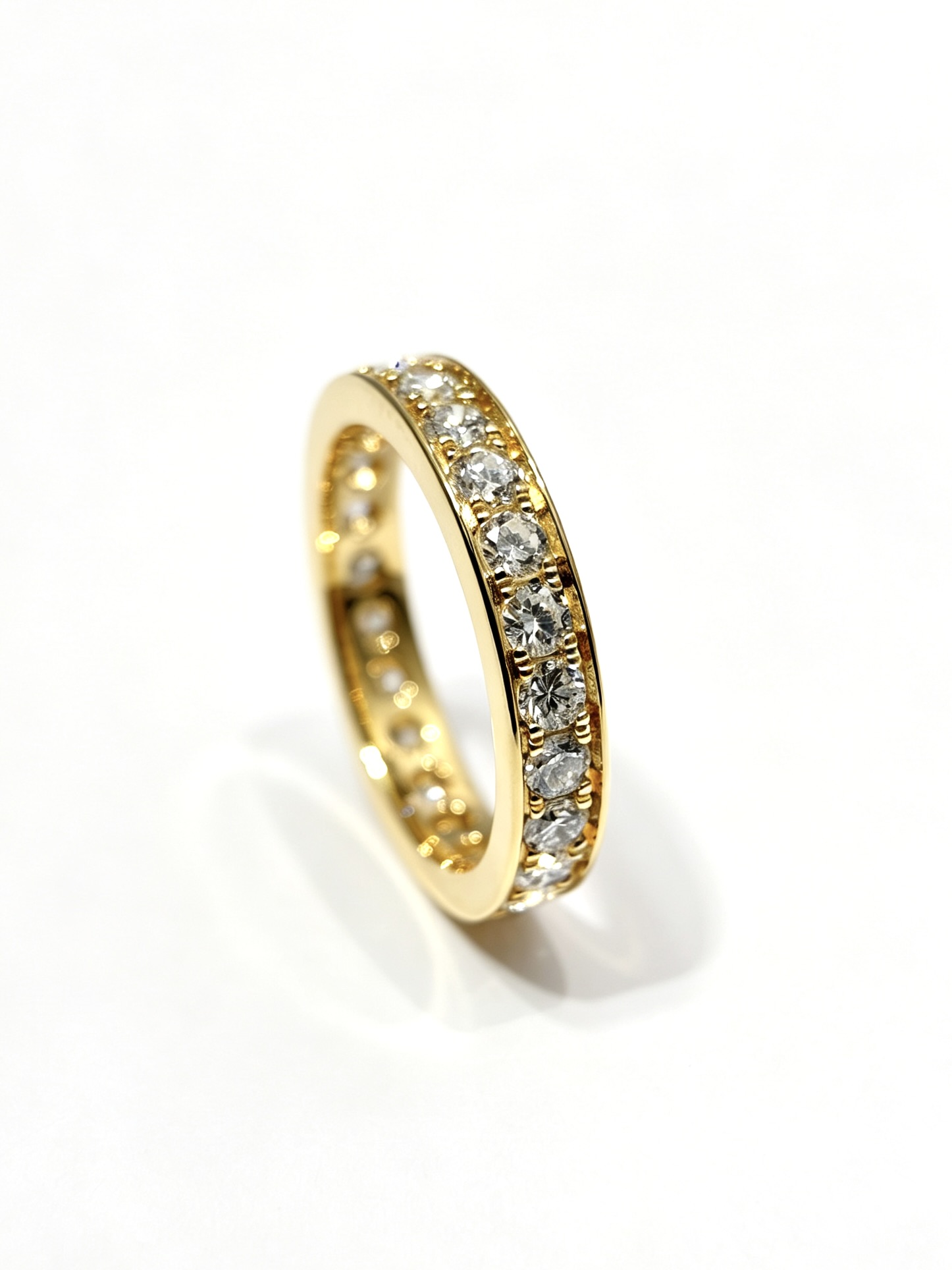
What to validate at the sample stage
Five checks specific to earrings.
Check that the two pieces are identical in diameter and in setting height. Confirm the post length and diameter suit the wearer’s lobe and piercing. Confirm the back engages firmly and releases without force. Check that the weight is acceptable after wearing the sample for an hour. And confirm that the finish matches across the pair, since two pieces polished in separate sessions can differ slightly in sheen.
All five are cheaper to correct on a sample than on a finished pair, and the last is the one most often missed because it is only visible when the pair is worn together.
FAQ
How do I order custom earrings?
Specify the pair as a pair: diameter with a tolerance, a colour band, the setting type and height, the post dimensions, the back type and the metal. For fancy shapes, add an outline matching tolerance. Most custom earring problems are matching problems rather than design problems.
What are good custom earring design ideas?
The strongest results usually come from matching colour across a set while varying size or setting type, rather than making every piece identical. For a pair, matching everything is correct; for a set of three or more on one ear, deliberate variation reads as design rather than as a mistake.
What metal is best for sensitive ears?
A solid nickel-free alloy: yellow gold in most formulations, nickel-free white gold, platinum or titanium. Ask for the nickel-free specification rather than a karat, because higher karat does not automatically mean nickel-free, and avoid plated base metals since the coating wears at the post.
Why do heavy earrings hurt after a few hours?
Because the mass hangs away from the piercing and applies leverage rather than simple downward pressure. Diameter and setting height move comfort more than total weight. A low setting and a moderate diameter will feel lighter all day than a larger stone in a tall basket.
Sources and further reading
- GIA 4Cs — grading factors for a matched pair
- Assay Office — hallmarking for custom earrings
- The Silver Institute — silver alloys used in earring findings
- CIBJO Blue Books — terminology and disclosure
- International Gem Society — setting and finding reference
- GIA Report Check — verifying stone documentation
Next step: Tell us whether it is a pair or a set, the metal you need for the wearer’s ears, and the sizes you have in mind, and we will quote a matched set to a stated tolerance and sample it for comfort before production. Custom, OEM and private-label programmes are all available. Contact vinico@zkzdiamonds.com or WhatsApp +86 135 3037 8229.
{“@context”:”https://schema.org”,”@type”:”FAQPage”,”mainEntity”:[{“@type”:”Question”,”name”:”How do I order custom earrings?”,”acceptedAnswer”:{“@type”:”Answer”,”text”:”Specify the pair as a pair: diameter with a tolerance, a colour band, the setting type and height, the post dimensions, the back type and the metal. For fancy shapes, add an outline matching tolerance. Most custom earring problems are matching problems rather than design problems.”}},{“@type”:”Question”,”name”:”What are good custom earring design ideas?”,”acceptedAnswer”:{“@type”:”Answer”,”text”:”The strongest results usually come from matching colour across a set while varying size or setting type, rather than making every piece identical. For a pair, matching everything is correct; for a set of three or more on one ear, deliberate variation reads as design rather than as a mistake.”}},{“@type”:”Question”,”name”:”What metal is best for sensitive ears?”,”acceptedAnswer”:{“@type”:”Answer”,”text”:”A solid nickel-free alloy: yellow gold in most formulations, nickel-free white gold, platinum or titanium. Ask for the nickel-free specification rather than a karat, because higher karat does not automatically mean nickel-free, and avoid plated base metals since the coating wears at the post.”}},{“@type”:”Question”,”name”:”Why do heavy earrings hurt after a few hours?”,”acceptedAnswer”:{“@type”:”Answer”,”text”:”Because the mass hangs away from the piercing and applies leverage rather than simple downward pressure. Diameter and setting height move comfort more than total weight. A low setting and a moderate diameter will feel lighter all day than a larger stone in a tall basket.”}}]}
Part of our custom jewelry guide.
Recommended
 How do I design packaging that protects chains and earrings in transit?Custom Jewelry
 How do I vet a jewelry factory before placing a first order?Custom Jewelry
 What should a shipping policy for jewelry say?Custom Jewelry
 How do I choose a brand name and check it is not already used for jewelry?Custom Jewelry
 Should I pay a factory deposit by bank transfer or use an order-protection service?Custom JewelryHow do I photograph jewelry honestly so customers get what they see?Custom Jewelry