Resizing and Maintaining a Lab Diamond Ring
925 sterling silver jewellery, set with lab grown diamonds and made in our own Shenzhen workshop.
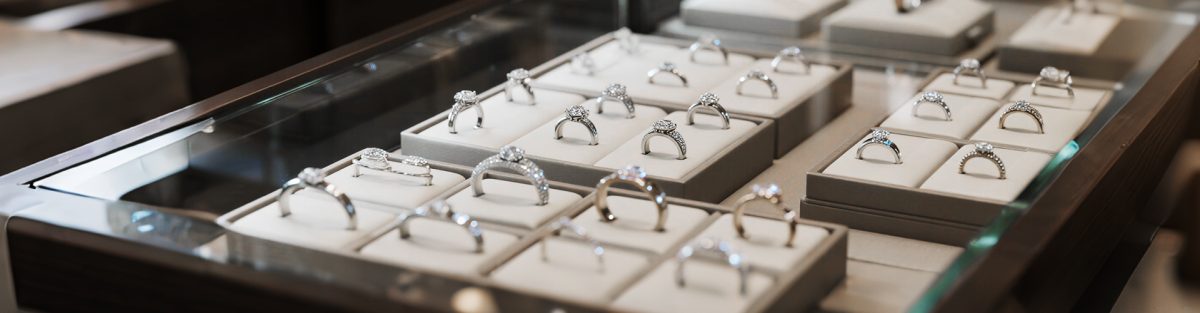
The ring arrives half a size too small and there is no plain metal to work with. The stones run the whole way around the band, or cover both shoulders, and the section a jeweller would normally cut is exactly the section that cannot be touched. That is the situation that turns a sizing adjustment into a rebuild, and it is entirely predictable at the order stage. Whether a ring can be resized later is a construction question with three variables: how much plain metal there is, where it sits, and how the setting is built over it.
Can a lab diamond ring be resized?
Usually yes, provided the band has a plain section to work with.
The stone has nothing to do with it. A lab grown diamond is resized exactly like a mined one, because the operation happens in the metal: a jeweller cuts the band at its base, adjusts the gap, and rejoins it. What limits the job is how much uninterrupted metal exists at the bottom of the ring, and how the metal has been hardened or plated. A plain band can typically move by one to two sizes; a band with stones through the section that has to be cut cannot move at all without being rebuilt.
So the useful question before buying is not whether a lab diamond ring can be resized, but whether this specific band can.
What determines whether resizing is possible
Construction, not stone, metal or price.
| Band construction | Resizing | Limit | Why |
|---|---|---|---|
| Plain band, no stones | Straightforward | Usually 1–2 sizes | Plain metal at the base |
| Half eternity | Usually possible | 1–2 sizes | The plain lower half is the working area |
| Full eternity | Not practical | — | No plain metal anywhere |
| Pave shoulders | Difficult | Small adjustments only | Stones extend into the section to be cut |
| Channel-set band | Difficult | Small adjustments only | The channel rails must be rebuilt |
| Bezel-set band | Limited | Depends on bezel spacing | Each bezel is a solid element in the band |
The resize itself: what happens at the bench
Four steps, and a fifth that is specific to plated rings.
First, the ring is measured and the target size confirmed against the finger, in the conditions it will be worn. Second, the band is cut at the bottom, in the plain section, and the gap adjusted. Third, the joint is soldered and the seam finished so it is not visible. Fourth, the ring is re-polished and the stones checked for security after the heat cycle. Fifth, if the ring is rhodium plated, the plating is renewed, because soldering and polishing remove it locally.
Stones are examined after any heat work, because solder temperatures can affect some treated stones and because the handling itself can move a setting.
Sizing correctly the first time
Three habits that remove most repeat resizing.
Measure at the end of the day, when fingers are largest, and never first thing in the morning after cold. Measure with a sizing set of the same width as the finished band, because a wide band feels tighter than a narrow one at the same internal diameter. And measure the finger that will actually wear the ring, since the same finger on the other hand is often a different size.
The method for measuring at home covers the practical version of this, including the printable strip and the existing-ring comparison.
Maintenance between resizings
Five tasks, at four different intervals.
Daily: take the ring off before showering, swimming and applying hand cream, and wipe it dry if it gets wet. Weekly: a quick warm-water soak with mild soap and a soft brush to lift the film from the pavilion, which is what makes a ring look dull. Monthly: check the prongs by running a fingertip across them and pressing each stone lightly. Annually: a professional inspection covering prong tightness, the shank for cracks, the setting for wear and the plating for breakthrough. And after any impact or snag: an inspection, even if the ring looks undamaged.
Most of the serious problems found at annual inspection start as something small that was visible a year earlier.
When resizing is the wrong answer
Three cases where the ring should not be cut.
The first is a full eternity band, where a resize means a rebuild and the honest alternative is a remake at the correct size or a trade-in against a new band. The second is a ring with a crack or thin spot in the shank, where cutting and soldering will not hold and the shank needs to be replaced first. The third is a ring whose repeated resizing has left it two or more sizes from its original, in which case the geometry of the setting and the profile of the band have both changed and a new band is usually the better answer.
A jeweller who proposes a rebuild in these cases is not being unhelpful; they are describing what the metal allows.

Metal-specific limits
Four metals, four different behaviours at the bench.
Yellow and rose gold resize easily, and a good jeweller can usually hide the seam. White gold resizes as easily but needs re-plating afterwards to restore a uniform colour. Platinum resizes well and is the most forgiving of repeated work, because it moves rather than thinning, but it requires higher temperatures and a specialist bench. Sterling silver resizes readily but is softer, so a resized silver ring can distort again sooner if the band is thin.
In all four cases, the quality of the finished joint depends on how the seam is finished rather than on the solder alone.
What to check after a resize
Five checks before accepting the ring back.
Confirm the final size against the intended fit, not against the number requested. Run a fingertip around the inside of the band for a raised seam. Check every stone for movement, since heat and handling can affect settings. Look at the plating in daylight for a two-tone patch near the joint. And check that the band is still round, because an uneven resize leaves the ring oval and it will spin on the finger.
All five take under a minute and are much easier to raise before the ring leaves the bench.
FAQ
Can lab diamond rings be resized?
Yes, in the same way as any diamond ring, because resizing works on the metal rather than the stone. The limiting factor is construction: a plain band or a half eternity band usually adjusts by one or two sizes, while a full eternity band or a band with stones through the lower section generally has to be rebuilt.
How much can a diamond ring be resized?
One to two sizes in most cases, and less for bands with pave or channel settings. Beyond that the proportions of the ring change, the setting can shift out of alignment, and a jeweller will often recommend rebuilding or replacing the band instead of stretching the metal further.
How do I keep a diamond ring clean?
Soak it in warm water with a drop of mild soap, brush gently with a soft brush focusing on the underside of the stone and behind the setting, rinse and dry with a lint-free cloth. Avoid toothpaste, baking soda and abrasive polishes, which scratch metal and round off prong tips.
How often should a diamond ring be inspected?
Once a year for a ring worn daily, and immediately after any impact or snag. The inspection covers prong tightness, the shank for cracks or thin spots, the setting for wear and any plating for breakthrough. Most serious faults appear first as something small that was visible months earlier.
Sources and further reading
- GIA 4Cs — grading factors relevant to setting work
- GIA — treatments and heat exposure during repair
- The Silver Institute — silver behaviour in resizing and wear
- Assay Office — hallmarking after repair and resizing
- ASTM B700 — electrodeposited silver coatings
- CIBJO Blue Books — jewellery terminology and disclosure
Next step: If a ring needs resizing, tell us the current size, the target size and how the band was built — plain, half eternity, pave or channel — and we will confirm whether it can be adjusted or needs rebuilding, and what the work involves. Resizing, repair and OEM programmes are all handled. Contact vinico@zkzdiamonds.com or WhatsApp +86 135 3037 8229.
{“@context”:”https://schema.org”,”@type”:”FAQPage”,”mainEntity”:[{“@type”:”Question”,”name”:”Can lab diamond rings be resized?”,”acceptedAnswer”:{“@type”:”Answer”,”text”:”Yes, in the same way as any diamond ring, because resizing works on the metal rather than the stone. The limiting factor is construction: a plain band or a half eternity band usually adjusts by one or two sizes, while a full eternity band or a band with stones through the lower section generally has to be rebuilt.”}},{“@type”:”Question”,”name”:”How much can a diamond ring be resized?”,”acceptedAnswer”:{“@type”:”Answer”,”text”:”One to two sizes in most cases, and less for bands with pave or channel settings. Beyond that the proportions of the ring change, the setting can shift out of alignment, and a jeweller will often recommend rebuilding or replacing the band instead of stretching the metal further.”}},{“@type”:”Question”,”name”:”How do I keep a diamond ring clean?”,”acceptedAnswer”:{“@type”:”Answer”,”text”:”Soak it in warm water with a drop of mild soap, brush gently with a soft brush focusing on the underside of the stone and behind the setting, rinse and dry with a lint-free cloth. Avoid toothpaste, baking soda and abrasive polishes, which scratch metal and round off prong tips.”}},{“@type”:”Question”,”name”:”How often should a diamond ring be inspected?”,”acceptedAnswer”:{“@type”:”Answer”,”text”:”Once a year for a ring worn daily, and immediately after any impact or snag. The inspection covers prong tightness, the shank for cracks or thin spots, the setting for wear and any plating for breakthrough. Most serious faults appear first as something small that was visible months earlier.”}}]}
Part of our 925 sterling silver jewelry guide.
Recommended
 Does a lab-grown diamond need Kimberley Process paperwork when shipped?Lab Grown Diamond Guide
 Is it better to buy a loose lab-grown diamond and set it, or buy finished jewelry?Lab Grown Diamond GuideHow do I choose a bypass or open ring that stays comfortable?Lab Grown Diamond Rings
 How do I choose between a solitaire, halo and three-stone ring?Lab Grown Diamond Rings
 Is Lab Grown Diamond Jewelry a Good Investment?Buying Guides
 What is a “hearts and arrows” cut, and is it available in lab-grown stones?Lab Grown Diamonds